

More rotation, more sprints: A glimpse into the future of F1’s calendar plans


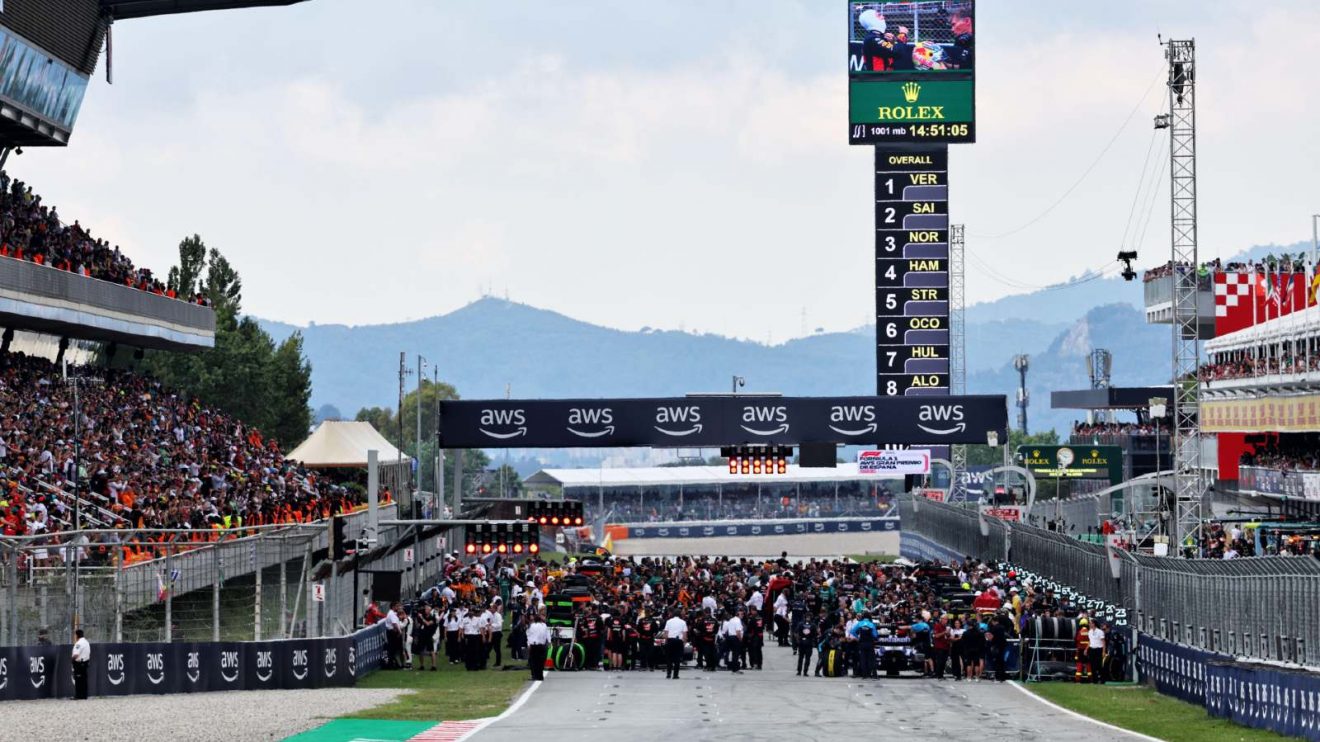
Stefano Domenicali says race rotations across Europe could become the norm on the F1 calendar.
F1 CEO Stefano Domenicali believes race rotation in Europe is on the way, with the Italian not ruling out the possibility of introducing more races to the calendar.
With 24 races on the F1 calendar in 2024, it’s the busiest season in the history of the sport – but there’s always the potential for more, according to Stefano Domenicali.
Stefano Domenicali: Wrong to say 24 races is too many
With the Concorde Agreement up for renewal, the cap on the maximum number of Grands Prix is likely to be increased from the current figure of 25 as F1 continues to expand its global reach.
With the sport’s popularity booming, the calendar has swollen to its current figure of 24 as new races have been introduced – including two new events in the United States as Miami and Las Vegas were introduced in 2022 and ’23, respectively.
The ever-increasing number of races, together with the increase in the number of Sprint weekends, has led to fears being expressed that the sport risks oversaturation with its fanbase, but Domenicali said this isn’t a concern for F1.
“I don’t believe that 24 Grand Prix is an oversupply. Look at other sports,” he told Germany’s Auto Motor und Sport.
“Soccer and basketball are played every other day. They entertain their fans much more intensively. In terms of quantity, we have much less content to offer. Nevertheless, compared to other sports, we are doing very well and growing. Everyone involved in our sport, in whatever way, should be happy with the situation.”
Asked outright whether that means an increase on the current 24-race figure is likely, Domenicali said the intention is currently to keep the number pegged.
“We want to keep it at 24 Grands Prix,” he said.
“But it’s wrong to say that 24 is too many. Too much of what? When the sport is as good as it is at the moment with many possible winners, the fans are counting the days until the next race.
“I mean, we have a field that is closer together than ever before. We’re talking about gaps of 0.078 or 0.093 seconds today. That’s less than a tenth on a lap of more than four or five kilometres.
“Distances like we see in a 100-metre race. 24 races is a good number. Each of our events has its own character.
“I mean, the Monaco GP was certainly not the most exciting Grand Prix in history, but we had one of the best TV ratings in the world. We want to keep a good balance between old and new races. Although there are many more countries that want to have a Grand Prix.”
More on the latest F1 news
? Revealed: The five drivers that should be on Haas’ 2025 shortlist
? Why Cadillac’s Le Mans experience proves it’s absolutely ready for F1
Stefano Domenicali: F1 thinking about race rotation system
With so many races already on the calendar, and interest coming in from even more countries hoping to host their first Grands Prix, Domenicali said the traditional core of the championship – the European rounds – may find themselves being rotated on and off the calendar in order to squeeze everybody in.
Anyone wanting to buy Spa F1 tickets, for example – Spa has hosted the Belgium GP every year since 1983 – might wish to do so sooner rather than later, then, just in case traditional favourites are rotated out.
“We are thinking about a rotation system,” Domenicali said. “It is likely that we will start with this in Europe.”
He also said the increased number of Sprint weekends – currently at six – is likely to be ramped up further.
“That is the goal,” he said. “The figures show that there is interest in it.”
With the Spanish Grand Prix moving to Madrid from 2026, and Barcelona angling to retain its race once its current contract expires, there are also two races in Italy as Monza and Imola continue.
But one European mainstay that has been without a race over the last four years is Germany – that’s despite the involvement of Mercedes as a leading F1 team.
But with German authorities reluctant to hand out millions of dollars to F1 in order to bring the sport back, Domenicali said the sport has to invest in the regions that are willing to invest.
“We don’t want to write anyone off, but the fact is that we are no longer as dependent on our core markets as we used to be,” he said.
“In the past, there was Europe, Brazil, and a few isolated countries where Formula 1 was big. Today, we are popular everywhere. And if there is a downturn somewhere for understandable reasons, we have to live with it and invest where we see growth.”
Read Next: Sergio Perez ‘slack off’ prediction fears resurface in Helmut Marko joke


