
Red Bull identifies new technical battleground for engine development


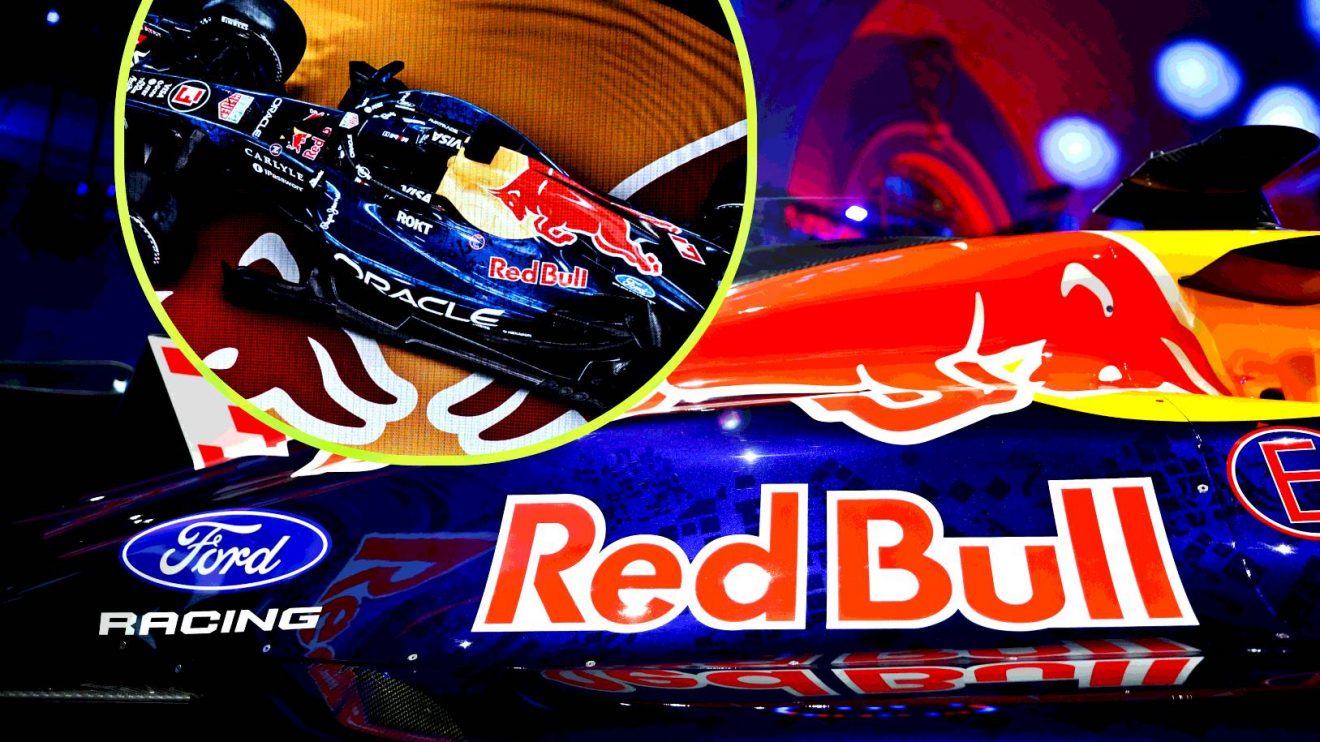
Red Bull has identified an area that could be a major development battleground over the coming F1 seasons.
Red Bull Powertrains’ technical director believes the internal combustion engine represents a major developmental battleground over the coming years.
While power unit development will be tightly controlled through the new regulations cycle, the development opportunities available to the manufacturers could see a keen focus on the internal combustion engine (ICE), believes Red Bull Powertrains [RBPT] technical director Ben Hodgkinson.
Red Bull: Biggest performance differentiators could be the ICE
F1 2026 sees the introduction of revolutionary regulations on both the chassis and power unit, with the manufacturers moving onto a new-generation 1.6-litre V6 hybrid with an increased electrification ratio.
The power output of the new unit is roughly split 50/50 between the internal combustion engine and the electrical recovery and deployment systems, with a 350kW battery that’s almost three times more powerful than the previous generation hybrids.
Homologation of the new power units is just a few weeks away, with the manufacturers required to submit detailed dossiers to the FIA by March 1st, before all the units enter a five-year cycle that has seen the governing body tightly prescribe what areas of the power unit can be upgraded, and when in the cycle these upgrades are permitted.
These prescriptions are entirely separate from the additional development and upgrade opportunities [ADUO] safety net that the FIA revealed late last year, which will grant underperforming manufacturers additional opportunities to improve their units.
Appendix C4 of the 2026 technical regulations reveals, in detail, what’s permitted and when for the manufacturers.
At the start of the new cycle, a potential background could be in the ICE, according to RBPT’s Ben Hodgkinson, who believes this area of the engine could represent a potential performance differentiator between the manufacturers.
“I think, within the power unit space itself, that could be true,” he told select media, including PlanetF1.com, ahead of Red Bull‘s season launch in Detroit.
“I think that the ERS side is going to be… everyone will be sort of 99 percent efficient on their power electronics and their motor.
“The best engines did, in last season, about 50 percent, so there’s still, in theory, quite a lot to go at, right?
“So I think the biggest differences are probably going to be on the ICE side. That does work with your fuel partner a lot as well.
“So our Exxon Mobil has been really vital in trying to get as much performance as we can out of the ICE, and has really helped us with that.”
More on F1 engines
Explained: F1’s complex power unit upgrade system
Explained: How F1’s new ‘overtaking mode’ will work in 2026
Sustainable fuels, which are introduced to F1 in 2026 as the sport moves towards its carbon net-zero goal in 2030, will power the new engines.
The move away from traditional fossil fuels marks a huge engineering challenge, in order to achieve competitive calorific values from the new solutions, whilst also forcing the manufacturers to work on improving reliability.
“It’s definitely given us a different challenge. It’s been quite an enjoyable challenge,” Hodgkinson said, when asked by PlanetF1.com about the extent of the challenge of the introduction of the new fuels.
“The sustainable fuels are a bit tricky because they’re made up of lots of different elements that have different evaporation points.
“The old fossil fuels used to evaporate at a bit lower temperature in a very clean and very narrow window, which meant you got a vaporisation very, very cleanly.
“With these sustainable fuels, you get some elements that evaporate later than others, which can be a bit of a challenge with combustion.
“So it’s actually driving a much, much hotter conversion chamber than we’ve ever had before, which comes with a lot of challenges. So it’s been an interesting challenge from an engineering point of view.”
RBPT’s first power unit to hit the test track later this month is the sixth-generation unit to be created by Hodgkinson’s team, which has grown significantly over the four years since his appointment as technical director of the unit.
Having moved from Mercedes High-Performance Powertrains in 2022, Hodgkinson was a key signing by then-Red Bull team boss and RBPT director Christian Horner, whose work in assembling and refining the department came to an end in July 2025, just a few months before the culmination of the project coming to life during this pre-season.
It’s understood that Horner’s contribution to the project continues to be acknowledged by Red Bull’s senior management, including GmbH CEO Oliver Mintzlaff, and Hodgkinson revealed his satisfaction with how he has been able to assemble an engine department to his exacting standards under Horner and, more recently, the newly-promoted Laurent Mekies.
“Red Bull has been very accommodating in terms of what facilities we’ve got. So I’m pretty confident with our facilities. I think the people we’ve got are amazing,” he said.
“There’s something really unique about a group of people who are part of a startup we’ve got. They’re almost like pioneers; the ownership and the dedication I can see in every department are just incredible.
“So I think we’ve got all the ingredients. Whether it will turn into a Michelin meal, we’ll have to see, won’t we, but we definitely have all the ingredients.
“I’m confident that we’ve built the right company and got the right people. I think confidence is something that somebody is about to lose will have, so you’re not going to get more from me than that, I don’t think!”
Asked where he believes Red Bull Powertrains currently stands in terms of performance and reliability, he said, “You never really know where you are. I’ve described it before to some of my teammates as a 400-metre race.
“I use 400 metres because it’s basically like a sprint. So it feels like a sprint, but you’re doing it in a stadium on your own, with no crowd, in a different country to all of your competitors. So all I know is that we’re running as fast as we possibly can.
“Obviously, I’ve got a lot of experience in designing F1 engines. I’ve been in it since the V10 days. So I know what a good company looks like. I’ve got the very unique opportunity here to try and shape what the perfect power unit manufacturer needed to look like.”
Read Next: Why Red Bull Powertrains believe 2026 compression ratio intrigue is ‘noise about nothing’