
James Vowles: Williams FW48 is the best-produced car of my tenure


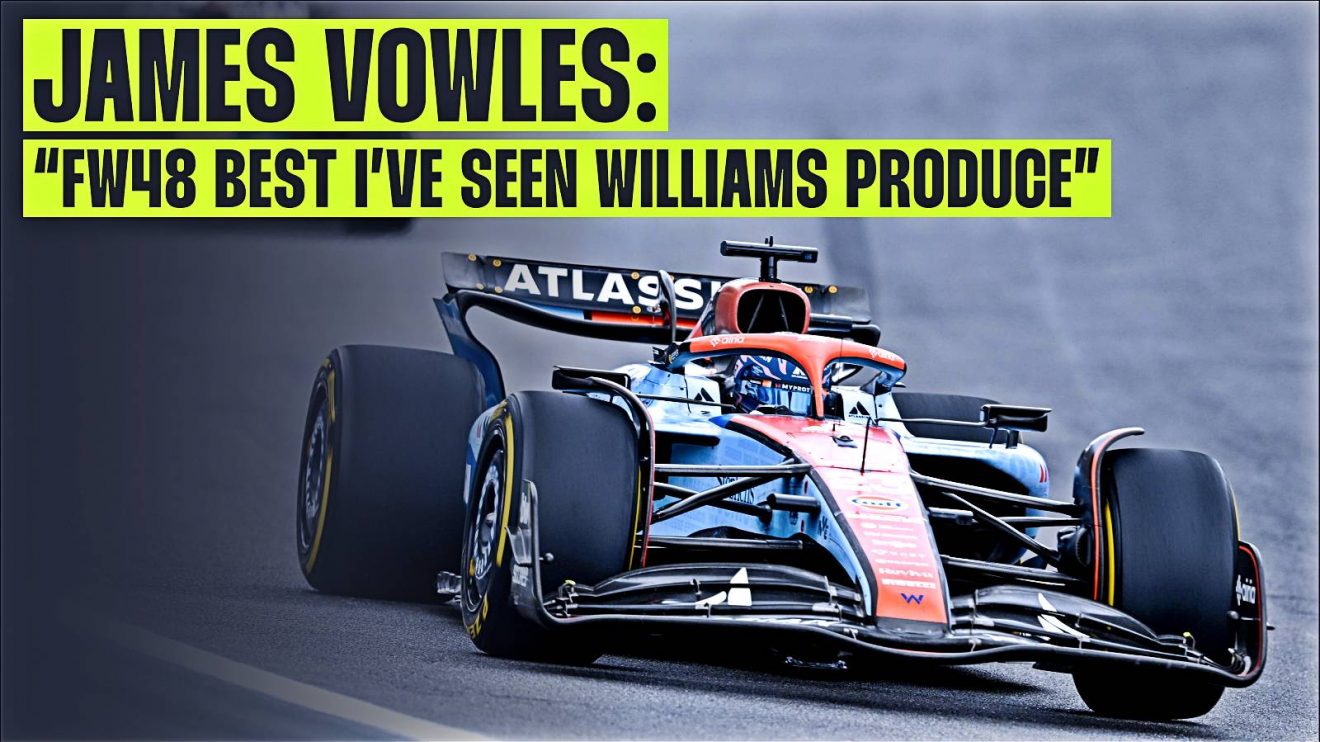
Williams' delayed FW48 is "the best" constructed car James Vowles has overseen, according to the team boss.
James Vowles has hailed the new Williams FW48 as the best-produced car he has overseen since joining the team in 2023, despite the car missing the Barcelona shakedown week.
The FW48 will begin its life on track with a filming day before heading to Bahrain for pre-season testing, where Williams will get its first real chance to gather crucial data ahead of the 2026 season.
James Vowles: Williams FW48 is the best I’ve seen us produce
Want more PlanetF1.com coverage? Add us as a preferred source on Google to your favourites list for news you can trust.
Vowles spoke to select media, including PlanetF1.com, about the decision to skip the Barcelona shakedown week in light of delays in the car production process.
With the immediate stress of getting a physical car constructed, as well as all components through the mandatory FIA crash tests, seemingly concluded, Vowles fielded questions about the possible competitiveness of the car, as the FW48 comes with high expectations.
Throughout Vowles’ tenure as team boss since taking on the role in 2023, he has spoken about building up the team’s infrastructure to focus on the 2026 regulations reset and, having led the team to fifth-place in the Constructors’ Championship, the possibility of joining the front-running teams appears a valid one.
“In terms of the car, it’s impossible to tell, and it’s really not me fobbing the question off,” he said, when asked about how good the FW48 could be.
“It’s simply that, even now, though I’m fortunate enough to see what’s going on in Barcelona, it’s impossible to tell what’s going on there, too.
“I don’t know what targets people have set.
“I think realistically, the car itself is the best I’ve seen us produce here. Those are facts I can put down.
“But that does not mean necessarily… that doesn’t indicate where it is on a timing sheet. That’s what Bahrain and beyond will tell us.”
On the delay in getting the Williams FW48 physically constructed, Vowles reiterated that, in terms of sacrificing development to focus on ’26, that research has reached fruition, but missing Barcelona came about due to pushing the limits of what was possible for manufacturing – something he believes will prove to be a minor blip overall.
“The car that we’ve built, just to put a number on it, and it doesn’t matter if I use the number of hours or the number of components, is about three times more complicated than anything we have put through our business beforehand,” he said.
“To put that in perspective, it means the amount of load going through our system is about three times what it used to be, and we started falling a little bit behind and late on parts.
“There are compromises you can make as a result of it. In addition to that, we have absolutely pushed the boundaries of what we’re doing in certain areas, and one of those is in certain corresponding tests that go with it.
“But those were only, I would say, a blip in the grand scheme of things. They are one item out of quite a few that were pushing us absolutely beyond the limit of what we can achieve in the space of time that we have available to us.
“So it’s more of an output than anything else, of pushing not just the boundaries of design, but the boundaries of just simply how many components could be pushed at the factory in a very short space of time.
“I said last year we were sacrificing 2025 for ’26… aerodynamically, we’ve done that. But if I print the car, if we print the car in February last year, it’s way too early. You leave too much performance on the table. More than that, you don’t push this business to a championship level of how late you can start offsetting everything.
“So what you’re seeing is an outcome for making sure we’re making aggressive decisions to keep as much performance in the car as possible.”
How Williams’ VTT has helped the team keep pace
In lieu of carrying out the pre-season shakedown in Barcelona, an event Vowles revealed the FW48 could have made if absolutely necessary, the team has carried out a multi-day virtual test track in order to gather simulated data using the physical components of the car.
“The VTT has been very useful, primarily on the cooling system side,” he said, when asked by PlanetF1.com how the team could expedite its learning programme with the FW48.
“We’ve got quite a different cooling system for us here than we’ve designed and used beforehand, and it allows us not just current learning to make sure we use it effectively – we also have to remember we had some reliability woes last year, and I wanted to make sure that those were all gone – but also future learning on the sizing of it and packaging of it for future states. So that’s been incredibly useful.”
While the VTT can go some way towards reducing the deficit in learning that has been created relative to nine of the other teams (Aston Martin is also yet to start its testing programme), Vowles explained that such a move would not usually be carried out at this stage of a season.
“So you’d normally run a VTT, but not for the duration and period of time we are and on the depth of programme that we are,” he said.
“We are challenging the business so, aerodynamically, the car is a lot more complex than anything we’ve put out before. In terms of design, it’s a lot more complex than anything we put out before.
“So the complexity… You do have to accept that the shapes in order to achieve them and pass the tests, and by that I mean flexibility of front wing, rear wing, and all that sort of jazz, it does take quite a bit more work in order to get there, and that’s an output of it.
“So I’m actually incredibly happy the car’s more complex, but I didn’t scale the business in the right way to achieve the output, clearly.”
Despite these factors, Vowles is confident that Williams won’t start the season on the back foot relative to the rest of the pack.
With a much more comprehensive testing programme granted to the teams at the start of the revolutionary new ruleset, Williams is still set for six days of pre-season running – double what has been the norm in recent years.
“I’m confident we won’t be behind for the following reason: we’ve still got six days of good testing in, and it’s normally dry. A dry Bahrain in representative conditions, there are still six days of testing,” he said.
“Furthermore, we’re fortunate we have the power unit provided by Mercedes, the gearbox provided by Mercedes, so the learning that they’re going through this week in Barcelona will carry over into us.
“It’s not where I want to be, resting on their hard work, but also it is worth stating that that is still an advantage to us that falls out of it to a disadvantage that’s negated.
“I’m confident that, with six days in Bahrain, we will run through the programme we need to, and it’s why I wanted the VTT.
“What I wanted to do is to make sure that, from the outset in Bahrain, we have a reliable car ready to go, so that we’re not sitting there doing what a lot of individuals and teams are trying their best to do in Barcelona, but not leave the garage. We’ve got to be there ready to go.”
More on F1 testing
McLaren MCL40 debuts with Norris running number ‘1’ as Audi stops in Barcelona
Red Bull boss Laurent Mekies delivers first RB22 verdict after ‘unfortunate’ Hadjar crash
What about the rumours about the FW48’s weight?
Ever since the rumours about Williams missing the Barcelona shakedown first emerged, a prominent rumour has been that the FW48 was struggling to pass the FIA crash tests and, on top of that, was emerging as an overweight chassis due to the changes required to pass the test.
Vowles didn’t specifically answer as to when the chassis passed the FIA test, but confirmed that it has done so – the implication being that it did so prior to the Barcelona test.
As for whether the car is starting the year overweight against the new 768kg weight limit, 30kg lighter than the 2025 cars, Vowles said it’s impossible to tell at this point in time.
“There’s no knowledge of the weight until we get to Bahrain 2, in terms of understanding where it is. That’s not avoiding the question, but you need to get all the sensor packs off to actually understand where we are,” he said.
“I think it’s a very aggressive weight target, and if we are over… anything you see out there, there is not a single person that would truly know it.
“It’s impossible to know it, because you need the car together without sensors in the right form. And that doesn’t exist today.
“If we end up being over the weight target, then from that point on, it will be an aggressive programme to get it off.
“But I think right now, anything that you’re seeing is murmurings in the media are murmurings… I’ll come out and explain to everyone at the point where we know that, but that isn’t today.
“What I’m really indicating is that the numbers we’re talking about are probably small enough that I need to see the car weighed in order for me to be able to assess where we are. So it’s not miles over to that point.”
Want to be the first to know exclusive information from the F1 paddock? Join our broadcast channel on WhatsApp to get the scoop on the latest developments from our team of accredited journalists.
You can also subscribe to the PlanetF1 YouTube channel for exclusive features, hear from our paddock journalists with stories from the heart of Formula 1 and much more!
Read Next: Williams confirms Bahrain test attendance and addresses FW48 rumours