
From Crashgate to courtroom: A deep dive into Felipe Massa’s $82 million lawsuit


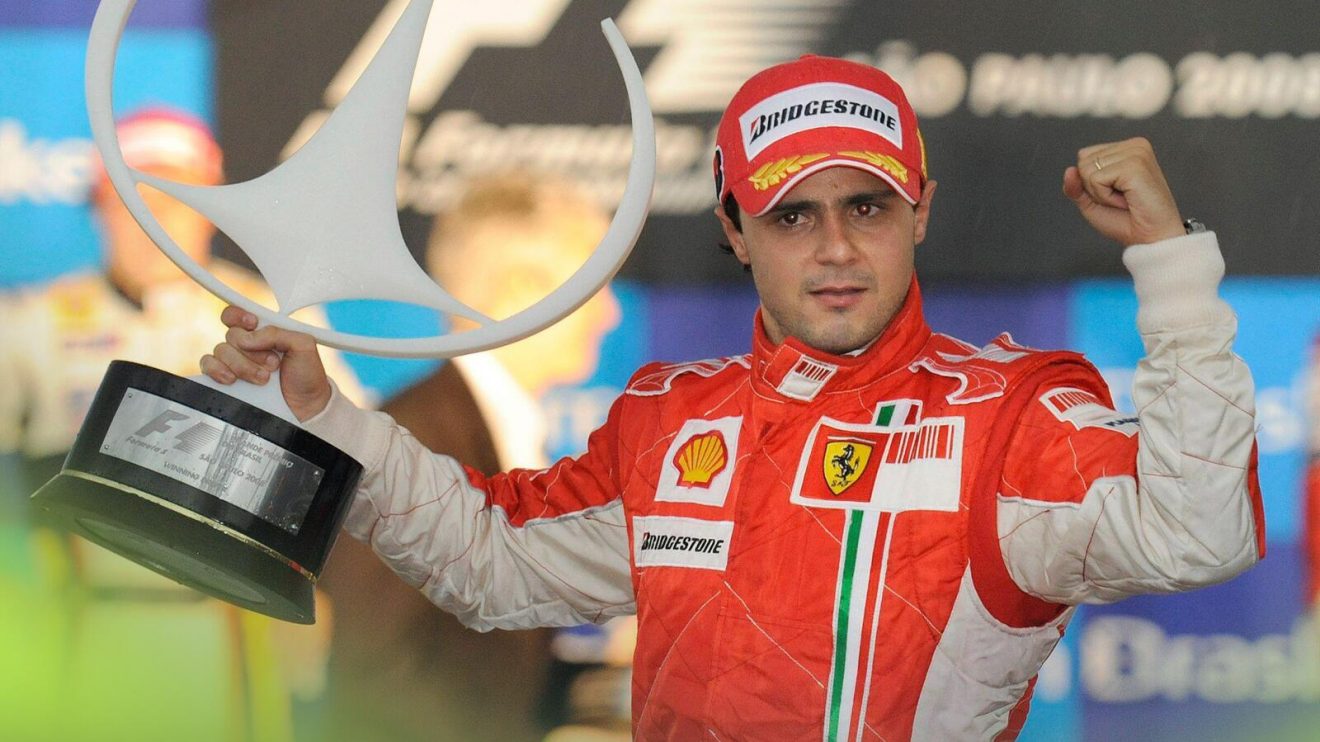
Felipe Massa is taking legal action as a result of his 2008 title loss to Lewis Hamilton.
Felipe Massa is pursuing $82 million in damages as a result of losing the 2008 Formula 1 world championship to Lewis Hamilton.
The Brazilian claims the outcome of that year’s Singapore Grand Prix, a race now known to have been interfered with, changed the outcome of the title, with Lewis Hamilton taking victory.
What is at the heart of Felipe Massa’s legal challenge?
This article was originally published on September 26 2025. It has been republished ahead of the start of Felipe Massa’s legal case against the outcome of the 2008 F1 world championship on October 28
Exactly how Massa’s legal team intends to attack the case is not known, though the Brazilian’s grievance is. He has stated that there is evidence that key figures within the sport knew that there were concerns surrounding the outcome of the Singapore GP, and as such it should have been investigated – and potentially annulled.
He believes that, by doing nothing, the likes of former FIA president Max Mosley and the sports’ commercial boss at the time, Bernie Ecclestone, were therefore involved in effectively denying him the world championship.
It comes following an interview with Ecclestone, who turns 95 next month, conducted by a German publication in which he was asked about Nelson Piquet’s infamous actions in Marina Bay.
“Max Mosley and I were informed during the 2008 season what had happened in the race in Singapore,” Ecclestone told F1 Insider in an interview published on March 1, 2023.
“Piquet Junior had told his father Nelson that he had been asked by the team to drive into the wall at a certain point in order to trigger a Safety Car phase and such to help his teammate Alonso.
“Piquet Junior was worried about his contract extension, so he was under a lot of pressure and agreed.
“We decided not to do anything for now. We wanted to protect the sport and save it from a huge scandal. That’s why I used angelic tongues to persuade my former driver Nelson Piquet to keep calm for the time being.”
Crashgate, as the sordid saga became known, was ultimately dealt with by the FIA with lifetime bans for Flavio Briatore and Pat Symonds, then team principal and technical director respectively of Renault. Those bans have since been overturned by a French court and both are back actively working in the F1 paddock.
Ecclestone’s interview was made well over a decade on from that ordeal, but gave rise to Massa exploring legal avenues.
For his part, Ecclestone doesn’t recall making the comments he did. He also adds that there was no facility for the race to be annulled, and on that he appears correct.
Governed by the FIA, Formula 1’s rules are laid out through a combination of the specific competition regulations – the F1 sporting and technical regulations – which in turn feed into the FIA’s International Sporting Code. That is a critical document as it outlines the governance processes and relevant bodies, including their authority to perform actions. There are other documents that come into play too, but all of them ultimately hang on the ISC.
At its simplest level, Formula 1 is a collection of (in 2008) 18 ‘competitions’, each of which is scored and tallied up to determine an overall champion. The driver with the most points at the FIA prize giving gala is the official winner. That is a key date, as beyond that, no changes to results can be made. Massa argues that, given there was at least some knowledge of what had happened prior to that point, something should have been done. That nothing was is now irreversible; Lewis Hamilton is and will remain the 2008 world champion. Hence Massa is seeking damages, as there is no clear alternative available to him.
However, his ability to succeed on that appears to hinge on whether he can demonstrate that there were people with sufficient knowledge of the matter, and then that the facilities existed to have been able to address it at the time. The first element appears to rely heavily on Ecclestone, and the F1 Insider interview, given Mosley died in 2021. The second point is a question of governance, which we can interrogate and potentially draw precedence from.
And there is a recent case in which a similar scenario has taken place which offers some fascinating insights into how Massa’s case may play out.
In early 2024, the FIA International Court of Appeal (ICA) published a judgement relating to an International GT Open event held at the Red Bull Ring the previous year. There, a mismanaged Safety Car impacted the outcome of the race.
Disadvantaged by the decision, Team Motopark lodged a series of protests such that the matter ultimately ended up with the ICA. However, before it reached that body, it was first handled by the Natinoal Court of Appeal within Real Federacion Espanola de Automovilismo, the Spanish motorsport authority (NCA in the FIA’s parlance) which governs the International GT Open competition. As it did so, the outcome of the race was annulled.
Crucially, according to the document produced by the ICA, “neither the Stewards nor the NCA had the power to cancel the Race.”
However, the ICA does have that authority, as laid out in the FIA’s Judicial and Disciplinary Rules, which state (in part) that “the ICA may … annul or amend the results of a competition.” In short, the FIA’s International Court of Appeals could strike the 2008 Singapore GP from the record books, or change the result. Critically, the process that leads to that point can only be triggered by a competitor, and no such protest was ever forthcoming.
The question whether the knowledge pertinent to lodging a protest existed but was not shared is a broader topic that is likely part of the foundation of Massa’s case.
Everything you need to know about Felipe Massa’s court case
? Explained: Why is Felipe Massa legally challenging Lewis Hamilton’s 2008 World title?
? Felipe Massa not in ‘a fight with Lewis Hamilton’ amid F1 2008 title court battle
But there is more, as even while empowered with the authority to “annul or amend” the Singapore GP result, there is a question over whether the ICA would ever do so. And that is a point that the Team Motopark protest also highlighted, as while the International Court of Appeal has that authority, it also highlighted the FIA International Sporting Code, and the very first Article contained within it.
“The FIA shall be the sole international sporting authority entitled to make and enforce regulations based on the fundamental principles of safety and sporting fairness, for the encouragement and control of automobile Competitions and automobile Esports competitions, and to organise FIA International Championships and FIA international Esports championships.”
The key element is sporting fairness. In the instance of the Team Motopark protest, the ICA accepted that the team was hard done by but, to correct the error, it would have impacted more teams than were originally involved – ergo, any change now would be inherently less fair than the injustice already served.
From there, one could reason that annulling the Singapore 2008 result would have a potentially significant impact on the championship – both drivers’ and teams’ – such that it would resulted in a greater injustice. Further to that, given the competition has been formally settled and prize monies awarded, doing such now would open a Pandora’s Box of issues. This is no doubt not lost on Massa’s legal team, and therefore suggests the action is in effort to gain some retribution for what he feels was a great unfairness, one that potentially cost him the world championship. It is not a grab for the 2008 title in of itself.
And even if it were, one can imagine a scenario where the court would ask Massa to demonstrate beyond a reasonable doubt that it was the Singapore Grand Prix result that cost him the title. The race, after all, was one of 18 that season and worth no more than the others. While elements out of his control impacted his result in Marina Bay, the same might be argued for reliability failures he experienced at other points of the season. Proving that it was specifically the result of the Singapore GP that cost him the title seems another key pillar of Massa’s legal case.
There is no doubt that the 2008 Singapore Grand Prix is a black mark on the world championship’s history; the only known instance where a team has conspired to ‘fix’ a race. Ecclestone’s point that there is nothing the FIA could have done appears valid, but that does not dismiss Massa’s arguments entirely, and even points to a weakness in the FIA’s governance that there appears to be no such ‘break glass’ process for extraordinary events.
And that aside, exactly what did Ecclestone and Mosley know, and what obligations (legal or moral) did they have at the time to do something with that information? That seems to be at the crux of Massa’s $82 million lawsuit.
Read next: Laura Villars unveils FIA presidential plan: ‘Zero Death by 2035’, carbon neutrality and more