

Push for F1 two-stop rule change as controversial new plan revealed


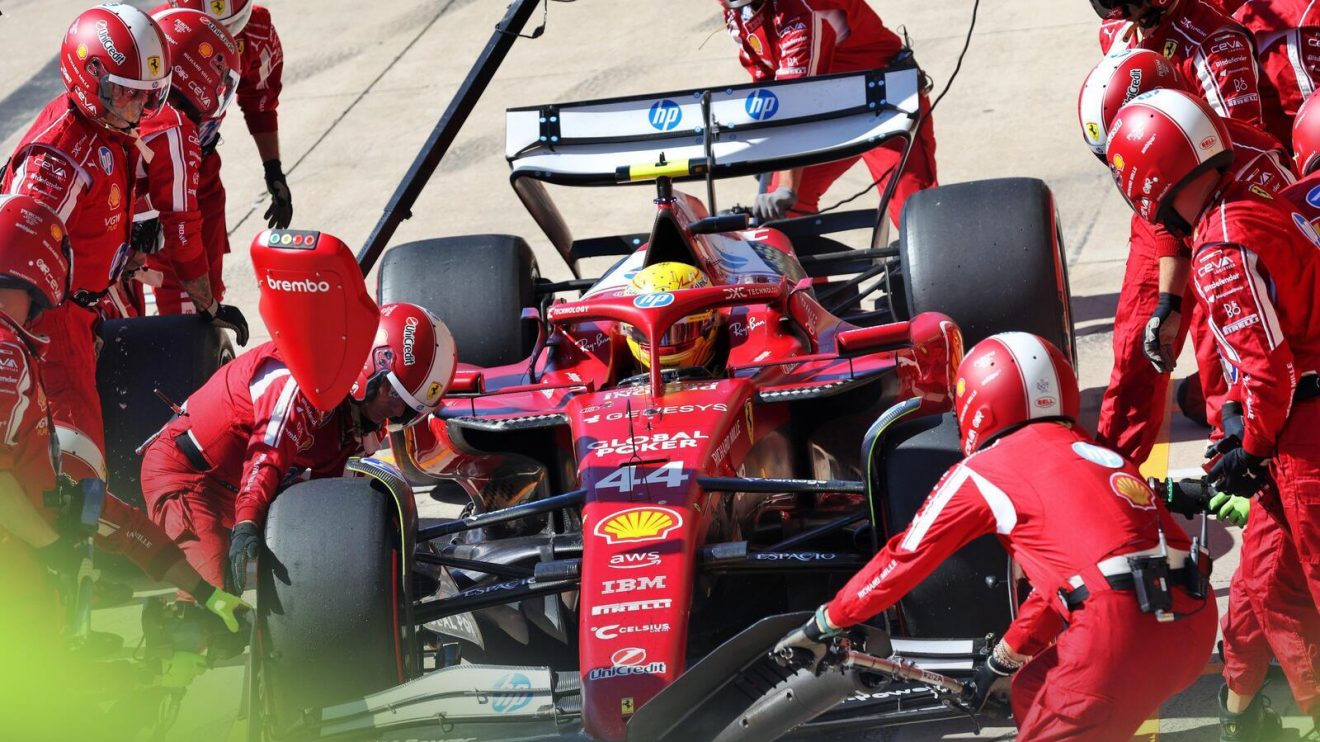
There are moves to introduce mandatory two-stop rules into F1 for 2026.
Formula 1 is poised to discuss the prospect of introducing mandatory two-stop races as soon as F1 2026.
It has been confirmed to PlanetF1.com that the concept is set to be tabled to the F1 Commission as a means of spicing up the track action.
F1 Commission set to discuss mandatory two-stop rule
The concept of introducing mandatory pit stops is not new, but has come to the fore on the back of races won using a one-stop strategy.
Already, drivers are effectively compelled to pit at least once during a grand prix, given the obligation to use two compounds of tyre in a dry race.
The exception was this year’s Monaco Grand Prix, where a mandatory two-stop strategy was introduced, leading to some undesired outcomes.
Fundamentally, it is that concept that the sport’s commercial rights holder is interested in encouraging.
By introducing a mandatory second stop, the intent is to create a degree of strategic jeopardy while doing away with the need for drivers to manage their tyres during races.
Speaking in the wake of the Monaco Grand Prix, which saw Racing Bulls and Williams slow one of their cars to back up the field ahead of their scheduled stops, teams expressed their concerns over the regulations.
Indeed, at the time the concept would not have passed an F1 Commission vote, such as the lack of support it needed.
For the two-stop rule to be expanded beyond Monaco, it first needs to be put to the F1 Commission.
Under the regulations as they stand, any change to the pit stop rules now would require a supermajority vote by the F1 Commission.
The F1 Commission is made up of the 10 teams, each of whom have a single vote, the FIA (10 votes), and Formula One Management (also 10 votes).
Ordinarily, a proposal must reach a 25-vote threshold to pass unless that comes after April 30 of the preceding year, in which case 28 votes – a supermajority – are needed.
However, a wildcard is that the governance process for next season is somewhat unclear given there is no Governance Concorde currently in place beyond the end of the current season.
Work remains ongoing to resolve that, and for the most part, F1 is carrying on, working to the processes as they are currently in place.
That sees concepts tabled at the F1 Commission and, if voted through, passed on to the World Motorsport Council to be formally parsed into the regulations.
More controversial F1 rules
? Who owns F1? All you need to know about Liberty Media and how F1 has changed since
? Concorde Agreement explained: Who signs it, what it means and why it’s vital for F1
But, that could also change.
The World Championship is owned by the FIA, which is charged with regulating it.
Liberty Media owns its commercial rights and therefore has a vested interest in the regulations but does not have carte blanche to decide how the sport is run.
The relationship between the FIA and the Liberty-owned Formula One Management is laid out both in the 100-year commercial agreement, first signed in 2010 and renegotiated in 2019, and the Concorde Agreement.
Charged with maximising the commercial value of the sport, FOM is invested in ramping up the spectacle to broaden the interest and appeal of the world championship.
And while fundamentally the FIA is also predisposed to see Formula 1 grow, it is also far more conservative and traditional.
The teams tend to find themselves somewhere in the middle, looking for growth while preserving the sport’s history.
It’s into that melting pot that the two-stop rule concept looks set to be thrown.
Read next: Does McLaren actually want to win the drivers’ title?