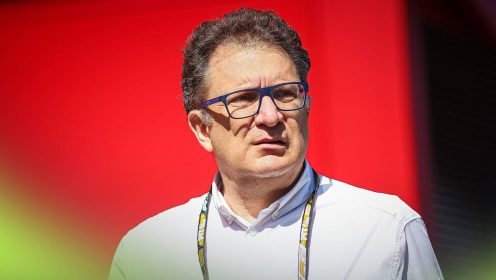

Nikolas Tombazis: FIA will review F1 energy management concerns after Chinese Grand Prix


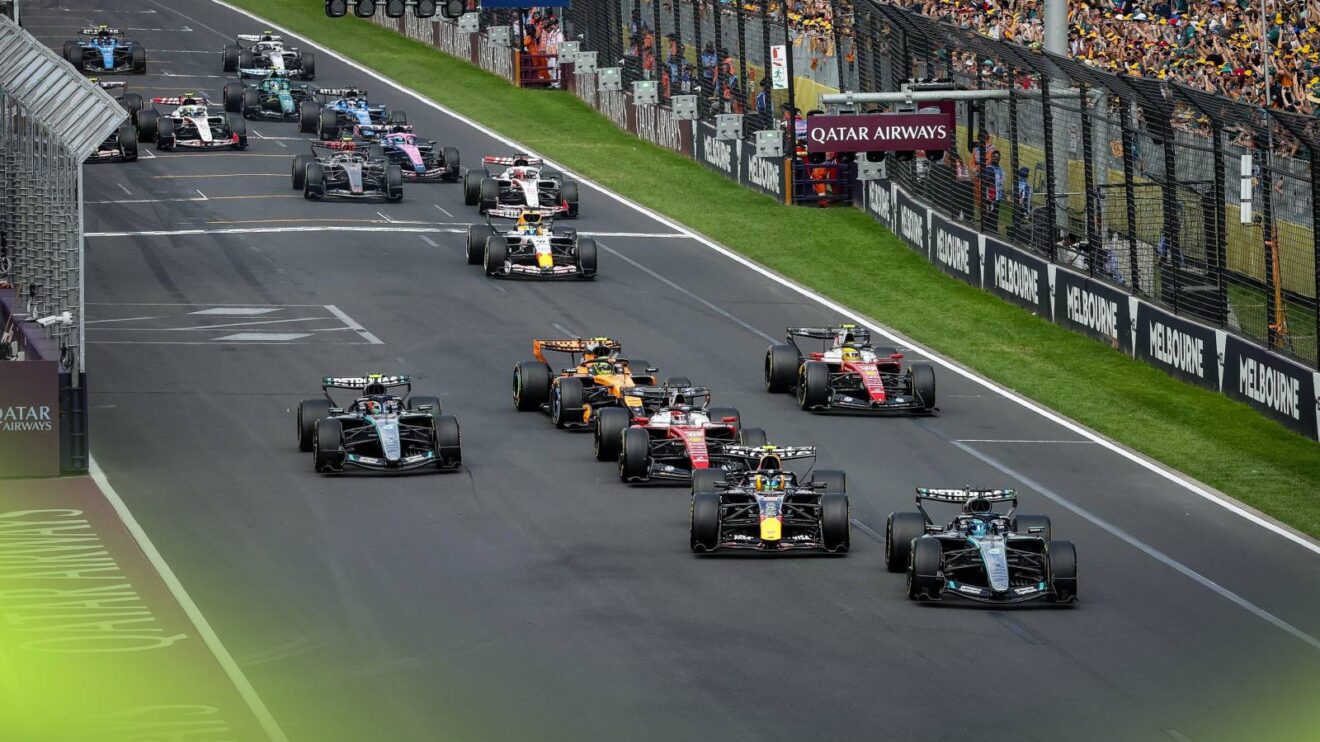
The FIA is set to explore ways to improve the energy management requirements for F1 2026 following the Chinese Grand Prix.
The FIA’s Nikolas Tombazis has said the F1 energy management situation is set to be reviewed with the teams after the next race of the season.
The Australian Grand Prix illustrated the realities of the delicacy required for maximum energy efficiency to translate into lap time, and tweaks to the systems could be made following the Chinese Grand Prix.
Nikolas Tombazis confirms FIA review of Formula 1 energy management rules after China
Want more PlanetF1.com coverage? Add us as a preferred source on Google to your favourites list for news you can trust.
The Australian Grand Prix marked the first race for the all-new regulations on the chassis and power unit front, with the drivers coming forward to express their misgivings with the dynamics required to get the best of the power units.
While ultimate laptimes remain comparable to last year, with the chassis and aerodynamic regulations proving successful as they are just a few seconds off despite being at the start of a new regulation cycle, the techniques required to unlock the power unit’s potential have been met with dismay by most of the drivers.
Due to the difficulties in recharging the battery and topping up the energy, the drivers are seeing their top speeds bleed away going down the straights as the batteries exhaust.
‘Super clipping’ is where the batteries siphon energy away from the internal combustion engine, rather than the power being delivered directly to the rear wheels, resulting in the decaying of velocity. This occurs without the driver’s involvement, with engine mapping starting the harvest while the driver is still on full throttle.
This led to usually high-speed sections, such as Turn 9 and 10 in Melbourne, becoming far less spectacular as the drivers approached at lower top speeds than usual.
Added to that, the racing techniques no longer reward late braking, with drivers earlier on the brakes recouping more energy for the following straight.
While the Australian Grand Prix delivered a reported 120 overtakes, a significant increase from 2025, many of these passes came about as drivers cycled through phases of energy.
For example, during the battle for the lead between George Russell and Charles Leclerc, each was able to power past their rival through the use of the boost button while the other had lower energy levels, or was in harvesting mode.
This led several drivers, including Leclerc, to point out the artificiality of the racing, but changes could be made in the coming weeks in an attempt to improve matters.
However, with the power units homologated, little can be done about their peak potential. Instead, a potential solution could be in a reduction of the peak energy output, meaning less peak electrical energy pushed to the rear wheels upon corner exit, but lasting for longer down the straights.
Another solution could be an increase in the rate of ‘super clipping’ harvesting, which is currently set at 250kW, with a potential idea being to increase this rate to 350kW, giving the drivers more energy with the trade-off being less power going to the rear wheels during super clip.
McLaren trialled this during the final day of pre-season testing in Bahrain, although Oscar Piastri remains unconvinced that it offers much by way of a solution, given that a “super clip at 350 is the same as a lift”.
“The only difference is that one of them, you’re actually off throttle and in control of it and, the other one, you’re at full throttle. I’m not sure it’s any more optimal,” he said.
“I think everyone can see the state of things. I think it will probably improve a bit. But, there are clearly some fundamental things that won’t be very easy to fix. I don’t really know what we can do.”
Speaking to the media on Friday in Melbourne, the FIA’s single-seater director Nikolas Tombazis revealed that there have been discussions with the teams about how best to resolve the current energy issues, but a consensus has been reached on not making any knee-jerk reactions.
“We didn’t believe it was realistic to make changes for energy management here,” Tombazis told the media, including PlanetF1.com.
“We had a meeting with the teams about 10 days ago, after the Bahrain testing, to review the matter.
“The team’s unanimous position was that we should stick to the current arrangements for the first few races and to review the matter when we have a bit more data.
“Our intention is after China to be reviewing the energy management situation.
“We have a few aces up our sleeves on that, which we didn’t want to introduce ahead of the first race as a knee-jerk reaction, and which we will review with the teams after China.”
The Chinese Grand Prix takes place on March 15th, with a two-week gap before the Japanese Grand Prix. Following that round at Suzuka, F1 is likely heading into a few weeks of downtime, should the Bahrain and Saudi Arabian Grands Prix be cancelled, offering more time for any potential changes to be introduced.
More on the Australian Grand Prix
Lewis Hamilton ‘disappointed’ in FIA if Mercedes compression ratio behind Melbourne speed
Ferrari telemetry data explains secrets behind epic Australian GP start
World Champions hit out at ‘artificial’ racing
Certainly, it would appear changes are needed if F1 is to create fans of the new regulations amongst the drivers, few of whom have been positive.
Having labelled the new rules as creating the “worst cars ever” when he spoke to the media over the weekend, reigning World Champion Lando Norris’ mood hadn’t picked up after finishing fifth on Sunday.
Speaking about the opening laps, in which most of the action unfolded as drivers figured out the best approach to deploying their available energy, Norris said the differences in speed between cars is going to create dangerous situations.
“[It’s] way too much. It’s chaos,” he said.
“There’s gonna be a big accident, which is a shame that you’re kind of driving, and we’re the ones just waiting for something to happen and something to go quite horribly wrong, and that’s not a nice position to be in.
“There’s nothing we can really do about that now. So, yeah, it’s a shame. It’s very artificial, depending on just what the power unit decides to do and randomly does at times.
“You just get overtaken by five cars, and you can do nothing about it sometimes.”
As for Max Verstappen, the first driver to come forward and forthrightly express his views during testing, the Dutch driver’s stance remains staunchly against the direction Formula 1 has taken.
Explaining that he’s “not having fun” with the new regulations, the Dutch driver explained the motivation for his criticism isn’t just to be a contrary voice, but out of love for his sport.
“I think it’s better for the sport, because I do care about it. I do love racing, and I want it to be better than this, right?” he said.
“So let’s see what we can do. I hope that, even during this year, maybe we can come up with some different solutions so it becomes more enjoyable.
“I love racing, but you can only take so much, right? It’s not like little tweaks for sure.
“I mean, I think they’re willing to listen, the FIA and F1, but I just hope that there is some action because I’m not the only one saying it.
“Whether it’s drivers, fans, we just want the best for the sport. It’s not that we are critical, just to be critical.
“We are critical for a reason. We want it to be Formula 1 proper, F1 on steroids. Today, that was not the case.”
Want to be the first to know exclusive information from the F1 paddock? Join our broadcast channel on WhatsApp to get the scoop on the latest developments from our team of accredited journalists.
You can also subscribe to the PlanetF1 YouTube channel for exclusive features, hear from our paddock journalists with stories from the heart of Formula 1 and much more!
Read Next: Lewis Hamilton ‘disappointed’ in FIA if Mercedes compression ratio struck in Melbourne