

Horner replacement reignites Red Bull concerns within F1 paddock


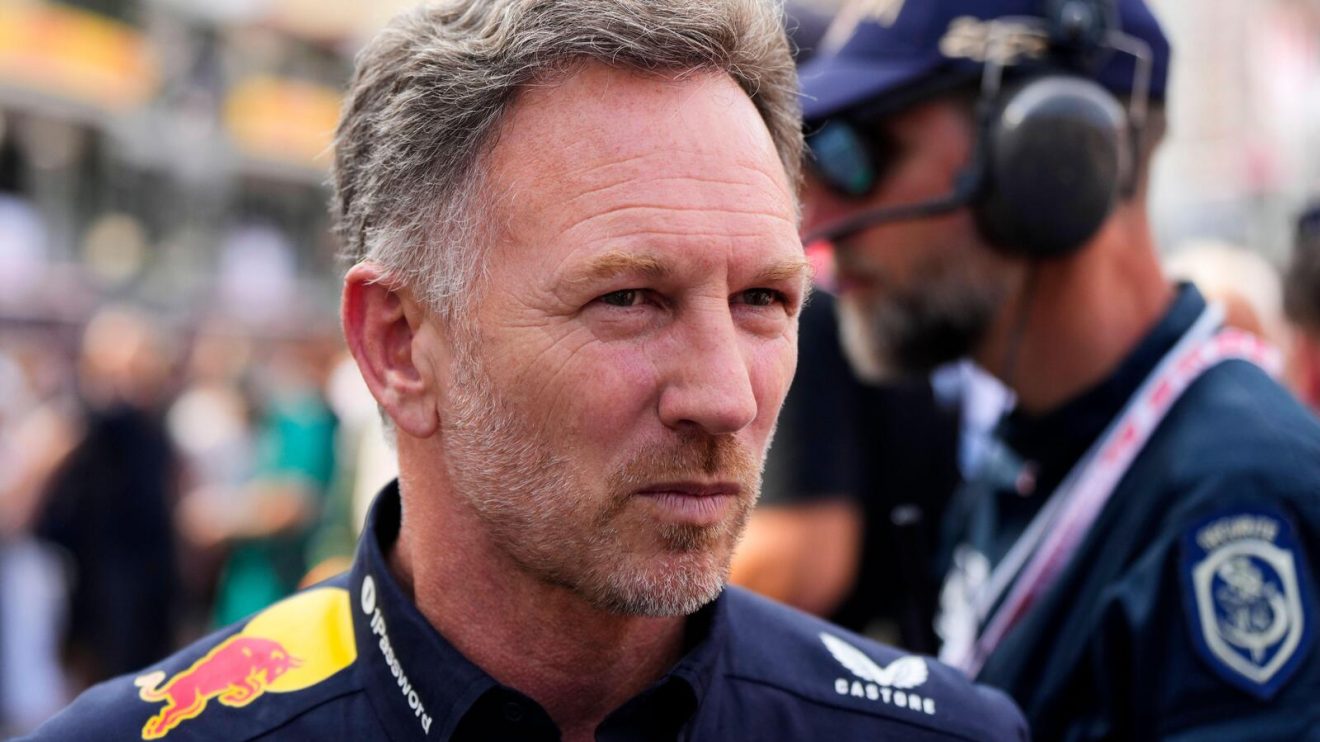
Christian Horner's immediate replacement at Red Bull Racing has raised concerns.
The appointment of Laurent Mekies as Christian Horner’s replacement as CEO of Red Bull Racing has reignited concerns surrounding the relationship between the two Red Bull-owned teams.
Mekies has joined Red Bull Racing from Racing Bulls, where he was team principal, stepping in after Horner’s services were deemed no longer required with immediate effect.
How Laurent Mekies’ Red Bull Racing appointment has reopened old F1 wounds
Mekies had led Racing Bulls since the start of last season, when he took on the role formerly filled by Franz Tost.
The Faenza-based operation is the continuation of Minardi, the much-loved minnow Red Bull saved from extinction the better part of two decades ago.
It has not just survived under the drinks company’s ownership but thrived, winning races and regularly scoring points – concepts that were pipe dreams for the organisation under Paul Stoddart’s ownership in the early 2000s.
But it has also raised a thorny question surrounding common ownership and the appropriateness of the relationship between the two organisations.
Concerns have existed in the paddock for some time, and came to a head last year following the movement of staff between Red Bull Racing and Racing Bulls.
Typically, an individual changing employer within the F1 paddock undergoes a period of gardening leave.
It’s a means of protecting a team’s intellectual property as, while the transfer of data between teams is outlawed by the regulations, there is no means of policing an individual’s knowledge or expertise.
Gardening leave is therefore employed as a means of devaluing any information the individual might have retained, given the time-sensitive nature of much of what happens in F1.
Following his departure from Alpine, Otmar Szafnauer was sidelined for a year. Alan Permane, who was sporting director at the Enstone squad (and, ironically, is Racing Bulls’s new team principal), was also sidelined for the better part of six months.
When Adrian Newey elected to leave Red Bull and join Aston Martin, he was forced to sit out for a time before taking up his new position with the Silverstone squad.
It’s also expected that Christian Horner will be forced to serve a gardening leave period of some sorts.
The 51-year-old had a contract through until 2030 and one can easily imagine a 12-month non-compete period as a minimum.
And yet, through the luxury of owning two teams, Red Bull Racing has been able to slot in a new CEO without delay. There is no other team on the grid that could confidently expect the instant start of a new hire.
There have been exceptions in the past but, by and large, teams want to both protect their expertise and disrupt their rival’s plans by mandating time away from the coal face for departing staff – especially senior figures.
It therefore grates that Mekies has been able to move across so quickly and freely, drawing again into question the legitimacy of the relationship between Red Bull Racing and Racing Bulls.
More on Christian Horner’s Red Bull departure
? Max Verstappen reacts after Christian Horner sacked by Red Bull
? Why has Christian Horner been sacked by Red Bull?
McLaren’s Zak Brown has been especially vocal on the concept of A-B team relationships, going so far as to suggest that the current regulations are not fit for purpose.
“The rules are not fit for purpose, just for today’s Formula 1,” Brown told this writer in early 2024.
“Red Bull has done wonderful things for the sport… I’d also say the sport has done wonderful things for Red Bull because I remember when Red Bull came into the sport with Sauber and was like ‘what’s Red Bull?’
“So I think their relationship with Formula 1 has been mutually beneficial.
“This has nothing to do with the Red Bull brand or their commitment to the sport. This is just where we are today.”
While for the most part, arguments regarding A-B teams have centred on potential performance impacts, there are broader, less tangible implications too.
By moving Mekies from Racing Bulls to Red Bull Racing, the organisation has not undergone the same costs as would be expected in a traditional recruitment process – a small but useful bonus in a cost cap era.
With an immediate appointment, any downturn in productivity has also been minimised, ensuring the organisation remains more efficient than it might otherwise have been. Another small gain.
In a sport as hyper competitive as F1, any small advantage is worth taking. Hence, while there is no smoking gun per se, it highlights deeply seeded concerns regarding the relationship between the two Red Bull-owned teams – a relationship that has only deepened in recent months following the opening of a new Racing Bulls facility near Red Bull Racing’s Milton Keynes campus.
Red Bull is not alone in being party to an A-B relationship, most teams on the grid are to some extent, but it is the most obvious and, arguably, most brazen.
To be clear, the concern here does not centre on Laurent Mekies or his appointment to Red Bull Racing, more the fact that his employer had the ability to so readily make such a high-profile appointment.
Read next: Christian Horner releases official statement after Red Bull sack


