
Carlos Sainz urges FIA to stay open-minded over F1 2026 energy rules


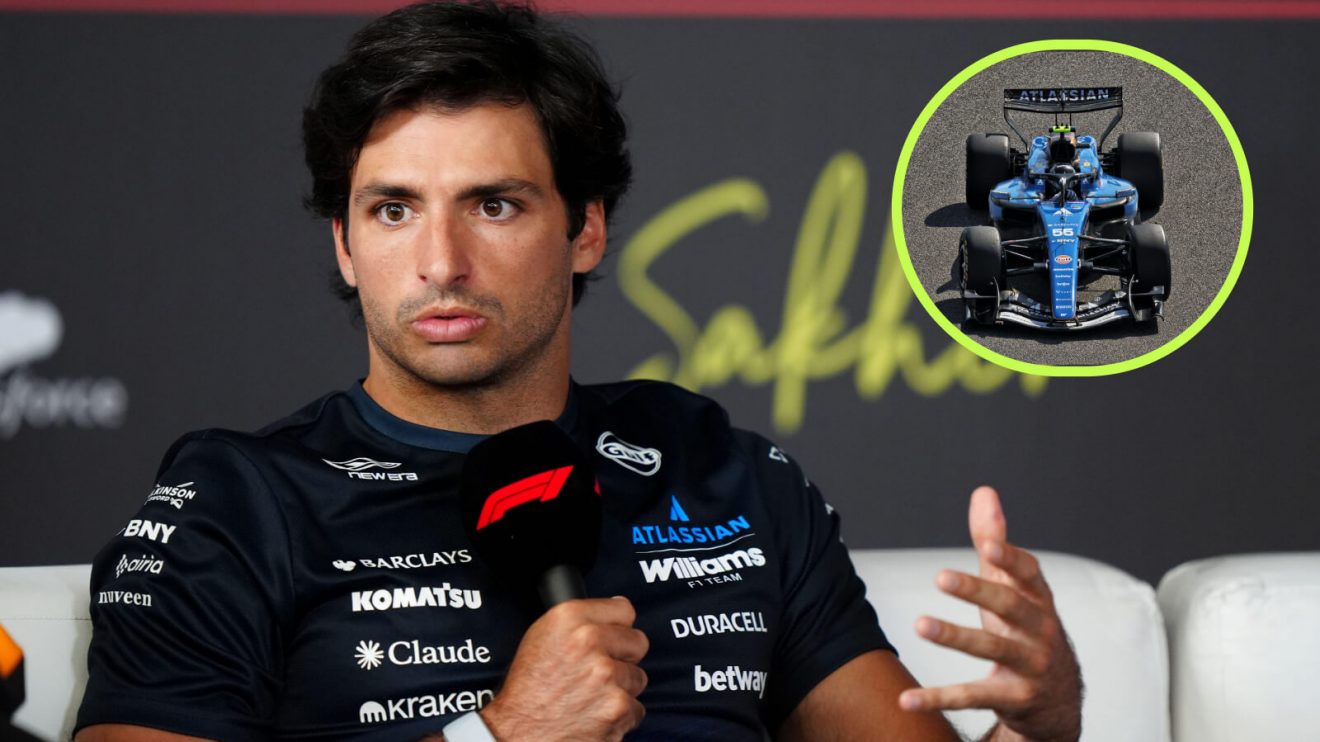
Carlos Sainz explaining F1 2026
Carlos Sainz has urged the FIA to be “open-minded” about Formula 1’s energy management as he warns changes may need to be made throughout the season depending on the track.
Adopting new chassis regulations as well as engine formula for the F1 2026 season, it’s the latter that is creating headlines.
Carlos Sainz calls for flexibility on Formula 1 2026 energy management rules
Want more PlanetF1.com coverage? Add us as a preferred source on Google to your favourites list for news you can trust
Even before the first race of the season, the FIA has found itself dealing with a compression ratio saga and safety concerns about the race starts. Both are engine-related.
The compression ratio issue, with Mercedes said to have found a way to run its engine in at 18:1 instead of the mandate 16:1 in “ambient conditions” will be decided by an e-vote that could see a change in how that’s measured come 1 August. For the race starts, motorsport’s governing body has introduced an extra blue light warning for the drivers ahead of the start process.
Those, however, may not be the only engine-related issues that the FIA has to deal with this season.
This year’s new engines run on a 50/50 split between electrical and combustion power, meaning the drivers have to decide when and where to harvest power for the battery, whether it is through a corner or at the end of a straight.
Adding to that complication is boost and overtake mode, both modes giving the drivers a power boost to either pull clear of a rival or close the gap on the car ahead.
Never before has energy management had such a big influence on Formula 1 racing.
More from F1 testing
Charles Leclerc says 2026 power unit rules create perfect smokescreen
Norris performs U-turn on F1 2026 cars to support Verstappen comments
So much so, Sainz believes the FIA and FOM may need to get involved at the more power-hungry circuits.
“I think Melbourne is going to be more challenging [than Bahrain], for sure, but I cannot tell you how much, because I haven’t run the calibrations in the simulator of what we’re going to find ourselves in Melbourne with,” Sainz told PlanetF1.com and other media outlets with regards to energy management.
“I think in general, my message to FOM and FIA is, I think the start of the year, we need to stay a bit open-minded in case the regulations that we’ve come up with are maybe a bit exaggerated on the amount of harvesting or deployment that we have to do through a lap.
“That might make some circuits okay, like potentially here, even though I still think here is not fully okay with what we’re seeing so far.
“But tracks like Melbourne or potentially Jeddah, tracks that might be more energy demanding, I think we might need to adjust a bit the regulations.
“And fair play is not easy, because it’s such a big change that I don’t think anyone knew how to predict how much downforce, drag the car was going to have.
“But so far, I would say I would only ask to stay open in case we need to fine-tune or adjust to make the category and make the show better. That’s my only message. I think we should stay flexible rather than committed to a certain level of energy management.”
Sainz, though, will have to wait until the end of the season before any changes could be made, as it would need to go before the F1 Commission for a vote, and then it would have to be ratified by the World Motor Sport Council.
The engines will also be homologated on March 1, which means no changes can be made after that until the end of the season.
Sainz completed his final morning in the FW48 on Friday, covering 66 laps with a best time of 1:35.252. That put him 1.5s down on pace-setter Charles Leclerc ahead of a season in which the Williams teammate fear there could be huge gaps on the grid.
“As things go,” the former Ferrari driver said of his team’s three days in Bahrain, “I think what we needed over the last few days was to recover the time lost in Barcelona by adding a lot of mileage to the car.
“I think we’ve managed to do that well, the car is running reliably from the beginning.
“That’s allowing us, obviously, to find out the limitations and the areas where we have to improve, which, unfortunately, there are quite a few.
“But the main thing last week was mileage, and then this week, we were finally starting to try and find a bit of lap time and performance out of it, and try to put it in a better setup window.”
He admitted the car was tricky to drive but that he feels the team is moving in the right direction.
“Certainly,” he said of the car. “What it means is being a bit behind schedule, missing testing, you probably cannot find the first thing where to put the car, and then you’re a bit of a step behind in terms of setup understanding.
“Last week, the conditions were really tricky for everyone. I think it was really, really windy every day. This week, suddenly the wind has come down, and I think it’s much more normal conditions, and the cars, I think for everyone, are a lot more predictable, a lot better to drive.
“But we’ve also done some setup adjustments to adapt the car setup a bit more to these regulations and it seems like it’s going in the right direction.”
Want to be the first to know exclusive information from the F1 paddock? Join our broadcast channel on WhatsApp to get the scoop on the latest developments from our team of accredited journalists.
You can also subscribe to the PlanetF1 YouTube channel for exclusive features, hear from our paddock journalists with stories from the heart of Formula 1 and much more!
Read next: Stefano Domenicali confident F1 2026 criticism is premature