
Adrian Newey shares ideal F1 vision after weighing sporting ‘conundrums’


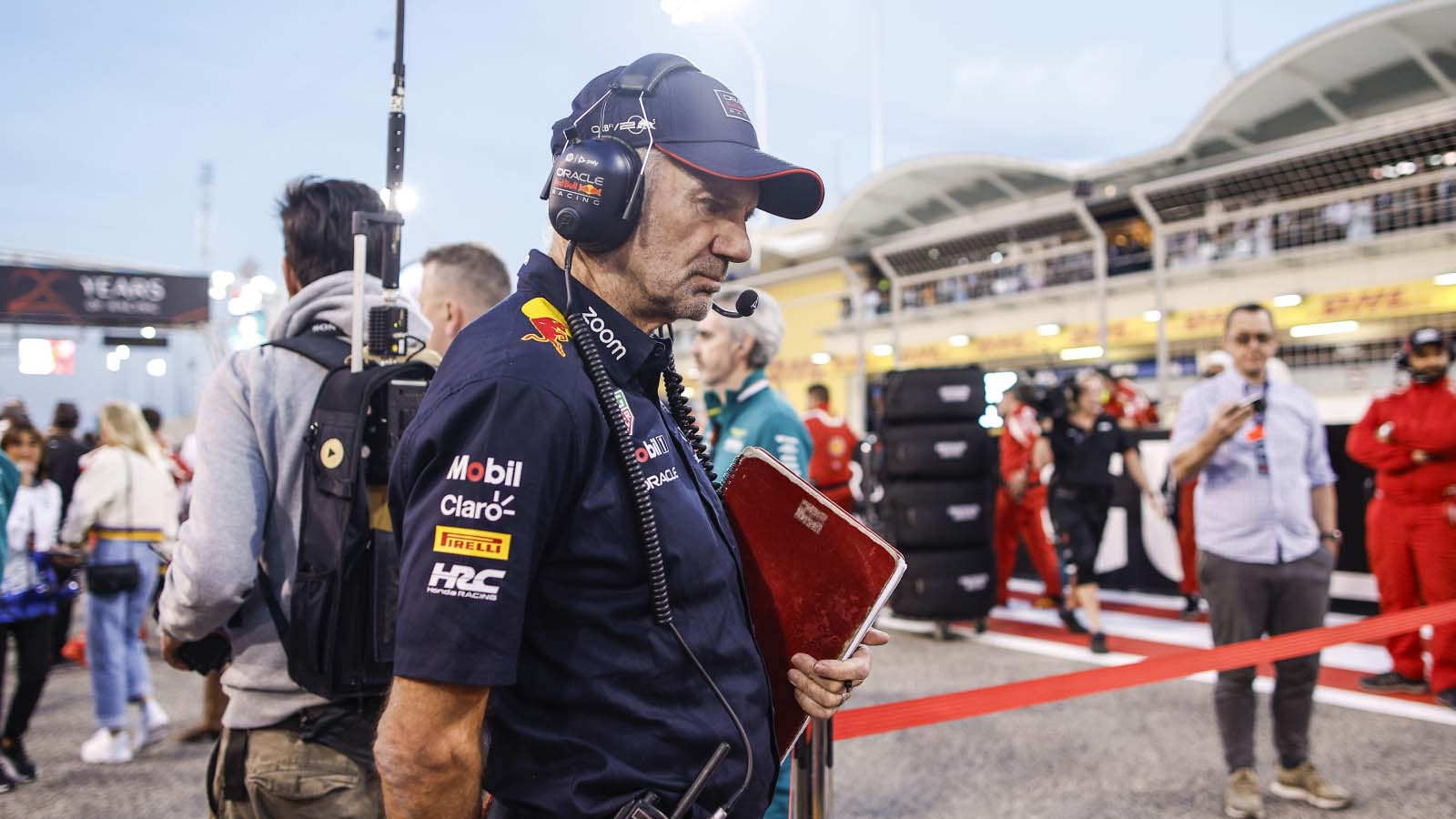
Adrian Newey and his team have built another race winner in the Red Bull RB20.
Adrian Newey has given a pragmatic view on his ideal version of Formula 1, balancing “spectacle versus social responsibility” moving forward.
That said, he would still fundamentally like to see the cars be “properly quick”, loaded with as much performance as possible, while being smaller and lighter than they are now.
Adrian Newey shares ideal vision of F1: Hopes for ‘small and light’ chassis in future
The cars of 2026 are going to be changing significantly from their current form, with the new power units focussing heavily on energy regeneration as Ford get set to partner with Red Bull, and Audi are gearing up to join the grid as F1 pushes towards a more sustainable route.
Newey admitted the 2026 engine regulations as they stand are currently a “strange formula”, given the potential requirements to run at high revs around slow corners to generate energy, but it may be something the sport has to become accustomed to in time.
Given the direction of travel, Red Bull’s chief technology officer explained that, for all the wishes to return to the days of loud, high-revving engines of years gone by, they are fuel inefficient.
But elsewhere, he hopes to see the cars be smaller and lighter than they are now, adding it is a “shame” to have seen the cars become bulkier and heavier over the years.
“It’s where all the conundrums come in,” Newey told Motorsport.com.
“I think most people would say, from a spectacle point of view, you probably want a high-revving V10, normally aspirated. We all kind of pine after the V10s and even the V8s of the 2000s.
“But of course, they are not fuel efficient. So, then you have to have the balance of spectacle versus social responsibility, even though the fuel consumption of the cars in terms of the pollution that is caused by the sport is, in reality, tiny.
“The biggest contributor by far has to be people attending the races. And in that sense, it’s no different to football or any other international sport. But it’s the image and the popularisation. So, I think that’s your first conundrum: the power source. Do you go for efficiency, which is typically relatively quiet, because noise is actually inefficiency?
“And then on the chassis side, to me it’s small and light. The cars have got very big. Those are the fundamentals.
“You can then start to debate how quick the car should be, in terms of lap time in high-speed performance, but the thing you have to remember is television invariably has the appearance of slowing cars down.
“Watching a moderate-performance car is not very exciting. Cars need to be properly quick to even begin to come across as looking quick on TV.
PlanetF1.com recommends
F1 2026: Confirmed teams and power unit suppliers for F1’s huge regulation changes
F1 jargon decoded: Breaking down what key Formula 1 words mean
“On the aero side of it, the racing certainly in 2022 especially, the cars were following very closely, and even now they still follow closely.
“But the cars have perhaps got really big. They are fast and they are heavy, and I think that’s a bit of a shame. Because one thing you can say over the years is that whatever F1 cars represent, tends to be popularised in the showroom.
“Certainly there’s a lot of talk at the moment, quite rightly, about ecology and how to reduce the effects on the planet of automotive. What tends to go with that is mainly an obsession with reducing emissions perhaps through battery or hydrogen, not using fossil fuel.
“But the much bigger thing to me is actually the amount of energy the car uses. Because that’s the key thing: if it’s using huge amounts of energy, it doesn’t matter where the source is coming from, that energy has to come from somewhere, even if it’s coming from a wind turbine, that’s by no means zero carbon emissions.
“So, the chance for F1 to go the opposite route, and go to much smaller, lighter, more aerodynamically efficient cars, I think that is the one that I would certainly advocate.
“Maybe that would then start to turn the tide away from these three-ton monsters that are wrecking our roads and collapsing potholes.”
Read next: Chinese GP track guide: Refresh your memory of a lap of Shanghai five years on from last visit