

What the Las Vegas Grand Prix got right that so many American street races got wrong


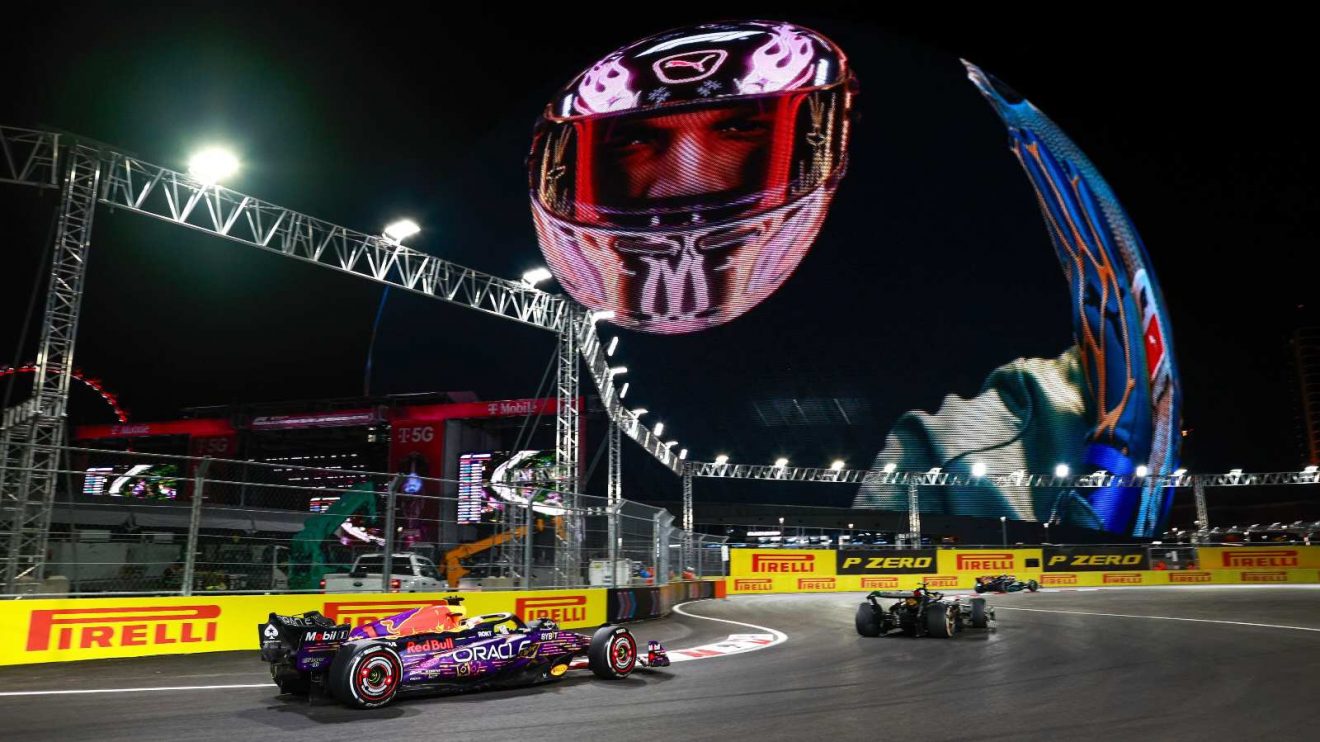
Max Verstappen of Red Bull Racing at the 2023 Las Vegas Grand Prix.
Formula 1’s history in the United States is punctuated by a near endless series of failed street races: Detroit, Dallas, Phoenix. Still, the Las Vegas Grand Prix seems to have flipped those expectations on its head, with the event finding success where others have failed. But how?
From F1’s organizational role in the event to the fact that Vegas is actually a city worth visiting at least once, the Las Vegas Grand Prix has found its footing.
The Las Vegas Grand Prix is organized by Formula 1
Throughout its long history, Formula 1 races have been organized locally. Promoters for either the track or the event itself were in charge of ensuring the infrastructure was prepared to handle the influx of high-speed cars and their dedicated fans; all F1 has had to do is turn up on the agreed date.
While that structure worked well in Europe, where F1 was born, it never quite clicked in America. F1 itself has long seemed unsure of how to approach an American audience, while American promoters have long misunderstood how to work with F1. That disconnect has resulted in disagreements about everything from sanctioning fees to track surfaces, with the result being that the events have often been unsuccessful and short lived.
But with Las Vegas, F1 tried something new. It chose to organize and promote the event itself.
We can likely credit much of the event’s basic success to that decision. F1 is an international powerhouse with the ability to more effectively and directly negotiate with local governments when compared to working through an intermediary organization. F1 knows what it needs and wants from a host venue, and it has the power to remain firm in its requests.
Most former American street race failures have come down to that misunderstanding between promoter, host city, and Formula 1.
US Grand Prix West organizer Chris Pook grew frustrated with never-ending financial negotiations with Formula 1, deciding to transform the race in Long Beach into an American open-wheel event. The city of Detroit had no interest in building permanent pit facilities for Formula 1. Bernie Ecclestone claimed that he canceled the Phoenix Grand Prix because of the organizers’ “inability to put more than 20,000 seats in a position where people could see [more than] a small part of the race.” The consortium of Dallas GP could hardly agree with one another, let alone with Formula 1, FISA, or FOCA.
With Las Vegas, the number of parties involved in negotiations is limited to the only folks who need to have a say — and it has streamlined negotiations immensely.
The LVGP track layout hits the big landmarks
Formula 1’s street circuits in America have long bypassed big landmarks or tourist destinations, which makes it challenging to create stunning visuals and contributes to a somewhat underwhelming experience.
Consider the Miami Grand Prix, for example. Though the track bills itself as a Miami institution, the layout itself is located quite far away from the glitzy, oceanside high-rises that many associate with Miami proper. The Caesars Palace Grand Prix was confined to a parking lot, while Dallas was wedged into a park.
Those kinds of circuits may be adjacent to the city, but they don’t actually pass through any of the big landmarks we associate with those host cities. The Las Vegas event, though, carves directly through the Strip — the city’s most notable landmark. It draws in the Sphere, which may be more of a new addition to Vegas but is still one of its most eye-catching features.
It enables fans to actually experience the city they’re in.
Dig deeper into the Las Vegas Grand Prix:
? Lando Norris needs to win in Las Vegas – but not for the World Championship
? How the 2024 Las Vegas Grand Prix promises to set the gold standard for F1 races
The city of Las Vegas embraces F1
Las Vegas and Formula 1 obviously have strong ties, considering how much investment the city has made in the infrastructure necessary to host a Grand Prix — but Vegas has embraced F1 in a way that few other cities have done.
Yes, the race cuts right down the Strip, but teams have forged partnerships with resorts and casinos and have created activations up and down the Strip. Local bars and restaurants put on watch parties and serve special F1-themed drinks to celebrate the weekend, while pop-up stores offer ample merch for interested fans.
Everywhere you go in Vegas, you’re greeted with F1, something that can’t be said for any other American street track.
The Las Vegas Strip is actually a destination
Part of what makes the Las Vegas Grand Prix so attractive is that the city of Las Vegas, and the Las Vegas Strip, are travel destinations in their own right — and that helps justify the decision to travel to the event.
Long Beach’s appeal was its closeness to Los Angeles, but the actual city of Long Beach itself was considered quite sketchy when Formula 1 arrived. The Dallas track was located in Fair Park, which kept it separate from many of the big downtown landmarks.
Phoenix was hardly a destination city, while Detroit’s importance was more because of its ties to the automotive industry than its tourist appeal. Even the Caesars Palace Grand Prix failed to draw a crowd, and that’s because it was located in a sun-bleached parking lot.
Modern Las Vegas, however, is one of America’s 10 most visited cities for tourists, and it’s an equally common destination for business conferences. The race itself takes place on the Strip, the defining feature of the city, which is in close proximity to countless hotels that make it easy to both explore Vegas and also enjoy motorsport.
Americans are ready to embrace Formula 1
More than anything else, though, Americans are actually interested in Formula 1. While there have always been F1 fans in America, the sport is now a certified phenomenon in a way that had previously seemed unthinkable.
And F1 has responded in kind by hosting three total Grands Prix in America each year, with Vegas landing as the biggest spectacle of them all, with the track built right into the middle of a truly impressive city.
All that being said, though, the Las Vegas Grand Prix isn’t quite in the clear just yet, because there are ample existential challenges facing the event.
Many Las Vegas residents resent the ongoing road closures that make the city inaccessible in the build-up to the event, while local businesses have alleged that road closures related to the event have cost them customers and, as a result, revenue. Even non-F1 tourists have complained about the closure of local landmarks like the Bellagio fountains.
And the Formula 1 fans themselves have also criticized the event for things like its sky-high ticket prices, which has resulted in lower than anticipated attendance figures and dramatic price slashes as the race approaches and the threat of empty grandstands looms.
The Las Vegas Grand Prix has a leg up on every other American street race in Formula 1’s history in myriad ways — but it’s up to F1 to capitalize on the opportunity it has been presented.
Read next: How an embrace of betting transformed Las Vegas into a sports empire