

Has endurance racing replaced Formula 1 as the pinnacle motorsport tech?


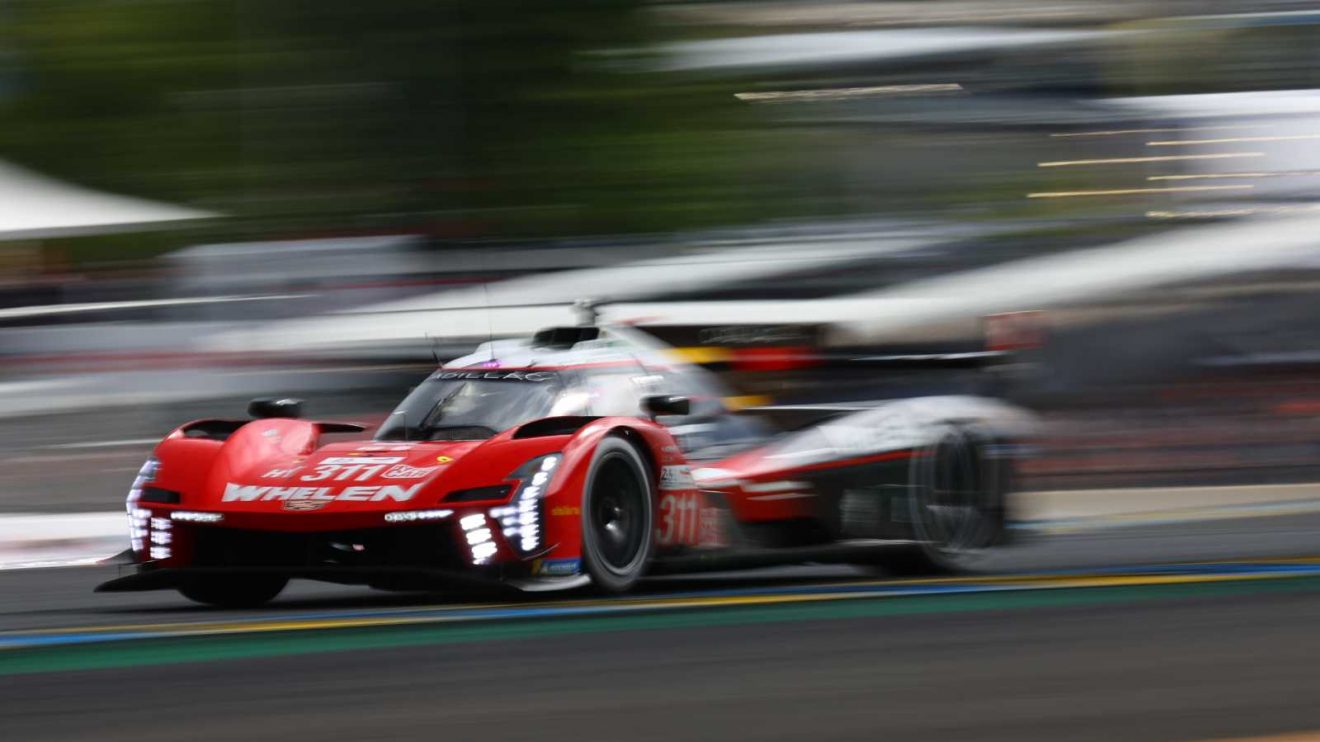
Whelen Cadillac Racing at the 2024 24 Hours of Le Mans
Formula 1 has long prided itself on being the pinnacle of motorsport technology, but has a growing manufacturer interest in sports car endurance racing taken precedence over F1?
With Ford’s announcement that it intends to return to the World Endurance Championship — and the 24 Hours of Le Mans — in tandem with its burgeoning F1 program, it may be time to ask some difficult questions about what is more valuable: endurance racing, or open-wheel racing?
Ford adds World Endurance Championship to its motorsport repertoire
Earlier this week, Ford announced that it intends to return to the pinnacle of sports car racing, the World Endurance Championship. While the US automaker has recently competed in GT classes, Ford is now aiming to prepare a GTP hypercar prototype in hopes of pursuing overall victory at the 24 Hours of Le Mans.
Since WEC and America’s IMSA SportsCar Championship joined forces to introduce a regulatory set applicable to both series, sports car racing has entered a renaissance. The growing hypercar class includes entries from exceptional automakers like Porsche, Cadillac, Aston Martin, BMW, Acura, Lamborghini, Alpine, Peugeot, Ferrari, and Toyota — with Ford joining the series in 2027.
Of course, the introduction of Formula 1’s 2026 technical regulations has also encouraged new automakers to entering the sport, with Honda, Ford, Mercedes, Audi, and Ferrari set to join in 2026, followed later in the decade by Cadillac.
But it is perhaps time to start questioning if the tides of motorsport development are changing. Is Formula 1 at risk of being usurped by sportscar racing?
We’re going to take a deeper look into just what makes a series like WEC or IMSA so appealing — and why Formula 1 may be falling behind.
More on F1 marques in endurance racing:
? Redemption for Meyer Shank Racing and Acura at the 2025 Rolex 24
? Why motorsport is so critical in Cadillac’s plan to take over the auto market
LMH vs. LMDh, creative freedom in sportscar racing
One of the most appealing parts of endurance sports car racing for manufacturers is the regulatory convergence between IMSA and WEC, and the creation of two different entry points to the top level of competition.
In the past, WEC and IMSA may have developed similar regulations, but ones that were distinct enough so as to prevent one manufacturer from competing in both series with the same car. After years of slim fields and single-manufacturer dominance, it was clear that something needed to change.
Enter: convergence. Heading into the 2023 season, IMSA and WEC debuted a new top-level class, GTP. These were prototypes that could compete against one another at big events like the 24 Hours of Le Mans, but critically, manufacturers could opt to conform to LMH or LMDh rules.
Le Mans Hypercar (LMH) is most associated with WEC, and it’s the option with a higher cost barrier to entry. That’s because every element of this car, including its hybrid components, can be developed by the manufacturer choosing to enter the sport. The LMH machines are more technologically advanced, at least in the sense of bespoke manufacturer development, but therefore come with a larger price tag.
Le Mans Daytona h (LMDh), on the other hand, mandates that a manufacturer must utilize an approved chassis, and that it must use a certain selection of off-the-shelf, spec components. Manufacturers are free to develop their own bodywork and certain power unit elements, but the semi-spec nature of the car allows for a lower entry cost.
These regulations also allow automakers to develop cars that look somewhat reminiscent of their road cars, pulling signature design cues like headlights, taillights, or certain combustion engines in recognition of the consumer market.
The cost cap, regulatory penalties in Formula 1
As reported on by PlanetF1.com earlier this week, former Red Bull turned current Aston Martin F1 designer Adrian Newey pinpointed a hidden drawback in Formula 1’s cost cap regulations: “Formula 1 can’t afford to be the best-paying industry anymore.”
Newey provides an example. Several years ago, if Red Bull Racing were to lose talented individuals, then it was highly likely that those individuals had moved to a different Formula 1 team — one that perhaps would offer a better salary.
But now that there’s a strict budget limiting the financial spend of an F1 team’s engineering department, teams have had to reduce their salaries, and according to Newey, it opens the door for talented engineers to move to a series like WEC.
Further, Newey noted that the technical regulations have become so prescriptive that most F1 teams feel boxed in. While individual designers and engineers may have slightly varying interpretations of the same ruleset, the end product will often be quite similar.
WEC and IMSA also feature fairly prescriptive rulesets, but there is far more freedom in the endurance racing world. It just takes a quick look at the official FIA technical regulation handbooks to see that: F1 2026 technical handbook runs for 260 pages, while WEC’s barely exceeds 100 for it Le Mans Hypercar (LMH) class.
Is WEC overtaking F1 in technical importance?
Will WEC overtake Formula 1 as the pinnacle of motorsport technology? It’s a question worth asking, but is ultimately one that’s very difficult to answer.
In speaking to Eric Warren, Executive Director for GM’s global motorsports competition, about Cadillac’s participation in both F1 and endurance racing, PlanetF1.com learned that Formula 1 is still technically important, but that endurance racing presents some truly valuable opportunities for brand growth.
See, success in Formula 1 is still synonymous with engineering excellence in a very broad sense. It still represents the pinnacle of experimental motorsport technology, with the incoming 2026 regulations pushing the boundaries of hybrid power. There’s still ample value for an automaker to be competitive in F1.
But the lower barrier to entry in endurance racing, as well as the two options for top-level competition (LMH and LMDh) and all the familiar design cues appeal to automakers like Cadillac in ways that transcend F1.
“The F1 car, when you look at it, you don’t see Cadillac,” Warren told PlanetF1.com in an exclusive interview, “whereas with the LMDh, we get the opportunity to inspire some direct design cues with customers to build that brand.”
F1 will prove that an automaker like Cadillac is capable of designing a car based on ground-breaking technical rules. Endurance racing, though, will allow fans to actually see a Cadillac-appearing car compete on the track.
With so many automakers choosing to participate in both WEC and F1 over the next several years, we’re at a critical choice point. How will the FIA design technical regulations in the future, and to what series will it lend its experimental bent? How will automakers decide what they value, and how they’ll respond? Will endurance racing take precedence over F1, or will F1 remain at the apex of motorsport?
We’re certain to find out over the next few years.
Read next: Cadillac confirm No.1 target for their F1 2026 entry