

Uncovered: Red Bull deploys novel front wing solution


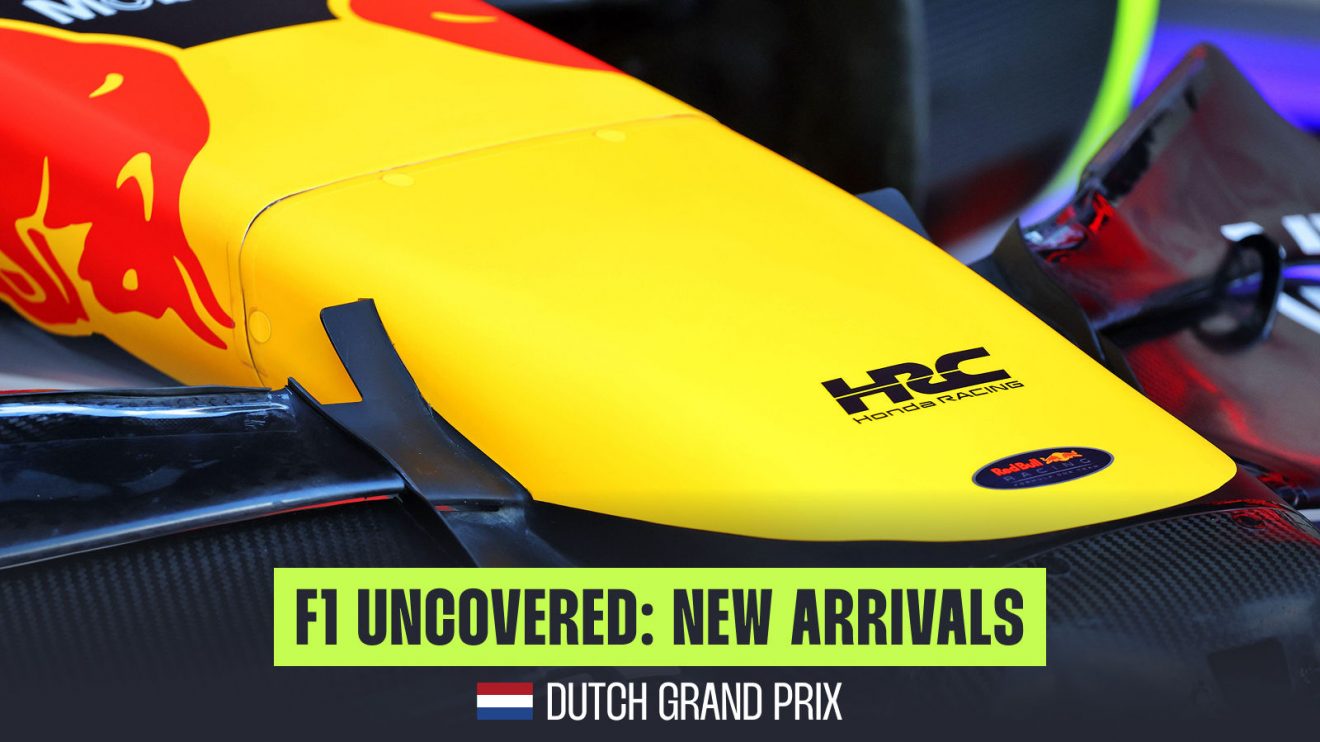
Red Bull is one of just three teams to have submitted new parts for the Dutch Grand Prix, as most have long turned their eye to 2026 and are now only looking to bring components that unlock additional performance for a given event.
However, with this being the third front wing adaptation in as many races, Red Bull is clearly having to add an array of solutions to cover its bases, having made an overall shift in design language with the first of those.
New front wing option for Red Bull
While the main goal is to give the squad another option to balance the car, with the upper element’s chord altered once more, a new and quite novel feature has appeared, too.

In the non-moveable section of the front wing, beside the nose, the profile of the flap element has been altered quite significantly and is very different to the geometry we’re accustomed to seeing here.
In fact, it has more in common with the inboard suspension fairing flick ups that have become commonplace up and down the grid, as the now L-shaped section rises above the height used across the span of the flap.
Acting more like an independent winglet, given the steep angle at which it’s orientated compared with the remainder of the flap, there’s clearly a desire to invoke quite a stark aerodynamic response.
Given its shape, it’s also likely shedding some vorticity that will help tidy up other inefficiencies created downstream, perhaps due to having more load on the front wing than they’ve had with their previous solutions.

As we can see from the last four races, Red Bull has altered where it is searching for load on the front wing’s upper flap, with the tallest section of the flap moved more towards the front wheel.
This will also have an impact on how the air moves around the rest of the wing, with the performance of the outboard section of the wing likely the biggest winner, in order to boost how much outwash is being generated.
Meanwhile, the altered state of flow around the inner corner of the front wheel assembly will undoubtedly have implications downstream, with the floor and sidepods having already been an area of intense development this season.
Aside from the obvious change in the flap’s trailing edge shape and chord height, the team have also been using a Gurney flap to supplement its requirements, with a full span option used in Hungary, but trimmed for the Dutch Grand Prix. Fitted to the inboard side of the flap, it terminates in the centre, intimating where Red Bull is looking to create the most load.
Introducing these three new flap options over the course of the last few races means that Red Bull now has numerous options at its disposal for the remainder of the season, with adaptations still able to be made to them to suit the various circuit characteristics ahead.
Read next: Racing Bulls boss issues response to Max Verstappen test rumours