

The critical F1 format question with rookies thrown in at the deep end


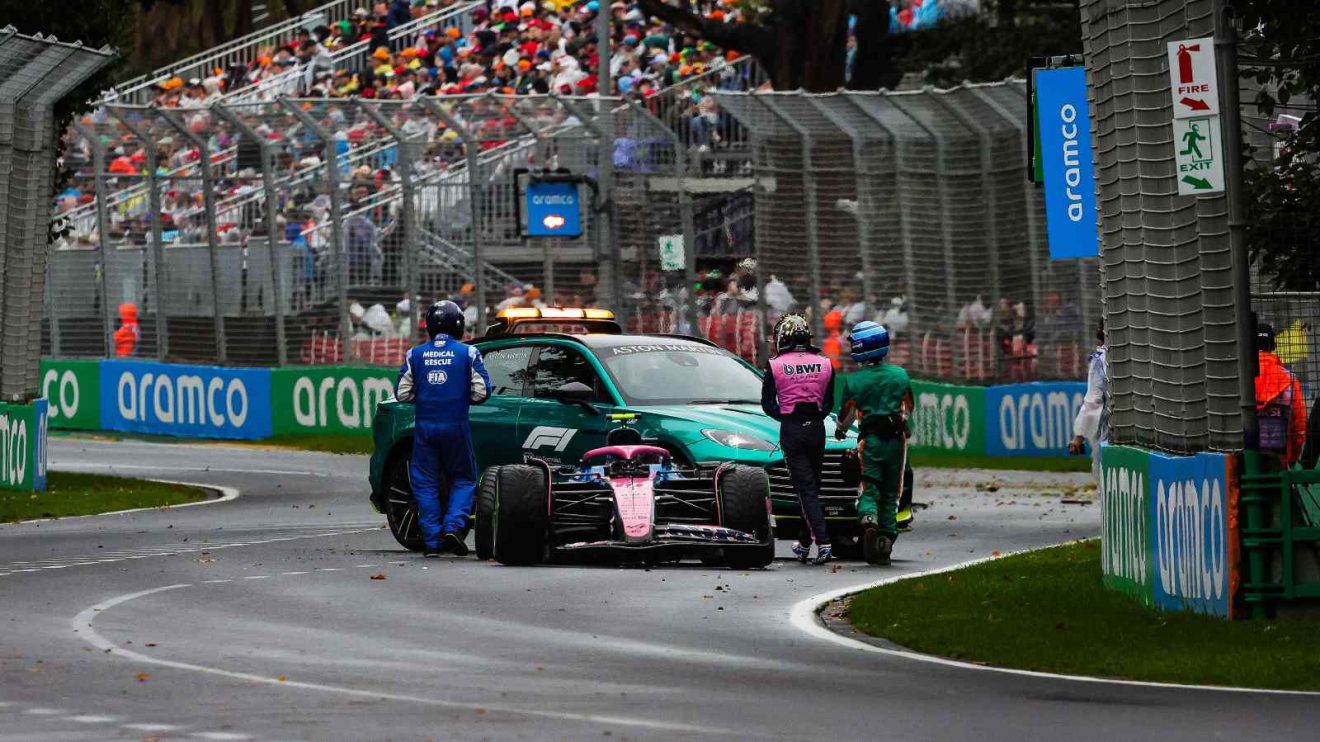
The rookie class of 2025 will face a unique challenge with the first races of the season.
This year, Formula 1 boasts its largest full-season rookie class in years; even though some drivers may had already contested a Grand Prix (or 11) ahead of 2025, none of them have ever had to mount a cohesive championship challenge — and it’s about to be tougher than most.
Limits on pre-season testing paired with a challenging kick-off to the 2025 calendar mean this incoming crop of fresh talent will be faced with a much steeper learning curve than they’d have experienced in any other season. Time to investigate what that means for these new drivers.
F1 2025: The rookie struggle in pre-season testing
Bahrain International Circuit has become the go-to location for Formula 1 pre-season testing for a variety of reasons, but the biggest one is pretty simple: Bahrain is warm.
In the modern era, F1 has placed significant restrictions on the kind of testing that can be done ahead of a season. Where once a new driver might have a handful of off-season opportunities to get up to speed in their car for the season, now pre-season testing consists of three eight-hour days that must be split between a team’s two drivers.
With that in mind, it would make sense to schedule testing at a track with fairly stable weather conditions — ideally ones that approximate the warmer temperatures of in which the sport generally races.
The Circuit de Barcelona-Catalunya was a longtime favorite for pre-season testing thanks to its proximity to the home bases of the teams, but because inevitably took place in the winter, the track was often cold. After a snowstorm in 2018 interfered with that critical testing time, F1 realized those all-critical shakedowns belonged somewhere a bit balmier. Enter Bahrain.
But in 2025, the country faced unseasonably cool temperatures and strong winds, which meant that our ample full-season rookie class — Kimi Antonelli (Mercedes), Oliver Bearman (Haas) Gabriel Bortoleto (Sauber), Jack Doohan (Alpine), Isack Hadjar (Racing Bulls), and Liam Lawson (Red Bull Racing) — were only able to prepare for this year for a day and half, and that time was likely spent on a cold or blustery race track.
An annoyance, yes, but not the end of the world — but 2025 hasn’t gotten off to a particularly easy start for our new F1 field.
Get up to speed ahead of the Chinese Grand Prix:
? Uncovered: How teams are exploiting the flexi-wing gap effect
? Five big Chinese Grand Prix questions we want answers to
F1 2025: Starting the year with a wet street circuit and a sprint weekend
In 2025, the Formula 1 calendar is arranged in such a way that two very challenging events line up back to back: Australia and China.
The Albert Park Circuit is a favorite of fans and drivers alike, but it does represent a brand-new challenge for a newer field of racers. Its street circuit nature means unforgiving walls are ready to catch a driver out with the slightest mistake, while the slippery white paint used to mark lanes and zebra crossings add an additional challenge.
On top of that came a reprofiling of Turn 6 that proved to be more challenging than expected, catching Oliver Bearman and Kimi Antonelli out in practice. The former absolutely demolished his Haas and missed out on both of Friday’s practice sessions, while the latter’s gravel-damaged floor was less damning but still deeply concerning.
Lingering over the whole weekend was Sunday’s threat of rain, which did in fact materialize on race day. Isack Hadjar and Jack Doohan both crashed under the conditions before the lights went out, while Gabriel Bortoleto and Liam Lawson retired later in the race as the rain worsened. Bearman struggled to the cross the line in 14th, last of the finishers, while Kimi Antonelli was the class of the field with his fourth place.
Clearly many of these young drivers would benefit from some more time behind the wheel. The upcoming Chinese Grand Prix weekend, though, won’t provide much practice time to make improvements and hone skills. After Friday’s single free practice session, we kick off into the first sprint weekend of the year, with every on-track session being critical to the overall championship.
This year, a common talking point among drivers has been the lack of testing time, with even veteran racers like Fernando Alonso lamenting both the three-day test restriction as well as the packed nature of the early schedule. The teams and drivers who identified critical areas of improvement in Australia won’t have much time to find a solution in China.
While Alonso did acknowledge that all drivers and teams are in the same situation regarding the schedule, a vast experience gap between the veterans and the rookies will only make it more challenging for the young talents to find their footing.
Of course, this isn’t intended to excuse simple mistakes — a driver who has been signed to F1 should theoretically display racing talent at an F1 level — but to pose a critical question: Does this current schedule format do a disservice to the young talents F1 is trying to cultivate?
We know, for example, that Jack Doohan’s seat at Alpine is dependent on his early performances this season. Both Isack Hadjar and Liam Lawson are part of the cutthroat Red Bull junior program, where one misstep can end your hopes of a top-level open-wheel career in an instant.
But are we really providing these young drivers with a chance to prove their talent when we launch them directly into a series of extremely challenging races?
Any Formula 1 driver should be skilled, yes — but rookies are still rookies, with a lot to learn about everything from F1 car control to championship management. It may be wise for F1 to take this to heart when designing future calendars, if only to kick the season off with two sprint-free weekends chock full of practice time.
Read next: FIA step in after F1 teams hit by ‘logistical challenges’ for Chinese GP