
How Lewis Hamilton carved through the field in incredible Belgian GP fightback


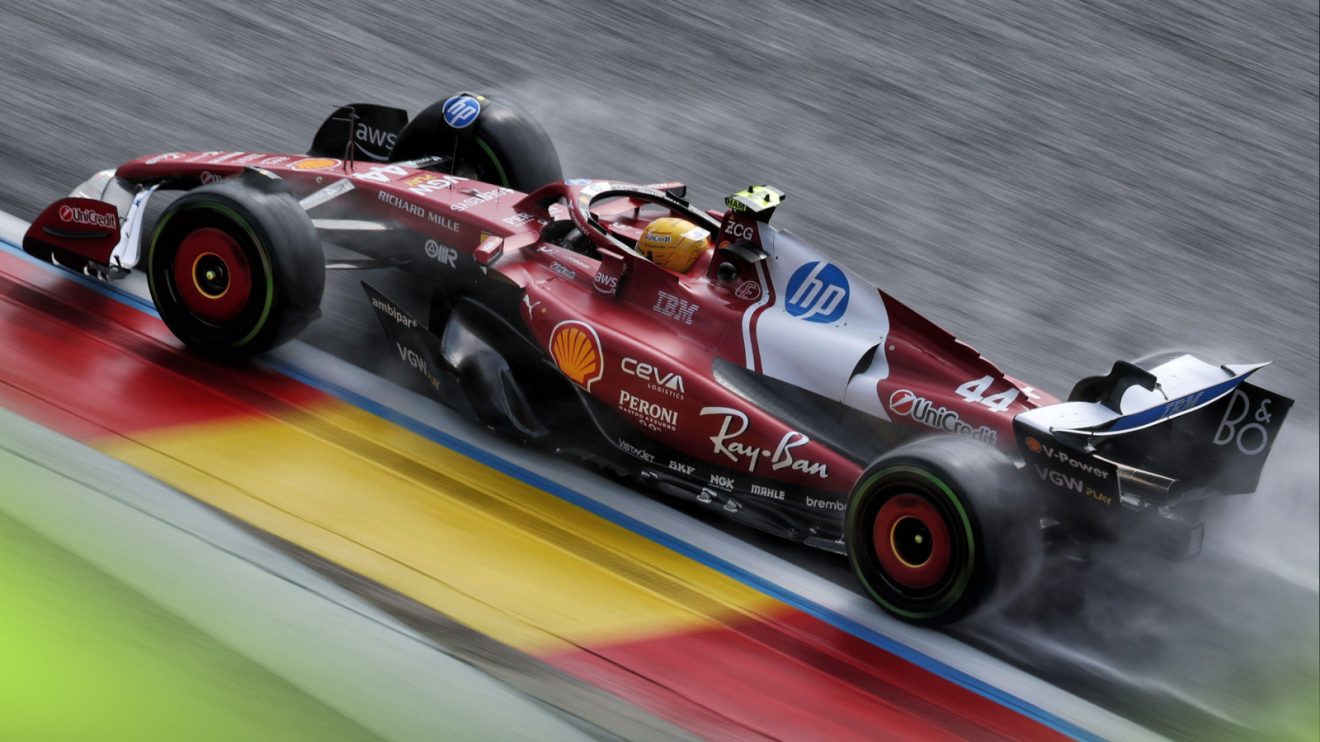
Lewis Hamilton gained 11 places during the Belgian GP.
Lewis Hamilton once again reminded us why he is a seven-time world champion, and why he has a reputation as one of the greatest drivers in wet conditions.
In a race where no one else made up more than three positions, he managed to gain eleven. Let’s break down how Hamilton pulled this off and determine how much of it came down to luck and how much was pure skill.
Inside Lewis Hamilton’s incredible Belgian GP comeback
It’s true that we’ve seen Hamilton make mistakes in qualifying before, even exiting in Q1 during Mercedes’ difficult transitional phase at the start of the new car generation in 2022. But no one expected to see Lewis fail to make it past Q1 twice in a single weekend.
Both on Friday and Saturday, the poor results came solely as a result of his own mistakes. In the Sprint Qualifying session, he made an error entering the Bus Stop chicane and lost control of the rear end in a rather strange fashion.
We’ve already discussed the technical problems with the SF-25’s rear suspension and the new upgrades Ferrari introduced ahead of the Belgian GP, which focused heavily on those areas.
On Saturday, in qualifying for Sunday’s race, Hamilton made another mistake — this time in Radillon — going off track with all four wheels, which resulted in his lap time being deleted. He ended Q1 in 16th.
More from the Belgian Grand Prix
? Belgian GP: Piastri sees off Norris in tense McLaren strategy game after rain delay
? 2025 Belgian Grand Prix — Official F1 results (Spa-Francorchamps)
Ferrari then decided to take advantage of his poor starting position to change nearly all of the car’s major internal components — from the engine, turbo, MGU-K, and MGU-H, to a completely new energy store. Since Hamilton had already reached the allowed number of component changes, this triggered a penalty, meaning he would have to start from the pit lane.
In the end, however, the penalty had no real impact, as the race began behind the Safety Car, and Hamilton was able to rejoin the pack without issue.
In the opening racing laps, we saw Hamilton at his best — pulling off clean overtakes on slower cars ahead. On Lap 8, he passed Carlos Sainz with a great move through the chicane, and followed that up immediately by overtaking Franco Colapinto and Nico Hulkenberg. It wasn’t long before he also got past Pierre Gasly in the Alpine.

What stood out in particular was that Lewis executed most of these overtakes in places where you wouldn’t normally expect them. Yes, he had a significant performance advantage, but he still had to make it count.
By this point, the track had dried enough to raise the key question: when would teams start calling their drivers in for slicks?
Drivers at the back of the pack always have an advantage in these situations, as they can box and rejoin in clean air. Those up front, however, have to be much more cautious with timing — the last thing you want is to rejoin behind a slower car still on intermediates, with the racing line being the only dry part of the track. That forces you to go off-line to pass — a major risk on slicks.
Hamilton used this to his advantage. He was the first driver to pit for slicks, followed in by Gasly, Hulkenberg, and Fernando Alonso. After the stop, he rejoined in 17th — but more importantly, he had no traffic ahead and could fully exploit the dry tyres.
A wave of pit stops followed, but by then Hamilton was already flying on the medium (C3) compound and setting strong sector times. He quickly adapted to the changing grip, found the limit, and got the most out of his tyres much faster than others.
Once most of the field had switched to slicks, Hamilton found himself in seventh, just behind Alex Albon, who had started the race fifth.


Comparing their situations shows how much of an advantage Hamilton gained from the better pit timing. After his stop, he was just over one second behind Albon.
He quickly got into DRS range, and we expected an attack, but it simply didn’t come. Hamilton’s Ferrari didn’t have enough top speed, even with DRS, to give him the edge on the Kemmel Straight and a chance to attack.
We can see that, after a few unsuccessful attempts, Hamilton dropped back slightly, then closed the gap again. From Laps 28 to 37, the seven-time world champion stayed within one second, but couldn’t mount a decisive challenge.


Hamilton ultimately finished the race in seventh, which is a great result considering all the mistakes made on Friday and Saturday. In the end, fans voted him Driver of the Day, and he reminded us all just how fast he can be in the wet.
Read next: Lewis Hamilton says FIA ‘overreacted’ after lengthy rain delay in Spa