

Six reasons why F1 fans should watch IndyCar this weekend


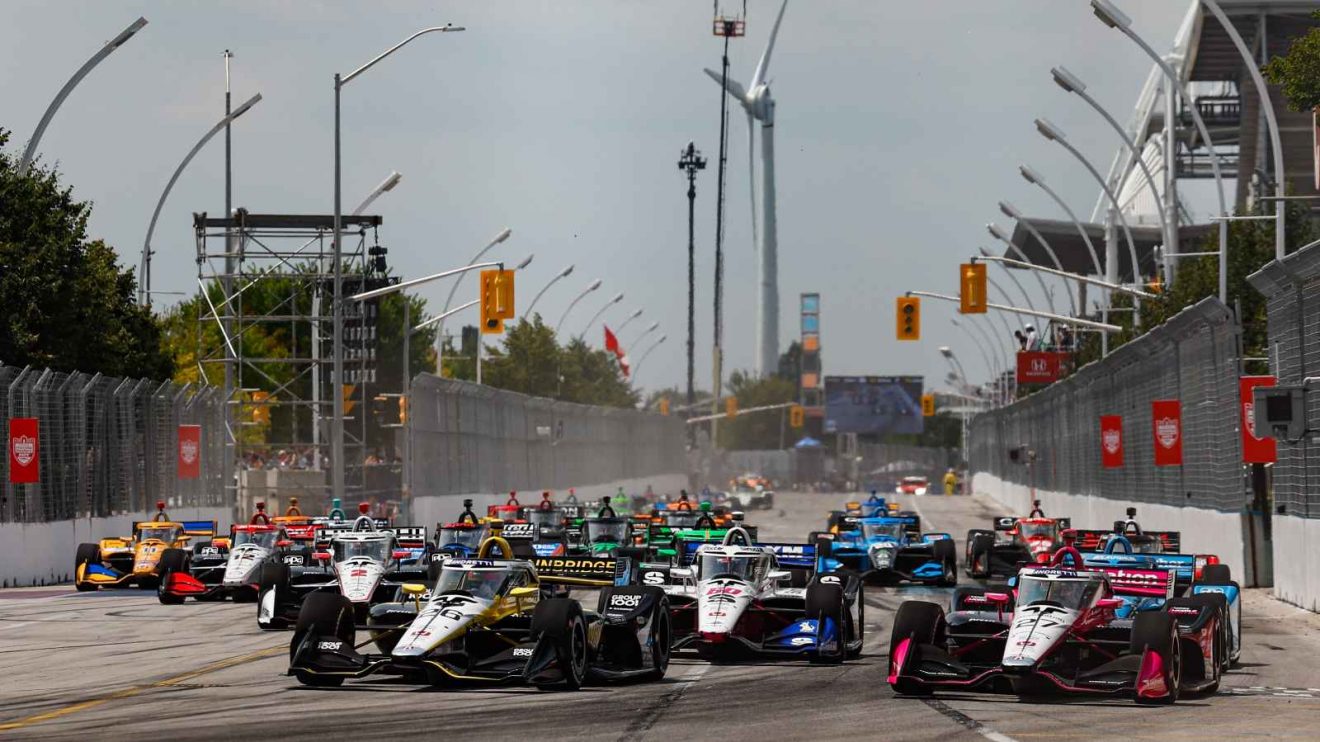
IndyCar's close racing action makes it fascinating to watch.
IndyCar is returning from its Olympic break this weekend, where it’ll head to Gateway for what promises to be a compelling race — and if you’re a Formula 1 fan in need of a racing fix, this may be just the series for you.
F1 and IndyCar are obviously two very different categories, but that doesn’t mean one is better than the other! But if you’ve never given IndyCar a shot, this is the best time to do it — and we’ll tell you why.
IndyCar’s circuit diversity
IndyCar races on three different kinds of circuits: street tracks, road courses, and ovals. Even if you think you’re not a fan of oval racing, there are still plenty of other tracks to enjoy — but once you give oval racing a try, it’s easy to get hooked.
That circuit diversity also adds a fascinating element to the race season. Some drivers naturally excel at oval racing, while many of the series’ best European transplants find it far simpler to learn the ins and outs of the series’ street and road courses.
IndyCar’s competitive racing
Yes, IndyCar’s high level of competition does have a lot to do with the fact that IndyCar is effectively a spec racing series — but that doesn’t make it any less of a sport! In fact, it provides a great opportunity to learn the skillsets of each driver, and to pay more attention to race craft rather than technology.
While F1 has certainly been compelling this year thanks to its diversity of winners, IndyCar is always a great option to turn to if you’re looking for more surprises and hard racing.
IndyCar’s technology is evolving
IndyCar is a spec series, which means you’re not going to see any one team running away on the innovation front — but that doesn’t mean there isn’t any technological evolution.
This year, IndyCar introduced its hybrid powertrain system for the first time, which has proved to be a challenge for many drivers and teams. But watching the ways these teams learn to understand the equipment and find ways to make the transition from ICE to hybrid easier has been fascinating.
Further, IndyCar is on the cutting edge in terms of tire technology thanks to Firestone’s “green” tires. These tires, used as the option tire on street circuits, is made from a substance called guayule, which can be grown in desert climates in the United States — and it may one day replace rubber in tires.
More on IndyCar’s F1 ties
? Explained: How McLaren expanded its F1 operation to include IndyCar program
? IndyCar vs Formula 1: Junior driver development series ladders compared
IndyCar is affordable for fans
One of the best fan-friendly selling points about IndyCar is the fact its races are some of the cheapest motorsport events you can attend in America.
As F1 grows in popularity, so too have ticket prices. Fans who used to be able to afford an excursion to Circuit of The Americas may no longer be able to do so — but there’s still affordable racing in the U.S.
In fact, at IndyCar’s biggest race of the year — the Indy 500 — a reserved grandstand seat can cost just $150, while you can gain garage access (and, as a result, access to every other non-race session during the Month of May) for less than $200 more.
IndyCar has a shorter season
Burnout can be a serious problem for fans, drivers, and team personnel when it comes to series like Formula 1 or NASCAR, but IndyCar has maintained a shorter season. With just 17 races taking place from March to September, it can be much easier to tune in without feeling overwhelmed.
That also means August is a fun time to begin delving deeper into the sport; with just five races left taking place over the next month and a championship still far from decided, there’s never been a better time to tune in.
The Indy 500
Yes, Indianapolis 500 season is over for 2024 — but that doesn’t mean it doesn’t hold a serious draw all year round. If you’ve ever tuned into the 500 just to see what all the spectacle is about but never quite understood who the drivers were or what the series was about, then this is a great time to get involved.
The 500 is unlike anything else in the racing word in terms of its history and gravity, and its impact resonates throughout the IndyCar season. By the time the next 500 rolls around, you’ll be ready to pick a favorite driver to root for.
Read next: Explained: The chaotic history of the IndyCar split and reunification