

Why Red Bull’s Eau Rouge telemetry data will make for very interesting viewing


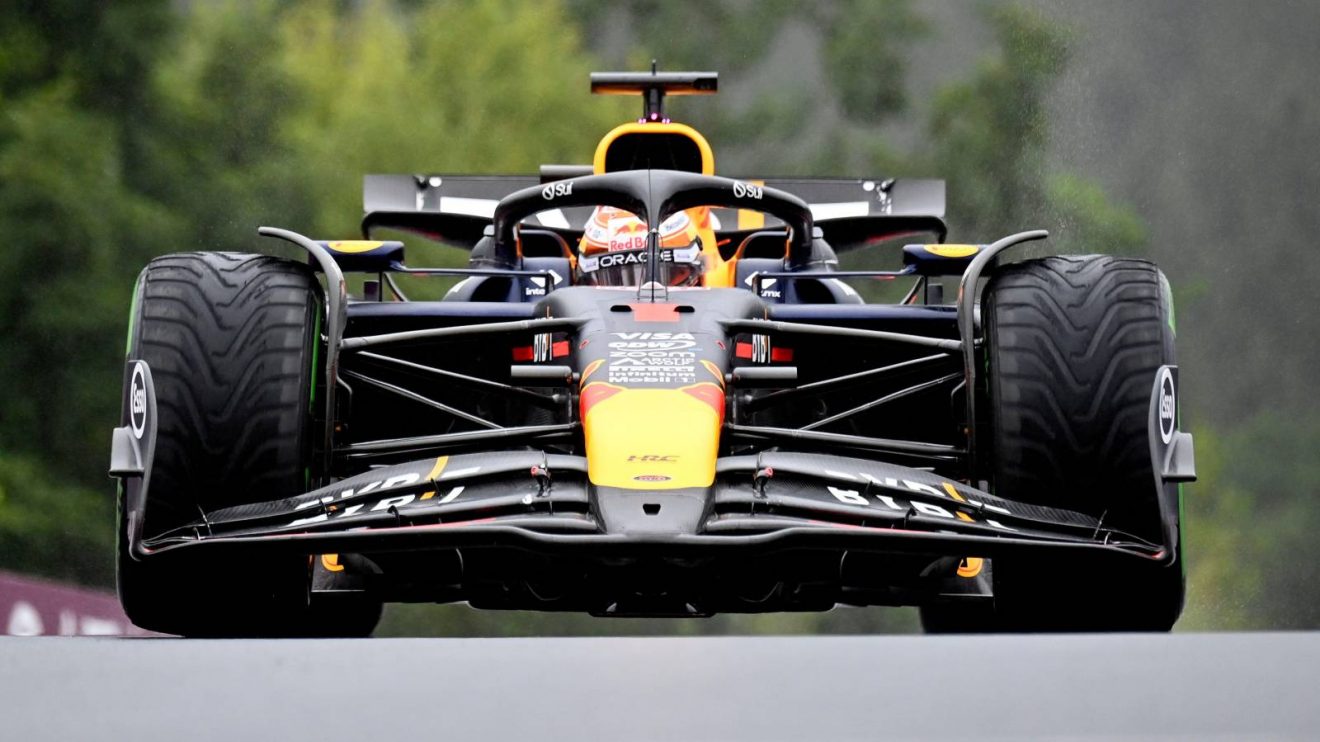
Red Bull's Max Verstappen.
The last stop before the summer break in the Formula 1 championship will be Belgium and the legendary Spa circuit. The seven fantastic kilometres stretching through the Ardennes forest make this track even more magical.
Let’s take a look at how the teams have prepared for this challenging track, what its significant characteristics are, and which teams it suits best.
Belgian Grand Prix track characteristics
Spa-Francorchamps has been part of the Formula 1 championship since its inception. This track has given us many unforgettable moments, both positive and unfortunately, negative. In addition to its long history, this track is characterised by being the longest on the calendar and probably the most technically demanding.
Over seven kilometres long, Spa allows drivers to make significant time differences during qualifying laps. Last year, the difference between first-placed Max and second-placed Leclerc in qualifying was an incredible 0.82 seconds.
This track has it all – from long straights and fast corners to slow chicanes and heavy braking zones. For this reason, engineers find it very difficult to balance the car and adjust the aerodynamic package, as there are too many factors to consider.
A brand new track surface at Spa-Francorchamps. Read the preview of the #BelgianGP here ?https://t.co/V116OKEWeD pic.twitter.com/gykGA4M6uc
— Pirelli Motorsport (@pirellisport) July 23, 2024
The first sector is characterised by long straights and two DRS zones, with the second one being where cars reach their maximum speeds. Also, the first sector includes perhaps the most recognisable corner known as Eau Rouge. This spot is considered one of the most dangerous in Formula 1 due to the combination of speed, elevation, and poor visibility.
In the second sector, the car’s downforce comes into play, which is necessary to ensure enough stability in both fast and slow corners. The last sector is very similar to the first since drivers are at full throttle almost the entire time. The exception is the chicane, specifically turns T18 and T19, which are the last corners and the hardest braking point on the track.
These drastic changes in corner types lead to maximum tyre stress, making tyre consumption one of the main factors here. As in previous years, Pirelli will bring medium-hard compounds – C2, C3, and C4.
Another influential factor will be the new layer of asphalt in Belgium, which will almost certainly speed up the entire track but still present some mystery since teams do not yet know how the tyres will behave here.
Last year, we had a two-stop race here, mainly using yellow and red-marked tyres.
Belgian Grand Prix aero packages
When it comes to aerodynamic elements, teams face the challenging task of adapting the car for all types of corners. Of course, being maximally efficient everywhere is almost impossible, so something has to be sacrificed.
Therefore, teams come here with low or medium-low downforce packages aiming for good maximum speeds on the straights in the first and third sectors. Simultaneously, some aero components can be adjusted to maintain sufficient downforce without excessive drag.
Configuración de alas traseras para Spa
Spa rear wing configurations #f1 #BelgianGP pic.twitter.com/w2oZX9udVy
— Albert Fabrega (@AlbertFabrega) July 25, 2024
In the image above, we can see the rear wings of the teams. The picture is completely different compared to last weekend in Hungary, where we had very aggressive packages.
McLaren and Mercedes, along with the VCARB team, have opted for the least loaded rear wing.
This makes sense given their cars are known for generating high drag. Therefore, this is a way to compensate so they don’t lose too much time on the straights.
Thus, it will not be surprising to see Mercedes and McLaren make up their time in qualifying in the second sector.
On the other hand, Red Bull has once again brought slightly higher loaded aerodynamic elements. Red Bull designed their car so that the floor’s efficiency heavily depends on the elements at the rear, such as the diffuser, beam wing, and rear wing.
With a good combination of these elements, the RB20 achieves very good overall aero efficiency, allowing them to use a more aggressive rear wing without significantly affecting top speeds.
Ferrari, besides adapting the rear, has prepared a new front wing hoping this design will solve their current aerodynamic problems.
Flaps de baja carga en el ala delantera del Ferrari
Low downforce front wing flaps for Ferrari#f1 #BelgianGP pic.twitter.com/MEFu1hXANo
— Albert Fabrega (@AlbertFabrega) July 25, 2024
The Italian team struggles with fast corners, and Spa does not seem like their ideal track. The bouncing issues are still present, and without solving this problem first, Ferrari cannot fully focus on other areas of improvement.
Which Teams Will Spa Suit the Most?
The Belgian track demands maximum efficiency and a good setup adaptable to various types of corners. In this area, since the beginning of 2022, Red Bull has been the absolute winner. For this reason, it’s fair to consider them the favourites.
However, the truth is they haven’t been in the best form in the last few races, and it will be very difficult for them to repeat the dominance they had on this track last year.
It will also be interesting to follow Red Bull drivers’ telemetry data in the Eau Rouge corners. Last year, Max and Sergio lifted the gas pedal before the ascent to avoid damaging the car’s floor – while all other drivers were at full throttle the entire time through these corners.
The reason they lifted the gas pedal was the soft suspension, a crucial factor for Red Bull’s good performance on the track. The important thing for them was that this adaptation did not affect their lap times in the race or during qualifying.
More analysis ahead of the 2024 Belgian Grand Prix
Red Bull RB20 upgrades explained with Hungary performance under the microscope
Five Belgian GP questions: Red Bull on the rocks? Will the real Alpine team please stand up?
McLaren and Mercedes could also be contenders for the victory. McLaren is in great form and had the fastest car on the track in the last few races. It’s true that these characteristics don’t suit them as well as Hungary did, but they should not be overlooked.
A big change compared to last weekend is the weather conditions, which are usually rainy in Belgium. Also, the track temperature is much lower, and such conditions definitely suit Mercedes better.
We saw at Silverstone that their race pace in the rain and on a cooler track was excellent. What could prevent these two teams from reaching the top step on Sunday are the long straights and DRS zones, where Red Bull will likely be faster.
For the same reason, we can expect teams like Haas and Williams to pleasantly surprise us. If they make good setups and manage the tyres properly, they have a high chance of fighting for the top 10.
As for the teams that this track will not suit, VCARB and Aston Martin, who performed well in Hungary, might struggle here.
Read next: Five Belgian GP questions: Red Bull on the rocks? Will the real Alpine team please stand up?