

Kyle Larson fumbles ‘best all-round driver’ claim with mindless aggression


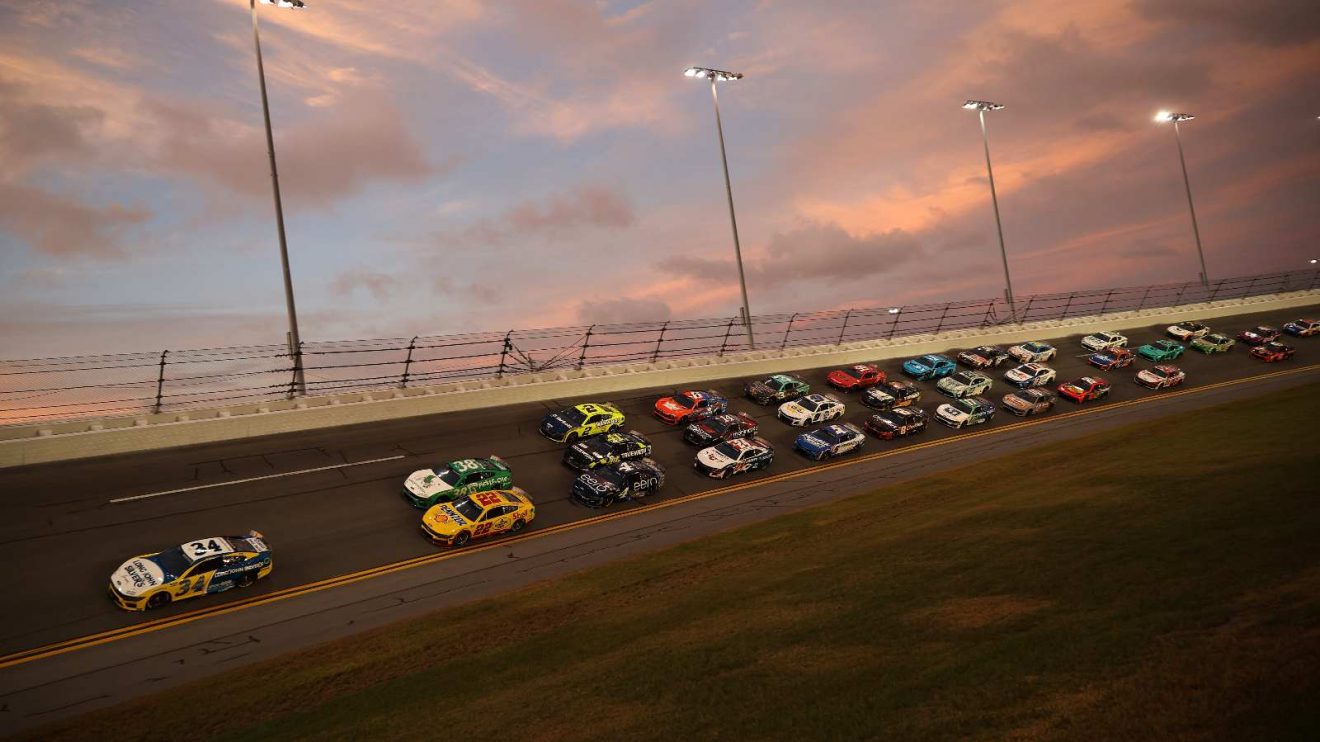
The sun sets over Daytona as NASCAR contests the Coke Zero Sugar 400.
Harrison Burton brought home the 100th win for the legendary Wood Brothers Racing team at Daytona’s Coke Zero Sugar 400.
It was a chaotic, action-packed Saturday night race — and there were plenty of great takeaways that will guide us into the next set of races this season.
NASCAR Cup Series conclusions at the Coke Zero 400
Another NASCAR race, another airborne car
Cars have been taking flight at an alarming rate during NASCAR Cup Series races. Coming into the Coke Zero Sugar 400, the series implemented a so-called “shark fin” on the right side of the car in hopes of reducing the chance of a blow-over crash. And yet we had two of them.
First came Michael McDowell. The race leader was struck by inside lane racer Joey Logano, and the angle of the crash tipped McDowell’s car into the air. Thankfully, the machine didn’t flip and managed to land back on its wheels — but any good will the series had earned for its shark fin was negated mere moments later.
With just a few laps remaining in the race, second-place Josh Berry was shoved out of line and into the air. His car flipped, crashed roof-first into the inside barrier, then landed on the roof, where it spun like a top.
Thankfully, Berry was able to climb from the car and didn’t suffer any serious injuries.
This all comes after Corey LaJoie flipped at Michigan.
Right now, NASCAR doesn’t have a clear explanation of what’s going on, why its Cup Series cars keep launching into the air. But it’s clear that it’s going to have to come up with a solution ASAP.
Daytona shouldn’t be a Playoff cutoff race
In 2025, Daytona International Speedway looks liked up to be a cutoff race for the NASCAR Playoffs — and Saturday night’s race proved that would be far from the right call.
Daytona isn’t a track that lends itself well to desperation. One aggressive move by one driver can result in a pile-up that damages half the field — and drivers are far more likely to get aggressive when they know this is their last chance to win a race or secure the critical points that will give them a chance to race to the season finale.
But that kind of “win or nothing” event isn’t just dangerous; it also erodes so much of what makes the track great. Daytona is a challenging track, and it requires a very specific amount of finesse to master. It can make winners of drivers like Harrison Burton or Austin Cindric, and it practically writes its own legacy.
Drivers were desperate enough with Daytona’s current slot on the schedule, where it’s the penultimate race before the end of the regular season. We don’t need to heighten that stress.
More on F1’s ties to NASCAR:
? Why so serious? Four valuable lessons F1 can learn from polarising NASCAR series
? From F1 to NASCAR: The 10 F1 drivers who made the move to the US
Kyle Larson’s aggression negates his “best all-around driver” claim
With Formula 1 returning this weekend, we’ve finally had a chance to ask Max Verstappen all about Kyle Larson’s claim that he is the better all-around driver — meaning we’ve had to rehash the debate all over again.
Unfortunately for Larson, he didn’t comport himself particularly well in Daytona. The stock car driver raced hard — too hard. Daytona is one of those tracks that will punish you or the drivers around you if you’re too aggressive, and Larson was, frankly, just too aggressive.
That kind of mindless aggression isn’t good for racing, and it’s also not a great look for a driver who has confidently announced his faith in himself as the best all-around racer in the world. It’s a trait that both Larson and Verstappen struggle with when they get heated, but at a track like Daytona, it’s especially problematic.
Ford is so back
At the start of the 2024 Cup Series season, Ford-powered teams just looked like they were lacking something critical when it came to leading and winning races — but at Daytona this weekend, it was clear something had changed. Team Penske, Front Row Motorsports, RFK Racing, Rick Ware Racing, Stewart-Haas Racing, and Wood Brothers Racing all made critical appearances at the front of the field.
The Ford drivers were able to look beyond team division to work together, which is critical at Daytona, where three lines of cars can form, and where the ability of any of those lines to dominate depends on how well the cars in that line can link up and push each other.
Ford had the pace to qualify up front, and it held that position until the very end of the race, when Harrison Burton secured his first-ever Cup Series victory.
Leigh Diffey is one of motorsport’s finest commentators
IndyCar and Olympic commentator Leigh Diffey made his debut in the NASCAR Cup Series booth at the Daytona Coke Zero Sugar 400, and it was a massive success.
Diffey’s consummate professionalism and his ability to weave together an exceptional story out of any on-track action is what made him so beloved in the IndyCar series, and his departure from open-wheel racing is dearly missed.
But IndyCar is swapping broadcasters from NBC to FOX in 2025, and Diffey is an NBC man at heart. It is, after all, what allows him to commentate on the Olympic track and field events that he loves.
There wouldn’t be a particularly simple way to make the Indy-to-Cup swap for Diffey at this critical point in the season, but Diffey made a strong debut despite the challenges presented by a Daytona plate race. He immediately provided a sense of legitimacy and composure to what has otherwise been a very lackluster NBC booth, and he’ll be a great asset to the Playoffs.
Read next: Spongebob Squarepants 400? 30 weird and wonderful NASCAR race names F1 fans may not know about