

Why Christian Horner? Why now? Shock exit may not guarantee Max Verstappen


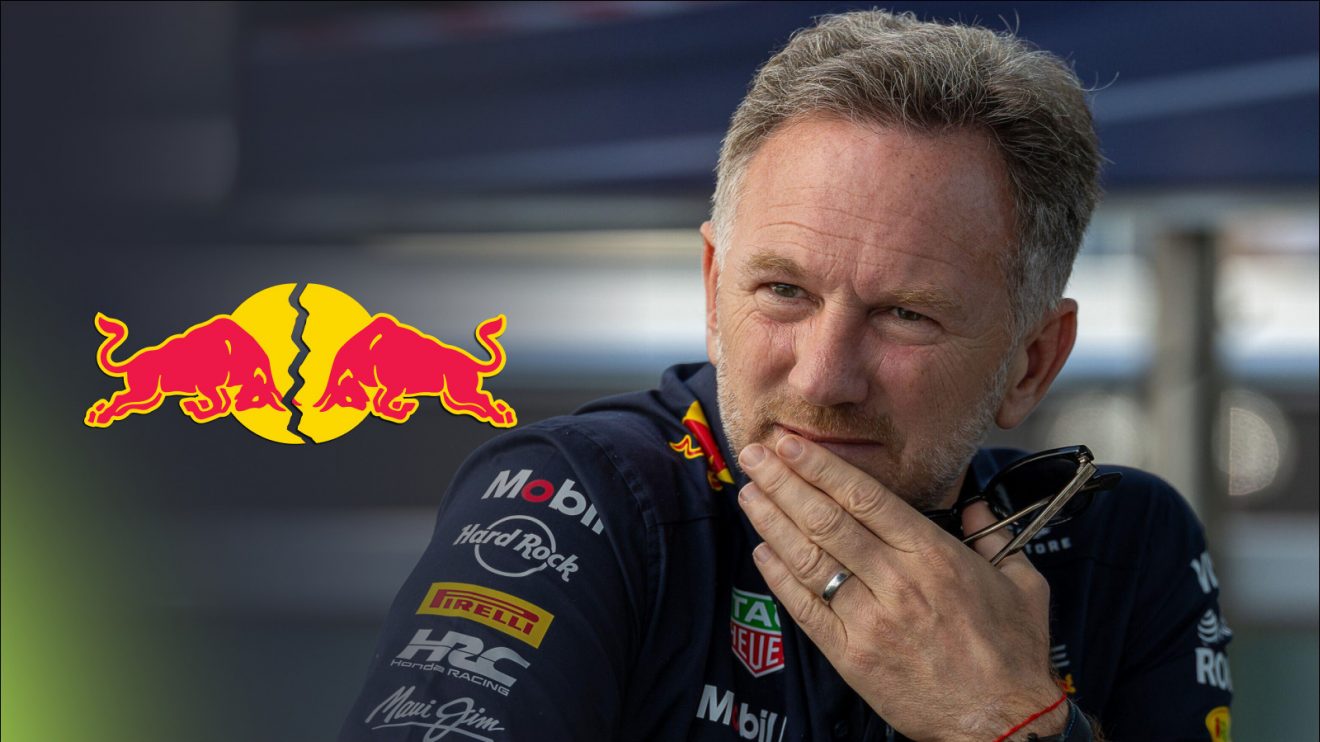
Following his Red Bull sacking, what might Christian Horner do next?
With the dust settling from the shock announcement of Christian Horner’s dismissal from Red Bull, might the decision have been made prematurely?
Horner’s removal from his role as team boss and CEO resets Red Bull Racing for the second half of the championship, but has it been a short-sighted move from Red Bull GmbH?
The cyclical nature of success in F1
There’s no denying that the last 18 months have not been particularly fun for Red Bull Racing.
Coming off the back of the dominant season ever produced by a team in Formula 1’s history, in 2023, the Milton Keynes-based squad was full of optimism for the year ahead in ’24.
But, instead of a continuation of the highlights of that season, the year began badly with the reveal of Red Bull GmbH’s internal investigation into Horner, and it didn’t get much better from there.
Senior personnel leaving, for various reasons, combined with the ebbing away of performance, have resulted in the team becoming less competitive, and, in the last 12 months, even the talents of Max Verstappen has only netted the team four race victories.
This week, Red Bull GmbH cried enough. With no clear signal that the team was getting on top of its issues, the threat of losing Verstappen, and the lingering aftermath of last year’s investigation (a situation that is still yet to be fully resolved), the parent company of Red Bull Racing opted for change.
It’s a huge decision to have made. After all, while being a divisive character, Horner’s pedigree as a team boss is unquestionable, having built up a chaotic midfield team into regular race winners and, eventually, a crushing World Champion force.
And, it must be said, that the team’s sub-par (by its standards) performance this year has still earned two victories and several pole positions from the first 12 races of the season… a far cry from a total disaster on the design front.
There are issues, certainly. The unique nature of the car’s design has resulted in no one other than Verstappen being able to drive it competitively, to the point where the second Red Bull driver hasn’t finished in the top five since the 2024 Miami Grand Prix, in May.
The aging wind tunnel infrastructure created correlation issues throughout last year that Red Bull only appears to have a loose handle on haven’t been fully addressed either, meaning that confidence regarding the upgrade path for the RB21 hasn’t been strong.
In Formula 1, success tends to be cyclical. Before Red Bull’s dominance, it was Mercedes, which held out for some seven seasons of being F1’s strongest force before Red Bull toppled it.
For Red Bull, the cycle has clearly been on the downtrend over the past 12 months, and with the likes of Rob Marshall, Adrian Newey, and Jonathan Wheatley all leaving under Horner’s watch.
Assuming performance has played a major factor in Horner’s dismissal, which we can’t be sure of at this point, given the lack of explanation for it, it would appear patience has run out over how things have dipped.
In a year in which Red Bull are still race winners on merit, he has fallen on his sword. It’s a decision that, in isolation, appears very harsh.
The arrival of Laurent Mekies
In his place is the comparatively unproven Laurent Mekies. A long-time employee of Faenza through various engineering roles, his experience includes spells at the FIA and Ferrari, where he was sporting director, before returning to Racing Bulls to take over the team boss role in 2024.
For an established front-running team, Mekies as CEO and team boss has some huge boots to fill. With team founder Dietrich Mateschitz having taken the gamble of employing the completely green Horner back in 2005, this risk eventually paid off as Horner proved an adept touch at both personnel hiring, empowerment, and the political machinations of the sport.
Mekies represents a clean slate, a fresh start for a Red Bull organisation that felt it needed one, Horner being representative of the old guard under Mateschitz Snr. This fresh start will likely lead to further staff changes as other teams pounce upon the vulnerabilities in what is now an uncertain period of time for Red Bull Racing.
But, in time over the coming months, stability will come. The question, however, is what that stability will look like.
After all, Mekies is inheriting the same aging infrastructure that Horner has been operating with, and the same technical team that has been doing its utmost to figure out the intricacies of the RB21, a car whose DNA stretches back to the design path embarked upon by Adrian Newey and Pierre Waché three years ago.
Mekies may well prove himself to be another star performer in a similar fashion to Horner, but, at this point in time, the likeable Frenchman is unproven on the big stage.
With success in F1 being cyclical, perhaps Horner should have been afforded more time before such drastic action was taken. After all, his decision-making over the past 18 months has been with an eye to the future, the creation of the Red Bull Powertrains facility, the collaboration with Ford, and the commissioning of a brand-new, state-of-the-art wind tunnel.
Rather than removing him in the closing stages of a rules cycle that becomes redundant shortly, seeing the end result of Horner’s efforts for 2026 surely would have made more sense? After all, Mekies now faces a steep uphill task to get onboard with all these spinning plates.
If the RB22 and the new power unit prove competitive in 2026, Mekies’ contribution will have been largely minimal and will only point to how Horner’s experience at putting the building blocks in place paid off. After all, the British executive managed to do so seven years ago when, realising the futility of continuing with Renault power, Red Bull started afresh with Honda, to tremendous success.
Should this scenario happen, it will be clear that Horner did have a handle on things, even if the final months of the current regulations fell apart. Given his pedigree over 20 years, why not have afforded Horner the chance to show whether or not he had put the foundations in place for the new era of F1, rather than putting itself in a position where Mekies is racing to play catch-up right from the start?
Firing the architect of a team’s success months before that success arrives, if it happens, will make the decision look reactive and premature, rather than logical and well-reasoned.
Of course, that’s working on the assumption that Horner’s axing is related to the team’s wayward performance in the last 12 months. Other factors likely play a role in this, stemming from fallout from last year’s internal investigation, the in-fighting amongst senior management since Mateschitz’s death, and the pressure that’s believed to have been applied from the Verstappen camp.
If Red Bull has pulled the plug on Horner in order to assuage the concerns of the Verstappens, it’s a big gamble. According to De Telegraaf, a publication with strong connections to the Verstappens, there’s not yet any guarantee that Max Verstappen will stay just because Horner has departed.
The crunch time is coming; Verstappen’s contract clause is understood to have centred around his position in the Drivers’ Championship after the Hungarian Grand Prix at the start of August.
While Horner’s focus may have been on the bigger picture of the future, the immediacy of the problems that have plagued the team in the last 18 months has culminated in this undesirable scenario of attempting to secure a driver’s future by way of contract clause shenanigans rather than simply being the best option for a driver of Verstappen’s calibre.
Horner is unlikely to be down for long, assuming off-track matters don’t play a part in his future, or that he even wishes to get back into F1. As an A-tier F1 boss, Horner shouldn’t find it difficult to find a new home and set about trying to rebuild.
Might Red Bull live to regret its decision to axe him? In the here and now, if Verstappen opts to leave anyway, there’s a genuine chance that Red Bull could be left with no star driver nor star team boss, and starting anew with a team boss who has had no input into the building blocks for 2026.
Beyond that, only time will tell.
Read Next: Key Red Bull document reveal hints at reason for Christian Horner axing


