

Hamilton still optimistic that setup choices could prove fruitful


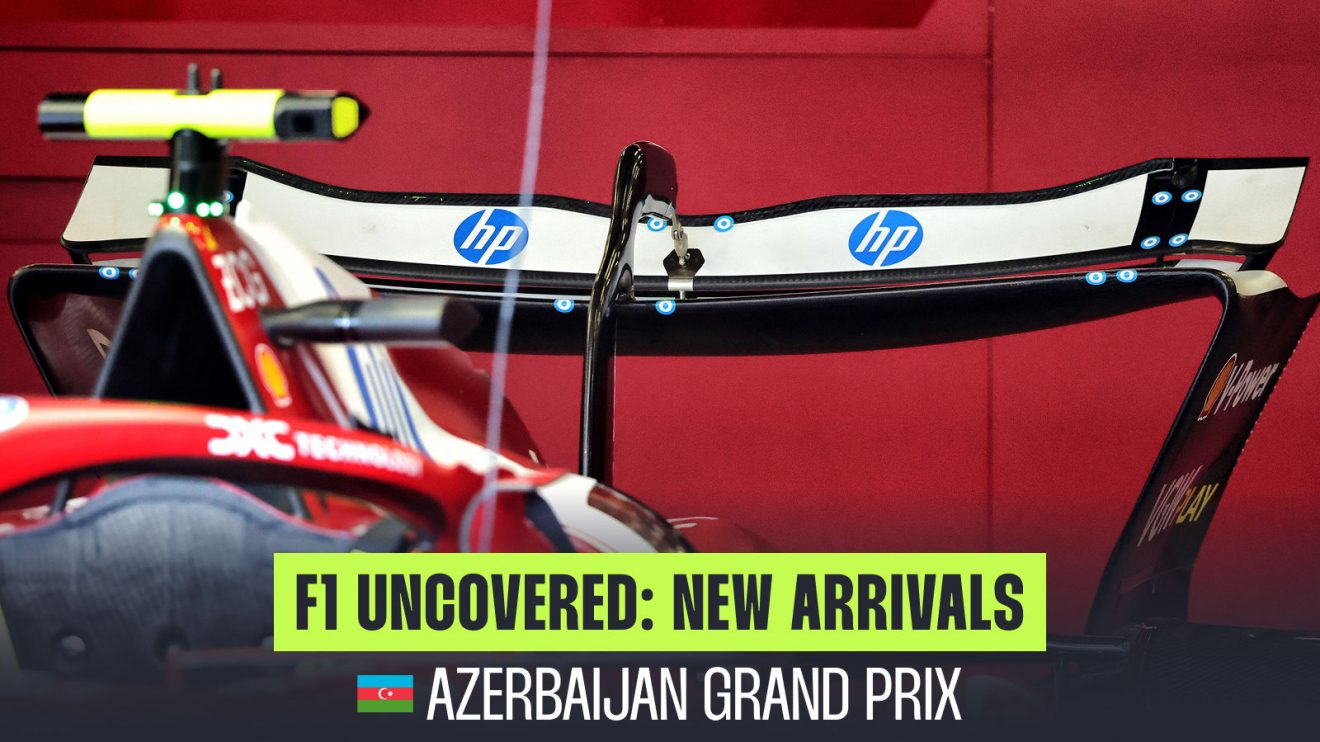
Ferrari has made numerous attempts at picking the lock that appears to shackle the SF-25 throughout the course of this season, with the car’s latent performance seemingly always just a little bit out of their reach.
And, despite their focus having already shifted to next year’s campaign some time ago, there’s still going to be the odd scheduled adjustment they’ll make to the car between now and the end of the season, as they continue that search.
A quick trim

One of those arrived at the Azerbaijan Grand Prix, with the size of the outlet on the front brake duct increased, in order to assist in rejecting the heat being generated by the assembly. This may also alter how the tyres behave, given how inextricably linked they are from a temperature point of view.
To further dial the car in for the circuit’s characteristics, Ferrari also set about modifying their rear wing, with a trim applied to the trailing edge of the upper flap.
This modified variant of the design that was introduced at the Belgian Grand Prix was tested more extensively by Charles Leclerc on Friday, whilst Lewis Hamilton was charged with collecting more data with the higher downforce configuration.

This trimmed element, which saw a large section of the flap’s trailing edge cut away to reduce drag further still, was also paired with modifications that the team had made to the front wing, in order to balance the car front-to-rear.
In a similar fashion to the cutouts in the trailing edge of the rear wing’s upper flap, the front wing’s upper flap was also trimmed.
Incisions made at either end of the flap (arrowed, with the specification used in Belgium inset) reduce the chord of the element in those regions and result in the wing producing less downforce, in order that the two match up with one another.

The data captured from both cars was later scrutinized by the team, as they assessed the pros and cons of both arrangements, not only in terms of how much that improved their single lap pace but also how it would have an impact on their race pace.
Ferrari took the gamble on the lower downforce option for qualifying, with both cars fitted with the trimmed rear wing element, as they looked to boost their straight line speed performance.
Ultimately, poor strategic decisions during qualifying led to Lewis Hamilton being dumped out in Q2, whilst Leclerc’s trip into the barriers on a slick track surface put pay to the Monogasque’s attempt at taking pole position having progressed to Q3.
Despite their poor qualifying performance, Hamilton was at least buoyed by the pace the car showed on Friday and is optimistic there’s still opportunities come race day
“I’m really hoping tomorrow that we’ve got good straight line speed, we should hopefully be able to fight guys, you know, so much can happen here that all sorts of strategy can come into play.
So I’m just gonna come into it as optimistic as possible, and I’m still gonna try and get into the top three. That’s been my goal all week”.
Read next: Could this be the moment Norris lost the World title to Piastri?