

How Max Verstappen stunned McLaren at Monza as key corner costs Lando Norris


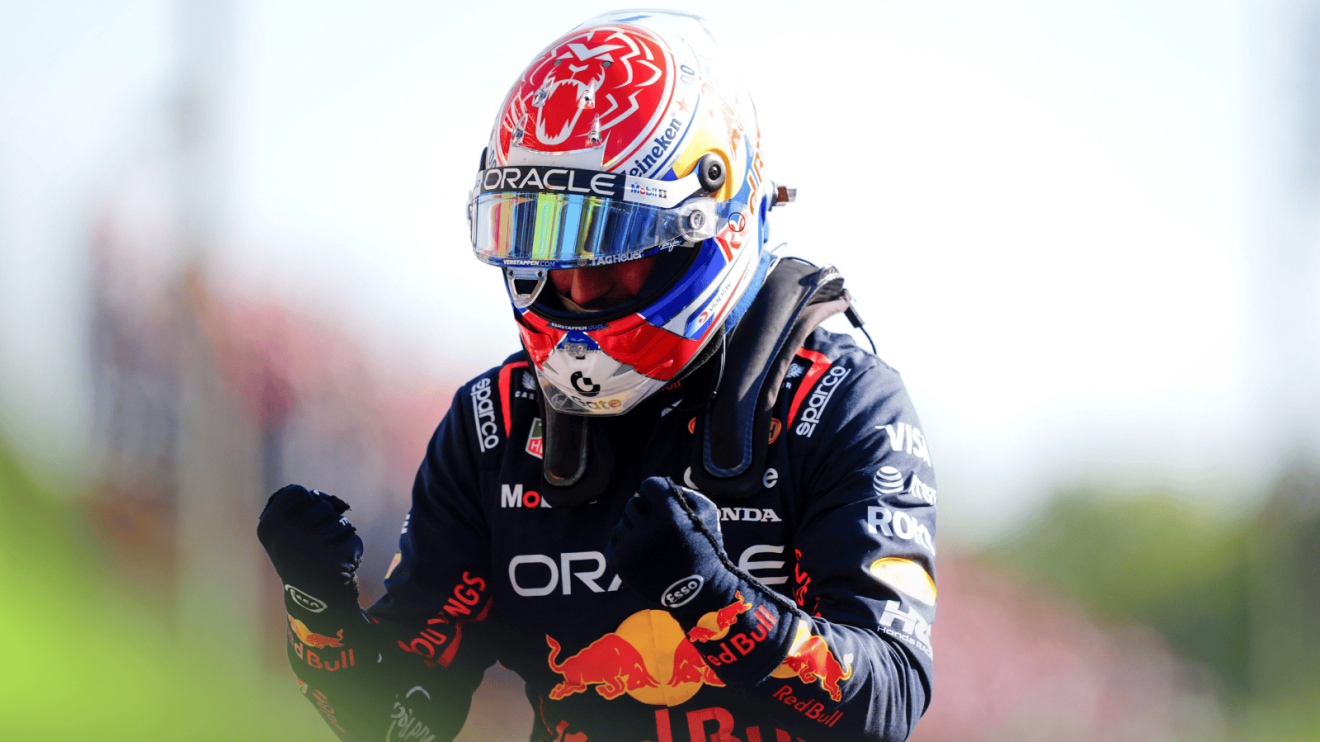
Red Bull driver Max Verstappen celebrates after claiming pole position for the 2025 Italian Grand Prix
In an extremely tight qualifying session, Max Verstappen emerged as the driver who managed to claim pole position while simultaneously setting a new lap record at the legendary Monza circuit.
The reigning world champion once again managed to defeat both dominant McLaren drivers this season and reminded everyone why he is a four-time world champion. Let’s take a closer look at how Max managed to secure pole position.
Max Verstappen sets new lap record at Monza
After three free practice sessions in which the Red Bull drivers did not particularly shine in terms of outright pace, all eyes were initially on McLaren, followed closely by Ferrari, who looked very strong throughout.
However, yet again this season, Verstappen managed to snatch pole and beat the dominant McLaren car — this time with a margin of just 0.077 seconds over second-placed Lando Norris.
Given the extremely high average speed around Monza, qualifying gaps are naturally small and the tiniest details — from braking points to throttle application and corner exits — become decisive.
Max Verstappen vs Yuki Tsunoda: Red Bull head-to-head scores for F1 2025
? F1 2025: Head-to-head qualifying statistics between team-mates
? F1 2025: Head-to-head race statistics between team-mates
The RB21’s key advantage over the McLaren was its reduced drag, which is the most critical parameter at Monza.
The Dutchman enjoyed a higher top speed, but reduced drag also comes with reduced downforce, which can lead to instability under braking — particularly when entering Turn 1.
That’s also the hardest braking point on the entire calendar, and a lack of front-end downforce makes front locking far more likely.
Let’s examine a direct comparison of Verstappen’s and Norris’s fastest laps, which reveals the differing characteristics of their respective cars.

As previously noted, higher top speed played into Verstappen’s hands and telemetry data shows that he gained a tenth of a second just before braking for Turn 1.
In the first chicane, Max actually outbraked Norris despite having less downforce, gaining yet another tenth on the McLaren.
Through Turns 4 and 5, both drivers were remarkably evenly matched. They navigated this section flawlessly and the delta line remained more or less static.
That was until the Lesmo corners, where McLaren’s higher downforce began to show its benefits.
In the picture above, you can see a visible difference in apex speed between the two drivers.
Onboard footage also reveals that Verstappen had to deal with a degree of understeer in Turns 6 and 7, which certainly affected his lap.
Norris regained nearly all of Verstappen’s advantage through this section alone.
In the chicane between Turns 8, 9 and 10, the delta remained unchanged.
Whatever Verstappen gained on the straights, he tended to lose in the corners — and vice versa — meaning the gaps essentially neutralised each other.
On approach to the final corner — Parabolica — Verstappen again held a slight top-speed advantage.
However, Norris had been extremely quick through Parabolica all weekend, so this corner should have presented an opportunity.
This time, though, he wasn’t able to capitalise on that speed and was actually slightly slower than Verstappen, who braked later and applied throttle earlier on the exit.
Verstappen gained only a small amount of time here, but crucially, just enough to extend his lead.


Could Lando Norris Have Done Better?
The simple answer: yes — he could have.
Despite a sensational lap from the Dutchman and the fact that Monza-style circuits aren’t ideal for the McLaren, the gap between the two cars is still evident.
Comparing Norris’s lap to Piastri’s reveals that Lando was slower through the Ascari chicane, indicating clear room for improvement.

Starting second on the grid means Norris will have to find his way past Verstappen on track — either through pure racing or via a superior strategy.
Monza is a circuit where overtaking is difficult — but not impossible.
The first lap will likely present his best opportunity to seize the lead. But whether he can pull that off remains a huge question.
If we recall Norris’s struggles at race starts — both this season and last — and add to that the fact that he’s up against Verstappen, renowned for his wheel-to-wheel racing, the odds are not in Lando’s favour in the opening lap.
Moreover, Red Bull demonstrated solid long-run pace during FP2.
On medium tyres, the reigning champion was quicker than Piastri and not significantly slower than Norris, whose average lap times were the best overall.
Given Leclerc’s victory here last year, all teams are likely to pay more attention than usual to a one-stop strategy and use it as the baseline to defend against rival tactics.
It will be extremely interesting to see whether Norris or Piastri can defeat the slower Red Bull in Verstappen’s hands on a track where overtaking remains a significant challenge.

Read next: New Max Verstappen evidence as key Red Bull change spotted after Italian GP pole


