

World Champion, playboy, activist? Remembering a different side of James Hunt


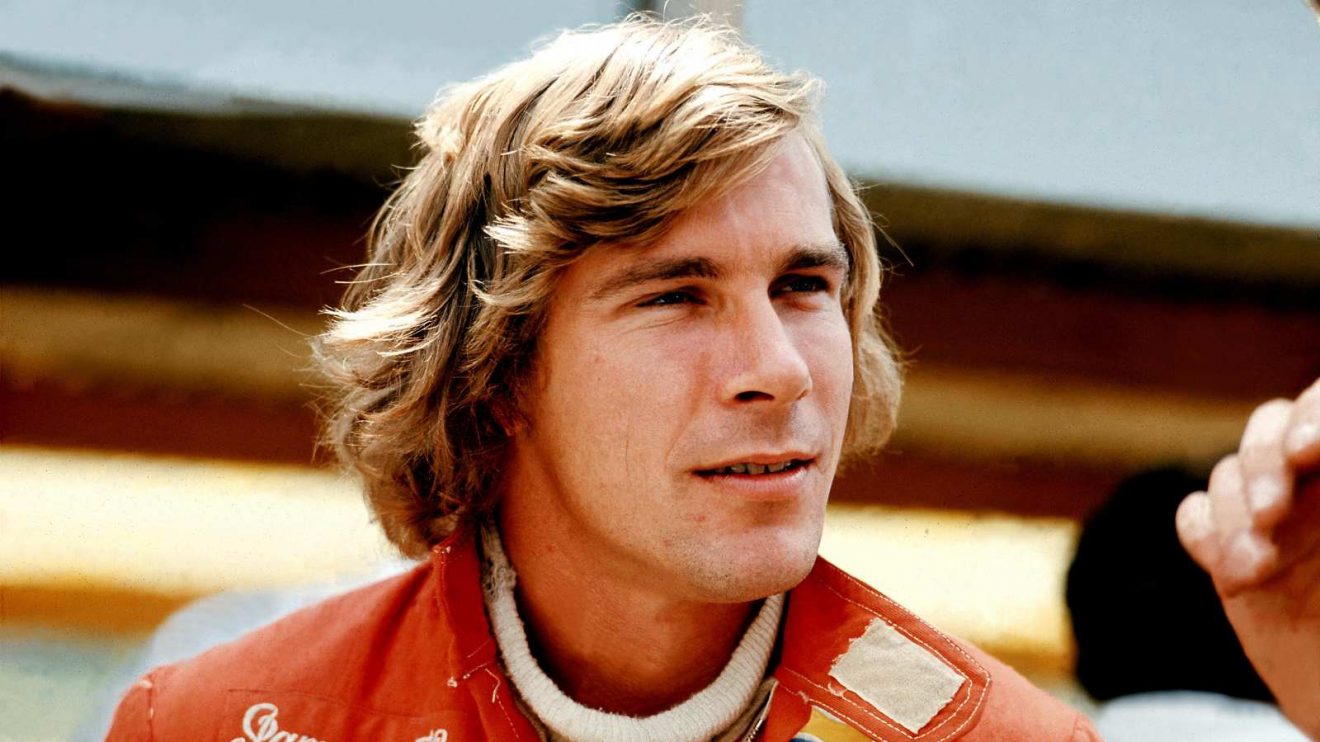
A young James Hunt looks off into the distance.
James Hunt is often remembered for his larger-than-life personality that made him a hit both as a Formula 1 driver and, later, as a commentator. He’s remembered for his love of the party scene, for his 1976 World Championship battle with Niki Lauda, and for the tragic circumstances of his death.
But today, on what would have been Hunt’s 77th birthday, we’re looking to remember a different side of James Hunt: the anti-apartheid activist.
The complex story of James Hunt
Born on August 29, 1947, James Simon Wallis Hunt was practically destined to become the kind of character that sticks indelibly in the minds of everyone who met him.
Hunt got his racing start in touring cars, starting behind the wheel of a Mini at Snetterton Circuit. After moving up through Formula Ford and Formula Three, Hunt found himself at something of a dead end career-wise — until Lord Alexander Hekseth purchased a March 731 chassis with the intent to go Formula 1 racing.
Hunt raced sporadically in F1 in 1973, taking an impressive second-place finish at the United States Grand Prix. He took his first win for the team two years later; when Hesketh ran out of funds to continue in the sport, Hunt was well positioned to take advantage of an offer for a McLaren ride.
His first year with McLaren, 1976, was a watershed, and Hunt came out victorious after a season-long battle with Ferrari’s Niki Lauda and after Lauda missed several races due to the horrifying injuries he sustained at the Nurburgring.
Hunt took three wins in 1977, but by that point, his career was slowly on a downturn, and he retired from F1 in 1978. Soon after, he joined Murray Walker as a commentator for the BBC, where his dry wit, insight, and fearless criticisms made him a hit with fans after years of his sauntering, swagger-filled personality served him well in his driving years.
Hunt died in 1993 after sustaining a heart attack at just 45 years old.
More nostalgic Formula 1:
? The scandalous story behind the man who introduced glamour to F1
? How a Donald Duck backpack stuffed with cash helped a driver enter F1
Sadly, Hunt’s legacy has long been confined to a fairly surface-level engagement with his party-heavy lifestyle and his swagger-filled quotes. In reality, he possessed a strong moral compass — one that saw him adamantly oppose apartheid, a form of systemic racial segregation that took place in South Africa.
Apartheid lasted from 1948 through the late 1990s, which effectively wrote race-based discrimination into law. While many international sporting associations stopped competing in South Africa as a result of apartheid, Formula 1 remained.
Hunt was a staunch anti-apartheid activist. In a 2013 story in The Daily Mirror, the late Murray Walker even recounted his co-commentator “launching into an attack on apartheid.”
“We were once covering the South African Grand Prix during the days of apartheid,” Walker recalled.
“All of a sudden, and for no particular reason, [Hunt] launched into an attack on apartheid.
“It was nothing to do with the Grand Prix, nor would it do British-South African relations any good. Our producer pushed a piece of paper across saying: ‘Talk about the race!’
“And then James blurted out on air: ‘Thank God we’re not actually there!'”
Calling out apartheid on air was a bold strategy, but Hunt was the kind of figure who could take that risk without risking his livelihood. He even attempted to have his commentary blocked in South Africa — something F1 adamantly denied.
So, when it became clear that Hunt wouldn’t be able to make any change on that front, he instead began making charitable donations to anti-apartheid causes for years.
In a August 2013 diary in The Guardian, a fan recalled, “During the South African apartheid years, I organised and chaired a discreet meeting in central London for wealthy individuals and foundations wanting to support black-led groups working for change there.
“The meeting had just started when the doorbell rang. A vaguely familiar-looking chap apologised for being late and asked if he could park his bike in the hall.
“It took me a while but eventually the penny dropped. Hunt was by then commentating on grand prix racing, alongside Murray Walker.
“He didn’t want his commentaries broadcast in South Africa, and when they were, he channelled his fees towards groups struggling for change there.”
Formula 1’s 1985 race in South Africa was hugely controversial; some teams had boycotted the race, but drivers like Ayrton Senna expressed conflicted emotions about implicitly supporting a regime they didn’t believe in.
“I am personally against the regime,” Senna said at the time, “I would not like to go there, but I have a commitment to my team.”
When drivers had their hands tied by the complexities of navigating politics on an international stage, James Hunt stepped up to speak out against apartheid and to funnel his money into causes he believed in.
There’s much of the James Hunt legacy to love — but today, we celebrate a staunch activist who understood the importance of using his power to make a change.
Read next: Six forgotten Grand Prix circuits that Formula 1 used to race on