

How one snow storm transformed NASCAR Cup Series history forever


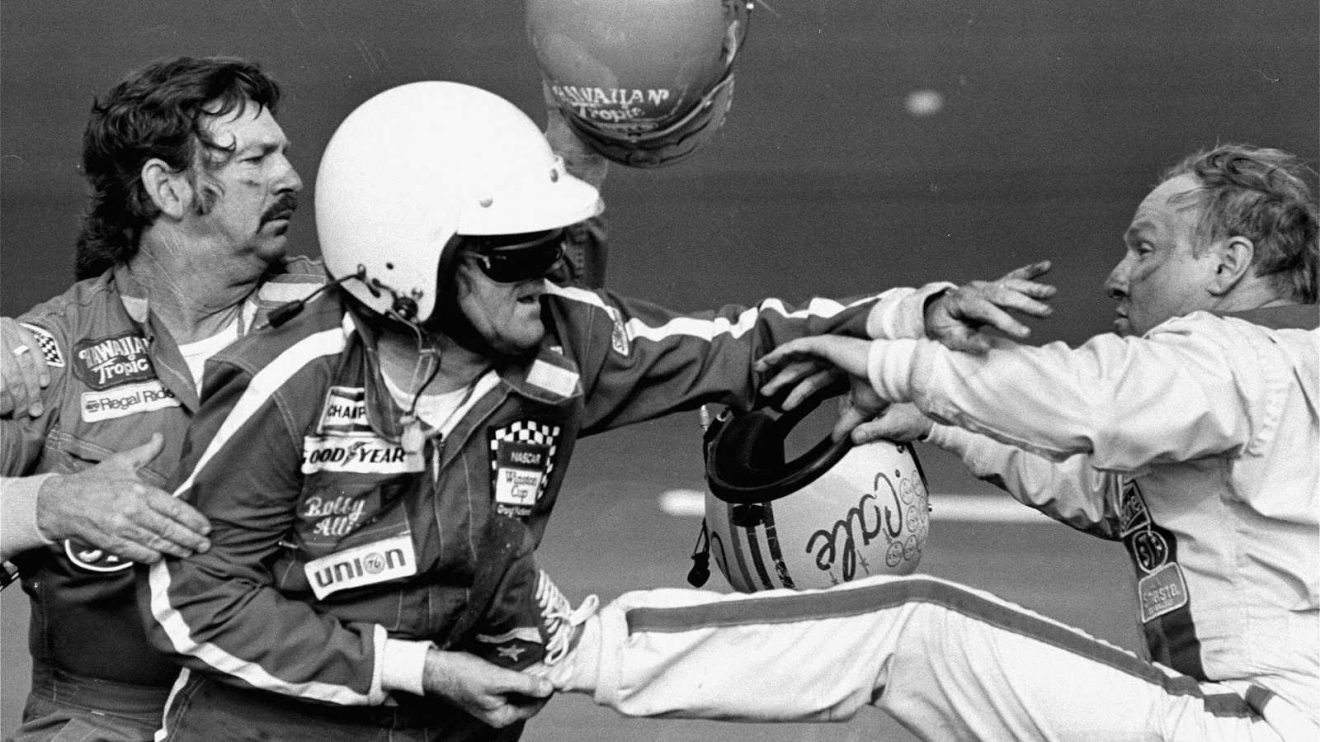
Cale Yarborough brawls with Bobby and Donnie Allison after the 1979 Daytona 500.
Today, we take it for granted that motorsport is streamed live for our consumption: If a race is happening somewhere in the world, there’s a good chance we can stream it from start to finish. But in America, the first event to really make a splash was the 1979 Daytona 500.
While plenty of folks likely intended to tune into the first flag-to-flag coverage of a 500-mile NASCAR race, the viewership numbers received a massive boost thanks to a snowstorm that kept most of America indoors — and the fistfight that turned stock car racing into an unforgettable spectacle.
Snow and fighting conspired to make the 1979 Daytona 500 a splash
NASCAR’s top level of competition, what we now know as the Cup Series, got its start after the repeal of Prohibition nixed the need to run moonshine. Down South, the adrenaline junkies with heavily modified cars needed to find something to do with them, and many turned to racing them around local oval tracks to make a quick buck. However, the lack of oversight or organization often led to sudden rule changes or unscrupulous promoters stealing away with the money intended for the drivers.
But the formal rules didn’t come into place until February 21, 1948, when a Daytona Beach, Florida resident named Bill France gathered together a group of drivers, mechanics, car owners, and race promoters at the Ebony Bar in the Streamline Hotel to create a set of rules by which they’d run their races and determine a set amount of money that drivers were guaranteed to earn any time they competed in a NASCAR event.
The glittering series grew quickly and soon justified construction of a stunning 2.5-mile superspeedway in Daytona. Named Daytona International Speedway, it hosted its first race in 1956 and its first 500-mile event three years later.
In the 1970s, the sport had grown massively. ABC Sports began to air a select number of partial races, while tobacco company R. J. Reynolds funneled money into sponsoring the sport. Prize purses jumped, and drivers were encouraged to compete in all the races in a season.
As the decade wound to a close, CBS Sports announced that, for the first time ever, it would air the entire Daytona 500 live — which was huge news, because even the iconic Indianapolis 500 didn’t earn that treatment.
Twenty cameras were set up on-site for the Great American Race — the most cameras used to cover a sporting event outside of the Super Bowl. CBS promised a transformative experience, not only in airing the entire race, but in introducing in-car cameras as well as low-level cameras positioned on the ground, to really make sense of the cars’ speed.
More from NASCAR history:
? ‘Like riding a buffalo’ – The chaotic story behind Lella Lombardi’s NASCAR debut
? How a labour law loophole enabled the biggest con in NASCAR history
That race broadcast would take place on February 18, 1979 — just in time for a massive snowstorm to sweep through the United States.
That weekend, a winter storm brewed up in the Atlantic, and while forecasters weren’t expecting more than eight inches of snow, huge swaths of the country were completely blindsided by the severity of the event.
Baltimore, Maryland received almost two feet of snow, and the storm system was strong enough that it plowed through Maryland, Virginia, and Delaware and into North Carolina, New Jersey, Pennsylvania and the Midwest. It went down in history as one of the greatest forecasting failures in recent history, but it did meant that huge swaths of America had nothing better to do that Sunday night than flip through their 12 television channels to find something to watch.
Over 16 million viewers chose to watch the Daytona 500 that weekend — a number that the s port failed to eclipse again until the 2000s.
As far as the racing action went, it was a little hit-or-miss. Rain in Florida had postponed the start of the 500 and warranted the first 16 laps be run under caution. When the green flag flew, a series of crashes, miscalculations, and car malfunctions whittled away the field. Richard Petty called it one of the most mentally tough races he’d run until that time.
The 200-lap race began to wind to a close with the promise of some action between leaders Donnie Allison and Cale Yarborough. When the white flag flew, the two were half a lap ahead of the competition. Coming out of Turn 2, Allison held the lead as Yarborough tried to slingshot past him.
The move didn’t work. Yarborough and Allison collided, crashing first into the wall and then into the infield. CBS’s overhead camera desperately panned the field, trying to lock onto the battle that had previously been for third place but was now about to decide a winner. It was Richard Petty that came out victorious that day, winning his record-breaking six Daytona 500 in the process.
Meanwhile, all hell was breaking loose down in the infield. Allison and Yarborough both had different ideas of what happened during their collision, and they were both yelling at each other in the infield. They were at top volume when, suddenly, Bobby Allison — Donnie’s brother — pulled up.
Bobby Allison had been planning to give his brother a lift back to the pits, but Yarborough had a bone to pick with him, too: He felt Bobby had blocked him earlier in the race. So, Yarborough did the only thing that made sense to him: He swung his helmet through the window of Bobby Allison’s car and cracked it against Allison’s head.
Bobby Allison leaped from the car and punched Yarborough in the mouth, only for Yarborough to shove him to the ground and start hitting him with his helmet.
By now, Donnie Allison was involved, shouting, “Hey! You wanna fight? I’m the cat you should be fighting with!” as he dragged Yarborough away from his brother.
Bobby grabbed Yarborough by one arm, and Donnie by the other, as Cale continued trying to swing his helmet at both men. Eventually, a track marshal tried to separate the three men but only managed to knock Yarborough to the ground, giving Bobby Allison a chance to jump on him and keep swinging.
Only when more marshals arrived did the brawl finally come to a close.
CBS only captured a moment of the fracas before the TV director chose to look away — but it lasted just long enough for fans all across America to spot the tension and fall in love.
As America thawed and folks returned to work, the newspapers couldn’t help but moralize about the inappropriate precedent that fight had set for any of the children watching. Many found the whole idea of NASCAR racing stupid to begin with, and the infield brawl made for easy pickings when they headed back to the office.
But the actual viewers had become totally enamored with the hard-charging NASCAR drivers and their rough-and-tumble passion. When fans got back to work the week after the race, that three-way skirmish was the de facto topic of conversation around the water cooler; forget what else happened in the race.
Forget all the caution flags and the attrition. Did y’all see Cale Yarborough take a shot at the Allison brothers? Did you read what Cale said afterward? Did you hear that Donnie threatened to beat Cale’s brains out?
While no other race that year received as much critical attention as the 1979 Daytona 500, the tone was set. Two years later, in 1981, ESPN was born, and more full-length NASCAR races were aired live. The sport was heading for its golden age — and it could thank a well-timed snowstorm for the pleasure.
Read next: NASCAR Playoffs explained: Format, rules, tracks, and schedule