
F1 uncovered: The challenges faced by F1 teams in 2026


As Formula One accelerates towards a new set of regulations, the teams and power unit manufacturers are busying themselves with designing new machinery to handle a vastly different set of challenges.
Let’s recap the basic changes that are being made and delve into some of the alterations that have been made to the regulations since the first draft entered the public domain.
Monumental changes ahead
This new set of regulations is the biggest shift the sport has seen since 2014, when the sport introduced the hybrid power units we’ve been using since. But, whilst the power unit that will be employed from 2026 remains a hybrid, the MGU-H has been removed entirely, putting more emphasis on the MGU-K for recovery and deployment.
Meanwhile, the internal combustion unit remains 1.6 litre V6, supplemented by a single turbocharger that’s arranged around the car’s centreline once more, whilst the sport moves to 100% fully sustainable ‘drop-in’ fuel, rather than the E10 it first introduced in 2022 and has used since.

As you can see in the energy flow chart comparison (above), the loss of the MGU-H does simplify things but, it does put more of an extreme emphasis on the MGU-K, with it now able to recover and deploy up to 350kW versus the 120kW that’s provided in the current power unit setup.
As a rough translation, that 120kW equates to around 160bhp, whereas that’ll roughly become a more eye-watering 470bhp from next season, which is quite the leap and has obviously led to question marks over the amount of recovery that’s required to facilitate the deployment requirements.
However, the wrinkle in this equation is how the energy tapers off, with that 350kW delivered until 290kph, at which point the energy being deployed begins to taper off inline with the increase in the car’s speed. At 340kph that glidepath reaches 100kW and by 345kph deployment reaches zero.
Manual Override Mode
Given that DRS has been ditched as part of the regulatory overhaul, there’s now an electrical deployment tool that the drivers will have at their disposal when looking to overtake their rivals.
Override, as it will likely be more commonly known, will act in a similar way to DRS, whereby the trailing car will have additional deployment when they’re within one second of the car ahead of them at the detection point.
This eradicates the glidepath normally in operation up to 345kph (noted above) and is replaced with a smaller dropoff, as the energy begins tapering at 337kph until reaching zero deployment at 355kph and beyond.

The car’s overall design has also been adjusted for 2026, in an attempt to make them more agile.
This includes the minimum mass of the car being reduced to 726kg, plus the nominal tyre mass that’s still to be announced by Pirelli, which is expected to be around 35-40kg.
At around 765-770kg it still puts the car on the heavy side but is a 30-35kg reduction on current machinery.
Whilst on the topic of tyres, the 18” wheel rim has been retained moving forward but their width has been reduced by 25mm at the front and 30mm at the rear.
This is inline with a reduction in the car’s overall width by 100mm, which is down to 1900mm. There’s also a reduction in the maximum wheelbase, which is 3400mm down from 3600mm.

As we’ve already mentioned, DRS is gone but, in order that the power unit’s needs can be met the sport has opted to introduce active aerodynamics as part of the regulatory overhaul, with two modes to be used – Corner Mode and Straight-Line Mode.
Originally described as X and Z mode respectively when the regulations were first released, we’ll now have moveable aerodynamics both at the front and rear of the car.
This will result in teams being able to design their front wing with movement in the two uppermost flaps, or just the upper flap, depending on how they want to configure the car for the given circuit.

This is combined with a similar arrangement to the outgoing Drag Reduction System at the rear of the car, albeit there can be up to three elements that make up the rear wing in 2026, rather than the two element assembly we currently have. If the team opts to use three elements then the upper two will rotate to reduce drag when SLM is employed.
This could lead to varied design implementation up and down the grid, as each team offsets the performance provided by their power unit against how they design their front and rear wing packages to produce sufficient downforce in Corner Mode versus what’s needed for Straight-Line mode.

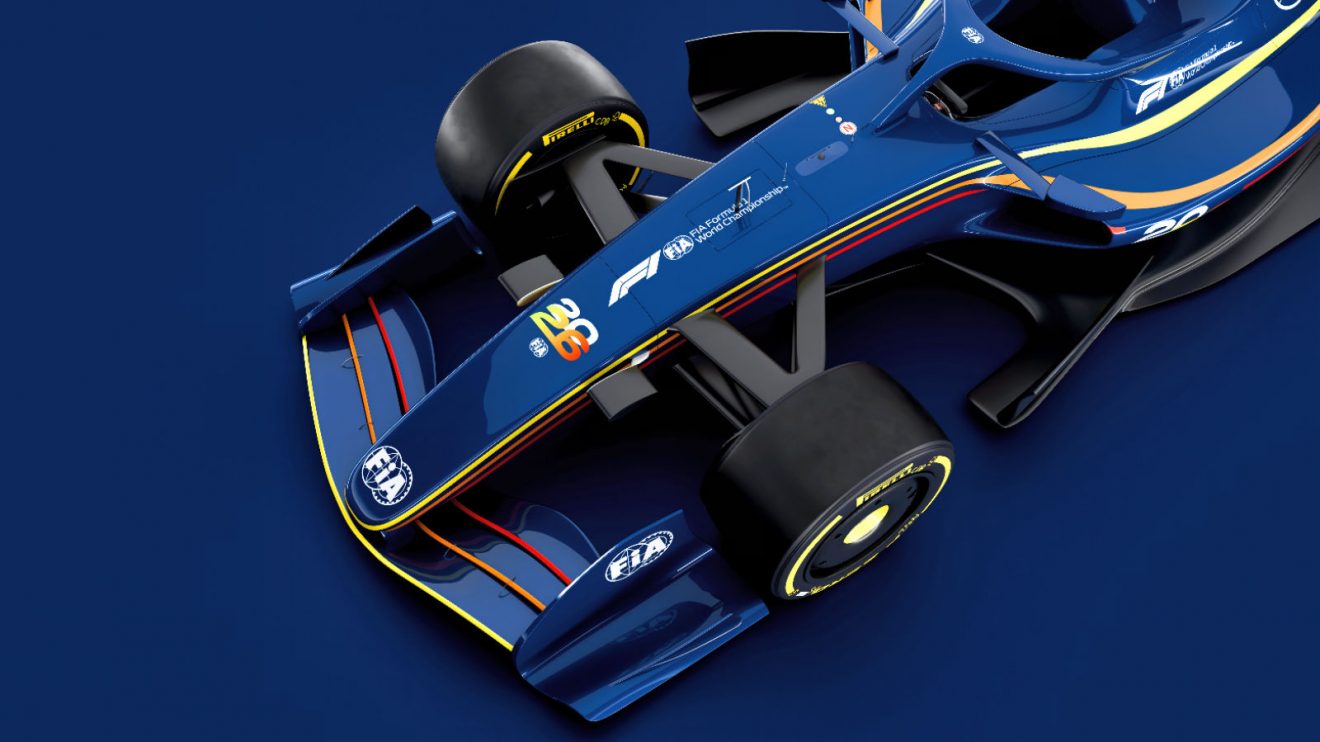
The rest of the aerodynamic package is largely centered around something that looks more akin to the 2019 regulations, with the upturned leading edge and fenced forward floor section seen during that era combined with a return to a relatively flat bottom floor, rather than the current tunnel arrangement. This also results in a much shorter diffuser section than this generation of car and a return to the straked layout we’ve seen before, albeit more constrained than in the past.
And, whilst the overly complex bargeboards that bit the dust at the end of that regulatory cycle aren’t set to return, there is an aerodynamic surface outboard of that, that carries a similar name arriving.
This ‘floorboard’ sits in a similar position to the outermost fence on the current generation of cars and whilst shown to be fairly simplistic in the renders released by the FIA, it will likely undergo a great deal of development during the regulation cycle, as teams look to leverage its performance, not only directly but by improving flow performance up and downstream of it.
In that respect, the twelfth draft of the regulations (we’re now on the thirteenth) has added some scope for development of aerodynamic solutions on the rear corner of the floor, just ahead of the rear tyre.
This region was a hotbed for development during the 2009, 2014, 2017 and 2019 regulation cycles, with different interpretations used depending on the prevailing options available to the designers, albeit all with a similar aim, as they looked to offer resistance to the issue of lateral tyre squirt into the diffuser region.
Conversely we’ll bid farewell to an item that was introduced on the current generation of car, as the front wheel deflectors used to alter the front tyre wake have been abandoned.
We’re also sure to see some interesting design decisions taken when it comes to the sidepods and engine cover, with the current generation of cars having proved to offer an array of options in the early stages before the teams converged on similar solutions.
The teams have obviously learned a great deal about the performance and compromises of some of the mechanical components during the current regulation cycle that will help when designing their new machinery.
However, that’s not to say everything will simply carry over, as the restraints posed by new design factors could play a role in making changes too. For example, where teams have made a switch to pushrod rear suspension since 2022, the new regulations and shorter diffuser will likely see many of the teams return to pullrod suspension again.
It’s a similar situation to the period from 2009 in that respect, where designers saw an opportunity to improve the layout of the car’s rear end from an aerodynamic perspective.
How F1 2026 is shaping up
? F1 2026 driver line-up: Who is already confirmed for the 2026 grid?
? F1 2026: Confirmed teams and power unit suppliers for F1’s huge regulation changes
Litmus test
There’s already been a great deal of chatter regarding how these regulations might not produce the type of racing that the sport is looking for but, that’s been said of regulations in the early stages of their arrival before.
Perhaps on this occasion we might have to look past the initial results and not have a kneejerk reaction, as more often than not, when a change of this magnitude has been made there’s a calm before the storm.
And, whilst there might be some contentious aspects to the regulations, there also appears to be some room for rapid improvement as the teams enter the inevitable quick paced development cycle.
Read next: Cadillac F1: Everything you need to know about the new 11th team