

‘F1: The Academy’ shoots for the stars but misses the mark


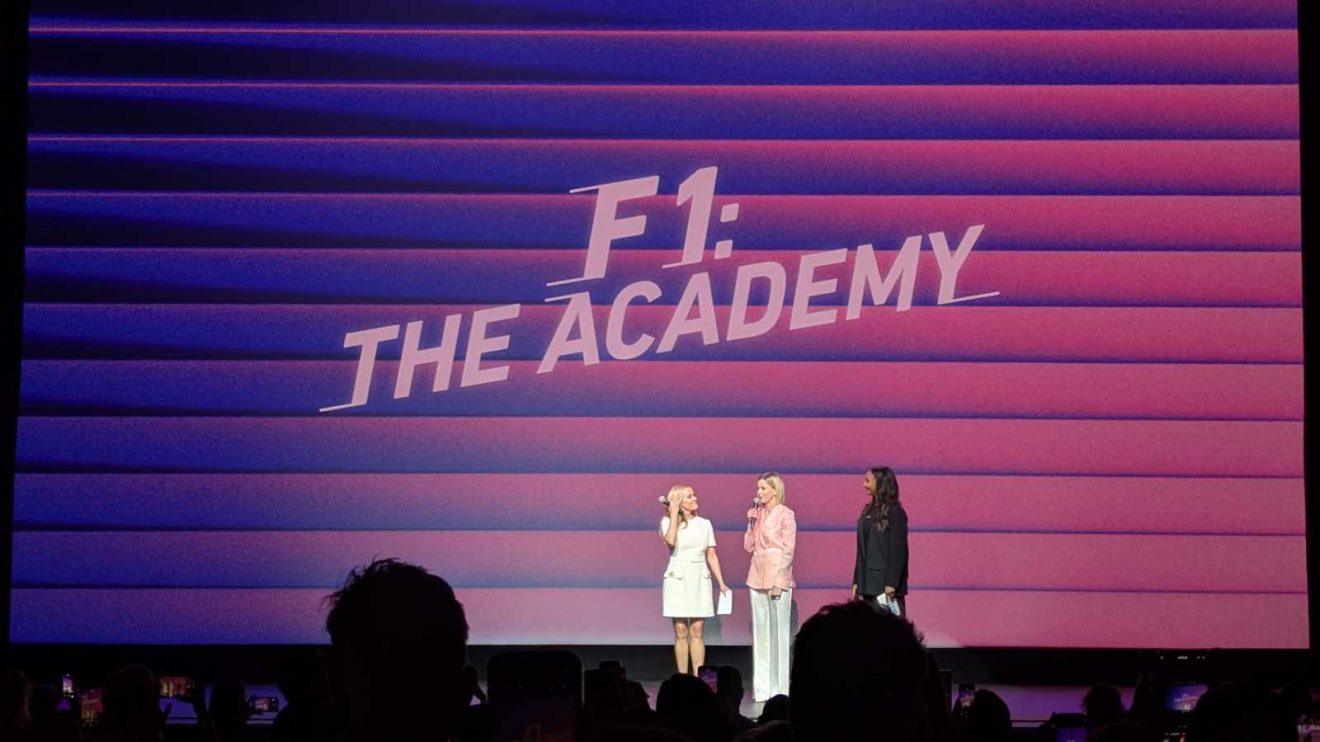
Reese Witherspoon of Hello Sunshine and Susie Wolff of F1 Academy at the debut of "F1: The Academy."
“F1: The Academy,” the docuseries about the all-female F1 Academy racing series, will be hitting Netflix on May 28, 2025 — and it’s worth a watch, even if it doesn’t quite hit its mark.
PlanetF1.com was invited to preview the first episode of “F1: The Academy” ahead of the Miami Grand Prix weekend, and it proved to be an enjoyable ride with some narrative wobbles.
‘F1: The Academy’ asks teen girls to be reality stars
Before I really dig into my review of F1: The Academy‘s first episode, I want to preface by saying I truly did enjoy what I saw! The production quality and framing were fantastic, and it was a privilege getting to better know the young women racing in F1 Academy. But the problem is that not everyone is cut out to be a reality star — nor should they be.
In short, F1: The Academy is a docuseries in the vein of Netflix’s highly popular Drive to Survive, in which a full season of racing is distilled into a handful of episodes. In F1 Academy’s case, its seven-race 2024 season has been summarized in a seven-episode series produced by Reese Witherspoon’s production company, Hello Sunshine.
The first episode picks up at the second weekend of the season, the Miami Grand Prix. After a brief introduction to the concept of the series and its goals, we’re pulled into the realms of Lia Block and Bianca Bustamante.
Right off the bat, F1: The Academy highlights a fascinating tension between the two teammates. Block is a second-generation racer whose father, Ken, was a hugely popular rally driver until his death in a snowmobile accident in 2023. Nevertheless, she declares herself an introvert, which we learn as she makes an appearance on Good Morning America, and viewers certainly get the sense that she finds this docuseries out of her comfort zone.
On the other hand, you have Bustamante, who is as much a racer as she is a social media influencer and all-around socialite. We’re introduced to her performance coach, who makes regular quips denigrating her social presence and driving skills, and we aren’t introduced to much of Bustamante’s backstory — though her roots as a young female racer in the Philippines could make for a great narrative throughline.
More on F1 and Netflix:
? Five things we learned from watching Drive to Survive Season 7
? Netflix eyeing major F1 broadcast deal after Drive to Survive success – reports
I enjoyed that episode, feeling like I learned far more about both drivers than I’d known before — but the narrative did admittedly feel a bit wobbly.
The omissions of Bustamante’s history feel particularly glaring when we learn so much about Block. We’re also briefly introduced to other drivers, like Lola Lovinfosse and Abbi Pulling, but without much context as to who they are.
I grant that both of these are points that could easily have been addressed in later episodes, but I also felt the set-up to their introductions left me wondering why, narratively, I was hearing about these drivers at this specific time.
F1: The Academy also lacks the primary features that made Drive to Survive so compelling: History and rapport between drivers.
Many brand-new fans who enjoyed DTS did so because the series did a great job at immersing viewers in an all-new world, where stakes are naturally high but made all the higher because these drivers have all been trying to triumph over one another in this niche world for years.
This opens up narrative opportunities to dig into the conflict between Pierre Gasly and Esteban Ocon, or to give drivers their own cameras for a weekend to see what they capture of their fellow competitors, who also happen to be their friends.
Or, we can look at Daniel Ricciardo’s struggle to prove his worth at Red Bull in the first season of DTS evolve within a deeply nuanced atmosphere: He was promoted to the team with the goal of rivalling Sebastian Vettel, only to feel so isolated in the team that he inks a deal with Renault — and Renault, if you remember, is also actively battling against Red Bull in a war of words. Ricciardo’s move leaves Carlos Sainz Jr. without a seat — himself a former Red Bull junior who has once again been left out in the cold by his team.
Those tensions, by design, will not exist in F1 Academy. Drivers are limited to two seasons in the series, after which they must find their own path forward if they’re unable to win a title. That doesn’t provide much time to get to know your fellow competitors — and it certainly doesn’t allow for years-long tensions to simmer just below the surface, since these drivers are at the start of their careers. The result is a much flatter narrative than DTS — and that’s an issue that has plagued almost every single imitator of that docuseries, from Box to Box’s Full Swing to NASCAR: Full Speed.
Personally, I think there’s still fertile ground to explore with F1 Academy… but it’s ground that I don’t think drivers will want to cover.
In the first episode, we see Lia Block slowly find friendships within the F1A paddock; as a self-proclaimed introvert, audiences can intuit that this is difficult for her, but we don’t see much of it.
As a former teenage girl myself, I know just how intricate it can be to navigate friendships with your peers — though I have no experience in doing so in such a highly charged environment, where those peers are also my direct competitors. I know that, below the surface of those early awkward exchanges, there’s a fascinating story to tell about personal growth, about friendship, about sport, about what life should mean, and so much more.
But as a former teenage girl, I also would have been mortified by the very idea of a camera crew probing into the insecurities and pains that accompany that period of life. Because these teenagers are also gunning to become race car drivers and not reality stars, they have no obligation to share those deeply personal experiences with the camera.
Because they are young women who have so many misconceptions and stereotypes playing against them, sharing those raw experiences could be an active detriment to their career. It’s been over a century, and naysayers still argue women are too emotional for motorsport; why should any of these young women then share those emotions with viewers, knowing it could be the reason they’re not hired for a job in the future?
None of this is to say F1: The Academy is bad; as I mentioned before, I really did enjoy the first episode! Unfortunately, its very subject matter may be what prevents it from finding the same culturally relevant legs that DTS ultimately found.
I do, however, think F1: The Academy will be a worthwhile watch for race fans no matter what. We should absolutely understand what it’s like to compete at the early stages of the European open-wheel ladder, and representation is critical in showing young girls that they can race cars, too.
F1: The Academy begins streaming on Netflix on 28 May, 2025.
Read next: F1: The Academy – How can I watch Netflix’s Female-Focused Drive to Survive?