
F1 2026 uncovered: The design clues that Red Bull and Racing Bulls renders reveal


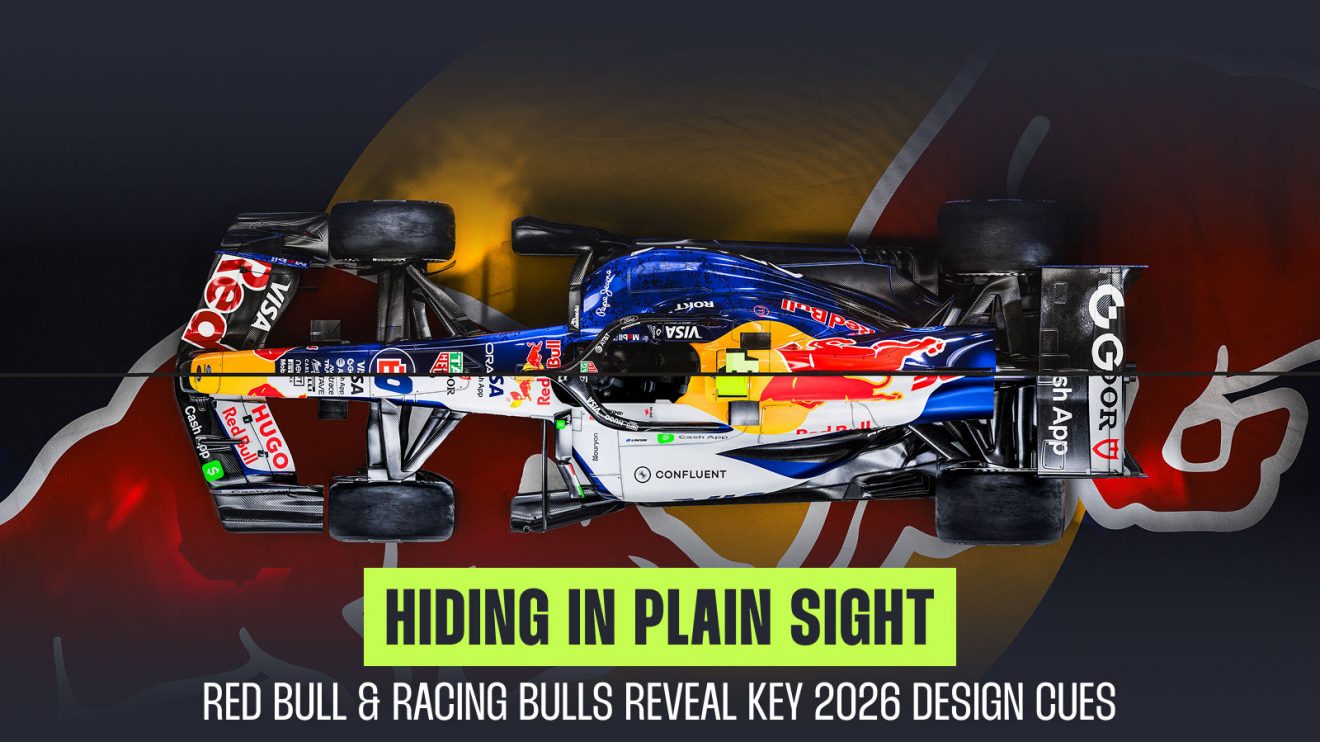
Let’s make something clear from the get-go, the physical cars that Red Bull and Racing Bulls have shown in their launch today aren’t going to be this year’s car.
However, the renders that the team have presented do offer some value, as they present us with an opportunity to see how different design houses work their way around the same problems, even if most of what we’re seeing on the renders may be from an earlier phase of the project.
Insight into 2026
Want more PlanetF1.com coverage? Add us as a preferred source on Google to your favourites list for news you can trust.
Obviously I’m not going to analyse these cars in fine detail, but the release of the renders by Red Bull and Racing Bulls does present us with our first real opportunity to see where the design of these cars will diverge initially before we start to see teams home in on what will eventually be trends or common themes up and down the pitlane.

Comparing the front of the cars we’re able to see some very different approaches to the front wing and nose architecture, with Racing Bulls opting for a shorter but raised nose tip when compared with the Red Bull.
This suggests that they’ve opted for a different cockpit position, which also has an impact on the location of the front axle line and as a consequence what can be done with the nose to some degree.
The shape of the nose tip is largely dictated by some of the dimensional criteria mentioned above but there’s clearly some different choices having been made by the two teams aside from that, not only in terms of the pylon’s makeup but also the contouring of the tip itself.
The level of design maturity in Red Bull’s front wing assembly seems to be much further along than Racing Bulls, in these renders at least, with much more curvature present in the leading edges of each element, which in turn alters the shape of the elements across their span and chord length too.
There’s also a difference in opinion when it comes to the way in which the ‘active aero’ portion of the front wing operates, with Red Bull having opted for a single actuator in the centre of the assembly, beneath the nose, whilst Racing Bulls have an actuator pod on either side of their wing, which obviously comes with its own aerodynamic consequences.
The way in which the moveable and non-moveable sections of the wing are set up are different too, with Red Bull taking a much more subtle approach around the joints, whereas Racing Bulls appear to be using them to create their own aerodynamic function.
The footplate, its furniture and the diveplane, the latter of which is not present on the Racing Bulls, are all much more mature in terms of design on the Red Bull too, which shows that there is some room for creativity and that teams will likely have a different approach to their design philosophy here.
There’s different locations and shapes for the front brake duct inlet on the two cars, showcasing the scope that’s available within the regulations for this region, whilst the front suspension layout shown in these renders is a pushrod arrangement, the positioning of the elements and fairings do have some individuality to them, likely to account for the variation in dimensions between the two.

Moving more toward the central portion of the car and there are some similarities to the overall design choices taken with the deflector arrays but, clearly, there are some differences in how they connect to the ‘floor foot’ below and the geometry of that surface (also see the insets) along with the actual makeup of the elements within the deflector.
For example, Racing Bulls have already seemingly found a way to make theirs work like a four segment arrangement, rather than the three elements that the regulations suggest.
This area of the car will undoubtedly be a hotbed for development during these regulations, as the teams search for ways to manage the turbulence generated by the front wheel assembly and how they work with the sidepods and floor around them.
I’ve also cropped this image to include a view of the front wheel, for which there are changes in how the teams handle the aerodynamics of this region for 2026.
There had been a specification wheel cover arrangement with the previous generation of car, but now there’s freedom for the teams to develop some of their own concepts, with a clear separation seen here between the two in order that they can manage the turbulence being generated.

The sidepod and engine cover solutions seen in these renders are also indicative of what you can expect from this generation of machinery, be it due to the constraints posed by the regulations or the conceptual cues taken from the team’s experience with the previous generation of car.
In Red Bull’s case we see a similar overbite, shallow inlet arrangement to the one used by them before, whilst Racing Bulls have a more open, periscope inlet arrangement.
However, it’s what the teams are going to do with the sidepods in terms of their overall bulk that will be interesting with this generation, as the previous iterations used the bodywork to help deal with the front wheel wake turbulence, due to the lack of control they had from other aerodynamic devices.
This wake control will likely be evident in the geometries used with the new cars too, which might be apparent in the shapes shown above, albeit in certain areas the teams may be able to return to some of the more shrink-wrapped detailing that we saw two or more generations ago.

This is perhaps more evident when we look at the floor exposure from above, with a much more tapered approach for the lower bodywork taken into the coke bottle region, whilst the upper and lower bodywork separation that we saw across the previous generation of cars is still present to help deal with the cars cooling requirements.
The teams also fought for some additional help with controlling the rear wheel turbulence during the formation of these regulations and have been granted some scope in the rear corner of the floor to help with this issue.
Without intervention the turbulence can wreak havoc on the flow through the diffuser, as flow is squirted dynamically into the diffuser as the tyre deforms.
This heralds a return to the sort of solutions we saw in the generations that preceded the ‘ground effect’ generation of cars, with teams free to add slots and holes of varying geometries in this region.
And, we’re already treated to some of the variety we can look forward to seeing, with Red Bull adopting a more simplistic slot arrangement parallel to the floor’s trailing edge, whilst Racing Bulls have presented a much more detail oriented longitudinal solution.
There’s a pushrod suspension layout employed at the rear of both cars too, as will likely be the case up and down the grid owing to how much a pullrod layout might encroach with the diffuser, the height and length of which exceeds what we saw with the last generation of ‘flat bottom’ cars.
Of course neither team has shown images of the diffuser layout, as you’d expect, with us left waiting for shots of the actual cars to get an idea of how they might be laid out.

However, we have now got an idea of how the teams might approach the design of the rear wing, given the switch to three elements, rather than two and the consequences posed by having Active Aerodynamics too.
In both instances the first element is much longer and less cranked than the two, shorter chord upper elements, which as anticipated will do much of the heavy lifting when cornering, whilst the downforce and drag will be shed on the straights.
The smaller box region that the elements occupy within the regulations mean that there’s also going to be much less scope in terms of what can be done around them when designing the endplates.
However, it’s clear that there’s a very small notch taken out of the upper rear corner on the Red Bull endplate, suggesting how detail oriented they already are here, even with less to work with.
So, whilst the renders shown can obviously be taken with a pinch of salt and we can look forward to seeing how different the cars look when they physically break cover, there’s certainly some merit in understanding how different the cars can look, especially when compared with the renders first produced by the FIA.
Read next: Red Bull ‘not naive’ as Mekies warns of ‘first few months’ struggles