

Explained: How IndyCar drivers and teams get their race numbers


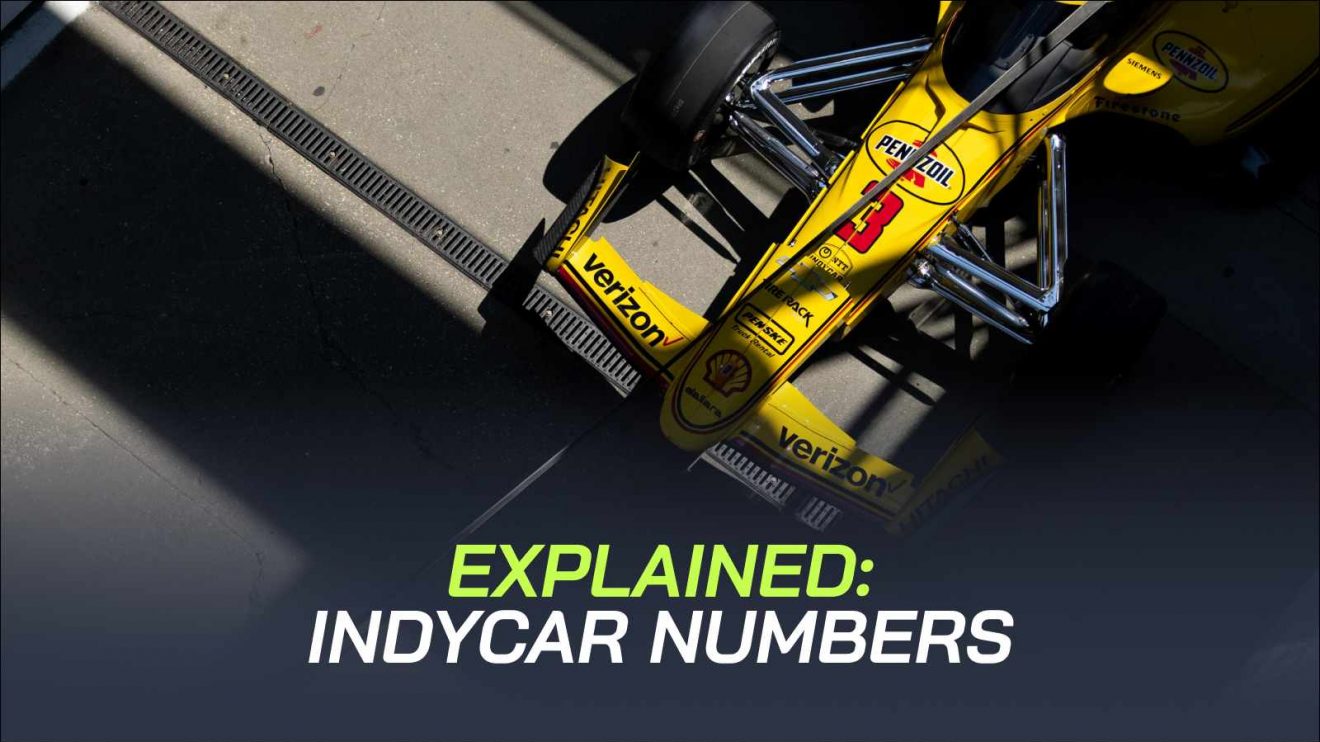
Why does Team Penske always have a No. 3 in IndyCar? Let's find out.
When it comes to identifying drivers on the race track, the easiest way to do it is via the numbers on the cars. But that can be easier said than done.
Over in Formula 1, drivers select a number that will represent them for the duration of their career — but in IndyCar, things are different. Instead, the numbers that a driver can use are limited to a certain selection from their team. Today, we’re going to understand how that works.
How car numbers work in IndyCar
Formula 1 fans looking into other racing series can find themselves a little confused by the numbering systems that are used in other sports.
Even in Formula 1, the car number system has changed over the years. Contemporary fans are familiar with the permanent number system, where drivers select a specific number to represent them for the duration of their F1 career, but that format was only introduced back in 2014.
In fact, a consistent race-to-race numbering system didn’t exist in F1 until 1974, when teams were assigned numbers. Prior to that, drivers were given numbers by race organizers, which would differ from one event to the next. And in 1995, a new system was introduced where teams were assigned numbers based on their finishing order in the Constructors’ Championship the year previously.
Over in IndyCar, things are a little different, and in honor of the season kicking off this weekend at St. Pete, we’re going to dig into it.
How IndyCar compares to Formula 1:
? F1 v IndyCar: Top speeds, engines, formats, calendars and safety measures all compared
? Formula 1 v IndyCar: How open-wheel racing’s hybrid powertrains compare
The teams are responsible for selecting the numbers for their IndyCar machines. Car numbers are assigned to entrant licenses; entrant licenses are the licenses that are required for an individual team to run an individual car.
In modern IndyCar, most teams run two or three cars. That means that each team will have to or three entrant licenses, as well as two or three numbers to assign to those entrant licenses. But teams are able to pick those numbers as they see fit.
Most teams have a slate of numbers that they prefer to use, and if those teams compete in NASCAR as well, you’ll likely note that the numbers will be similar between them. IndyCar can reassign numbers if a team isn’t using them for a specific car, but there’s generally a respect for a team’s chosen numbers.
Team Penske, for example, likes to run the Nos. 2 and 3, which hearkens back to the days when car numbers were assigned to teams based on their championship finishing position. Racing with 2 and 3 meant that your team also had the championship — and Penske retains that nod to the series’ past.
Penske also uses the Nos. 12 and 22 — the former because it pays homage to Penske’s first IndyCar driver Mark Donohue, who competed until the 12; meanwhile, the No. 22 is in deference to sponsor Shell, which wanted a number in the 20s.
Over at A. J. Foyt, you can always guarantee you’ll see a No. 14, which is because that’s the number Foyt himself used when he won his first Indy 500. The number earned a place of honor in Foyt’s life, so he now uses it to denote the number-one driver on his team.
Chip Ganassi Racing started out using the No. 9 by default and over the years has scooped up the Nos. 8 and 10, just so the Ganassi machines stick in a similar sequence.
Rahal Letterman Lanigan Racing uses multiples of 15, while Meyer Shank Racing must have a No. 60 — and, if there are additional cars on the team, then owner Mike Shank will add the No. 6 and/or the No. 06.
Other numbers feature close ties to a driver, sponsor, or team partner. When Jimmie Johnson competed in IndyCar, he raced under the No. 48, as he had done in NASCAR, because CGR reserved the number for him. When Rick Ware Racing partners with Dale Coyne, it uses the No. 51, which it uses in many other series as well.
Newcomer Prema chose the Nos. 83 and 90 in honor of the year the team was founded (1983) and the year it won its first championship (1990).
Team numbers can change year to year, but most outfits retain a similar logic and respect for tradition from one year to the next.
Read next: IndyCar schedule: Every street track, road course, and oval in 2025