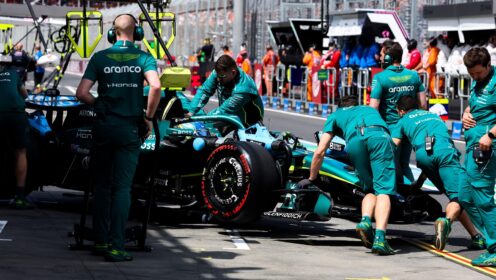

The quest for perfection: How close are Aston Martin to World Championships?


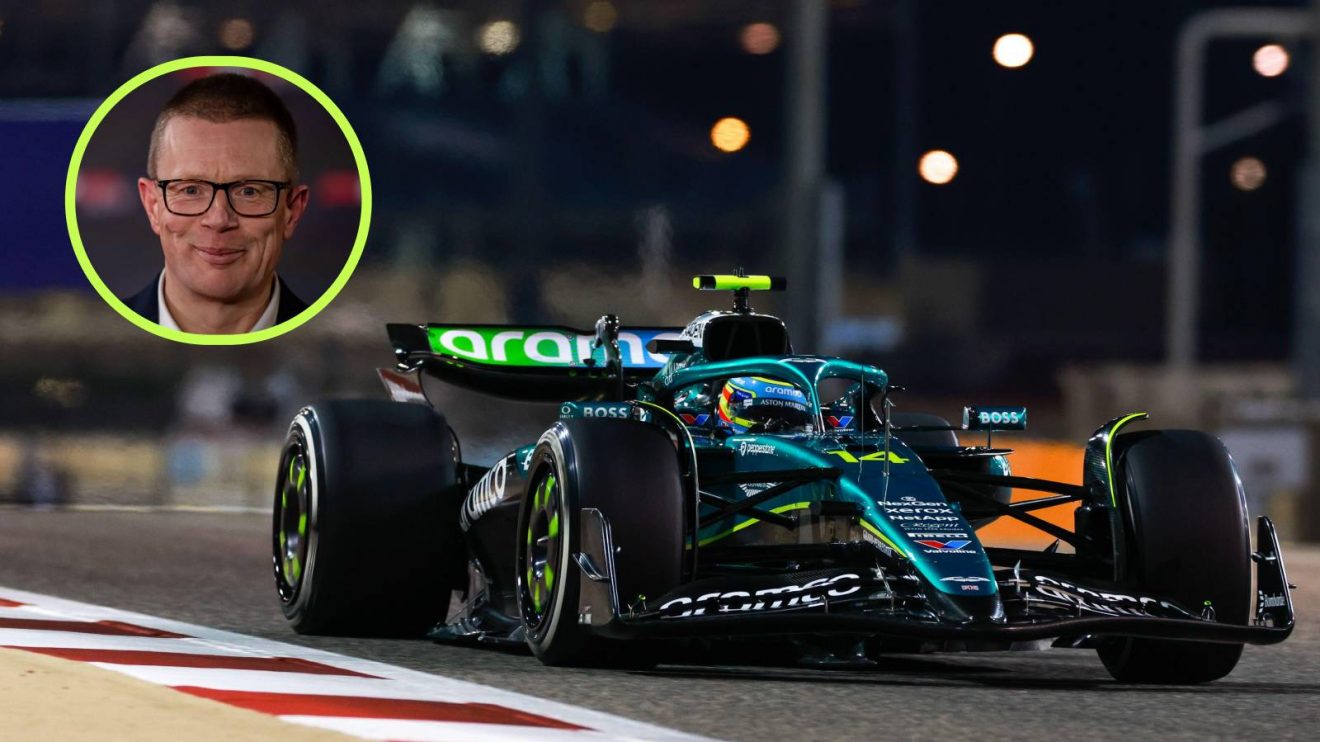
Andy Cowell has explained the changes he's made at Aston Martin after arriving at the team in October 2024.
Aston Martin’s new boss Andy Cowell has shared his thoughts on where his team stands on their path towards a championship challenge.
Lawrence Stroll’s Aston Martin team has gone through a long process of infrastructure and personnel investment, with management changes also made over the winter as Andy Cowell took over from Mike Krack as the team principal.
Andy Cowell: I want Aston Martin to chase perfection
Cowell had left Formula 1 in 2020, having headed up Mercedes-Benz’s High Performance Powetrains engine department for almost 20 years, including leading the technical team which developed the dominant V6 hybrid power unit which swept all before it at the beginning of the hybrid rules era.
Tempted into a return with Aston Martin by team owner Stroll, Cowell succeeded Martin Whitmarsh as CEO and, following a frank evaluation of the managerial organisation at Aston Martin, set about making some changes.
The biggest change of all was that Cowell appointed himself to serve as the team principal, as well as his role as Group CEO, while Mike Krack – having served as team boss for three years – moved into a newly created role as chief trackside officer.
Cowell’s pedigree as a manager is second-to-none, having proven himself throughout the years as one of the architects behind Mercedes’ incredible dominant run of titles between 2014 and ’20, but running a full Formula 1 team is a new career challenge for the softly-spoken engineer – and it’s a challenge that has clearly lit a fire in him, given it tempted him out of what could have been a cosy (and early!) retirement from the frontlines.
“Lawrence asked me to lead the team, to work out what’s needed within the team. Lawrence’s vision is very clear. He wants to get to the front,” Cowell told PlanetF1.com in an exclusive interview during pre-season testing in Bahrain, his first track outing in his new role.
“He’s invested in the campus and lots of facilities… a tremendous wind tunnel. And, joining the team, I spent a period of time looking at the way the team works, looking at the results on the race car, because, at the end of the day, we’re all there to make a fast race car.
“Then I just thought about how we can make the organization more streamlined, flatter, better communication, and clearer responsibilities for all key leaders in the business.
“It was the culmination of those thoughts and input from Lawrence, and other people at the team, that we came to the conclusion that we would flatten the organisation.
“My approach is to get into the organisation and learn and understand what’s going on.
“But also I feel that, especially at the moment, there’s a need to focus on racing a 2025 car and developing a ’26 car. I think it’s best if future projects have a dedicated team so that their daily focus is on that end point.
“And a trackside team is focused on racing the 24 races of 2025, so it was that thinking that led to the organisation changes.
“Mike, I can already see, is into the detail of how we’re going to maximise the performance of the car, the collection of bits that have been created in the factory, and the group in the factory are focused on the conceptual work for 2026 and and they just think about that day in, day out.”
Given the vast investment carried out by Stroll in recent years, including a complete overhaul of the team’s aging factory at Silverstone (a facility which dated back to Jordan’s entry into Formula 1 in 1991), the new facility boasts a state-of-the-art wind tunnel which is about to enter active service, a brand-new driver simulator, and world-class R&D and production facilities – all of which have tempted prominent names like Bob Bell, Enrico Cardile, and Adrian Newey to sign on the dotted line to add further weight to the team’s gathering strength.
Aston Martin remains unproven, but there’s no doubt the ingredients have been put together. It’s on Cowell to come up with the best recipe to get the maximum from these ingredients and, given his experience with world-championship winning teams and facilities, how far off the mark are Aston Martin?
“In terms of capital investment, we’re in good shape – getting all the equipment, all the tools, dialed in to get high quality output, that’s the stage that we’re going through at the moment, getting all those tools to link together with a good understanding of the accuracy of each of the tools, a respectful understanding of the accuracy,” he said.
“How far along are we? That’s an incredibly hard question to answer. One thing that I always say to people is that… I want us to chase perfection, and then I’ll pause and I’ll say, ‘But, by the way, we’ll never get there’.
“Because you create something, and, at the point you’ve created it, you can always see ways of getting better. So how far along the journey to perfection are we? But we’ll never reach perfection, because we’ll always be self-critical.
“We’ll always think of ways of getting better and not be satisfied. I’m naturally spotting issues and, as soon as I spot something, then I want it to improve so and that’s something that I enjoyed in previous jobs.
“You celebrate the successes as you go along, but then you quickly get into the jobs list of what you could do to get better.
“If somebody says, ‘That’s perfect, I don’t have any improvement ideas on my jobs list’, then perhaps that is the time to retire, because you’ve stopped coming up with ideas.”
Why did Andy Cowell opt for management changes at Aston Martin?
The rapidity of Cowell’s desire to make changes to Aston Martin’s managerial structure could have been seen as a way for the new CEO to make his own mark in short order, even with Cowell’s impressive resumé.
There’s an admirable quality in that Cowell has chosen to put himself out front and centre at this early stage, particularly given the fact that – from next season – there will be nowhere to hide if Aston Martin fails to deliver upon its potential.
It’s a team still learning how to be a frontrunner, it’s inexperience shining through in 2023 when the team found itself with a highly competitive AMR23 that fell off the boil through its development path, and it’s perhaps not surprising that the first structure put in place by Stroll back in 2021 – following the split with former team boss Otmar Szafnauer – wasn’t fully optimised for the team in its current guise and size.
Asked about the general amenability of the personnel to the changes he’s brought about at Aston Martin, Cowell said there’s been clear harmony in the push to get to the front.
“I think there’s a collective hunger at the team, to improve, to make a fast race car, and to get everything working well,” he said.
“The challenge for the team to go from being in administration [in 2018, as Force India], nervous about whether you’re going to get paid month to month, or whether the team is going to survive – going from a small team in that condition to the team that we’ve got today of 1000 people where Lawrence’s words have been backed up with very strong action, when you look at the investment in the campus, the equipment, the number of people, then that’s a very clear sense of commitment – and now it’s how do we learn?
“How do we learn as a collective, to use that capacity effectively and efficiently, develop great capability with all the tools that we’ve got, and have all of that focused on reading the FIA regulations and creating something that is compliant with the regulations but is more performant than anybody else’s? Everybody wants that.
“We’ve been trying to work with the top leadership, and then, the next level down, we had an off-site meeting three weeks ago, and one of the opening questions was, ‘Who wants to win?’
“Everybody put their hand up straight away. The speed and enthusiasm, the hunger to analyse and to think, to think about what we need to do… It’s a change from a small team where survival was success.
“The actions that are very evident with all the investment show that it’s not about survival. It’s about creating the best F1 car, chasing all the small gains, and thinking about how to improve every single area of the business, and then making that step so it’s changing in every single area of the business.
“It’s hard making those small, last little steps and keeping everything linked together.
“The 10 teams in Formula 1 are very, very closely matched. The gap between winning a race and coming last in percentage terms is quite fine.
“So you’re looking for those marginal gains, and we do all operate within a cost cap.
“So it is a performance benefit if you can be more efficient with everybody that’s within the cost cap, the individual energy that those people have.
“I think that’s where organisation efficiency – clear responsibilities and efficient processes – so that every second of the year, information can flow without needing to hold a meeting – without needing to broadcast what the output is – that it naturally flows in in the system, through use of the processes, so that 1000 people in the factory, the information flows like it does within one human brain is the dream that I’d like to come close to achieving.”
With Cowell positioning himself as one of the 10 team leaders in Formula 1, heading up a huge global brand like Aston Martin, what makes him the right man to be team boss?
He smiles awkwardly when I ask him this – his confidence in leadership may be unequivocal, but there’s no hint of ego. It’s perhaps for this very reason that he is the ideal candidate.
“I’m not going to big myself up!” he laughs.
“I’m a bloke from Blackpool who’s enjoyed working in motorsport throughout my career and was lucky enough to do an engineering degree, get a job in motorsport.
“I always wanted to work on the chassis side, but chose engines because the pay was a bit better as a graduate, and stayed in engines and power units for a while.
“Then Lawrence asked, ‘Would you come and help me run this team?’
“So that’s what I’m trying to do, and I’m trying to do it by listening, observing, thinking about how all our time can be better focused on making a fast race car and chasing those marginal gains. That’s what I enjoy doing.”
After almost five years on the sidelines, watching F1 as an outsider as others tried, in vain, to tempt him into a return, there’s no sign whatsoever that Cowell has slowed down.
“I’m re-energised. I missed motorsport,” he confirms.
“I missed Formula 1 as an industry – there’s no other industry like it, with regards to that pursuit of engineering performance perfection and a restlessness about the time that it takes to do it.
“Every second counts in terms of delivery of great ideas. But that pursuit of excellent experiments so that you have really fast learning loops – doing that across every single department in a business, so that there’s no department where people are going, ‘Oh, if only that area was a bit better’, everybody then just concentrates on their own bit of the jigsaw puzzle and looks left and right and goes ‘Crikey, that’s impressive’.
“Therefore, you just work on your own area. You get that better. So, yeah, I’m re-energised and I’m loving it, I’m exceptionally proud.”
Read Next: Susie Wolff future update after rumours of FIA president pursuit