

Uncovered: Aston Martin’s make-or-break upgrade ahead of crucial F1 2026 decision


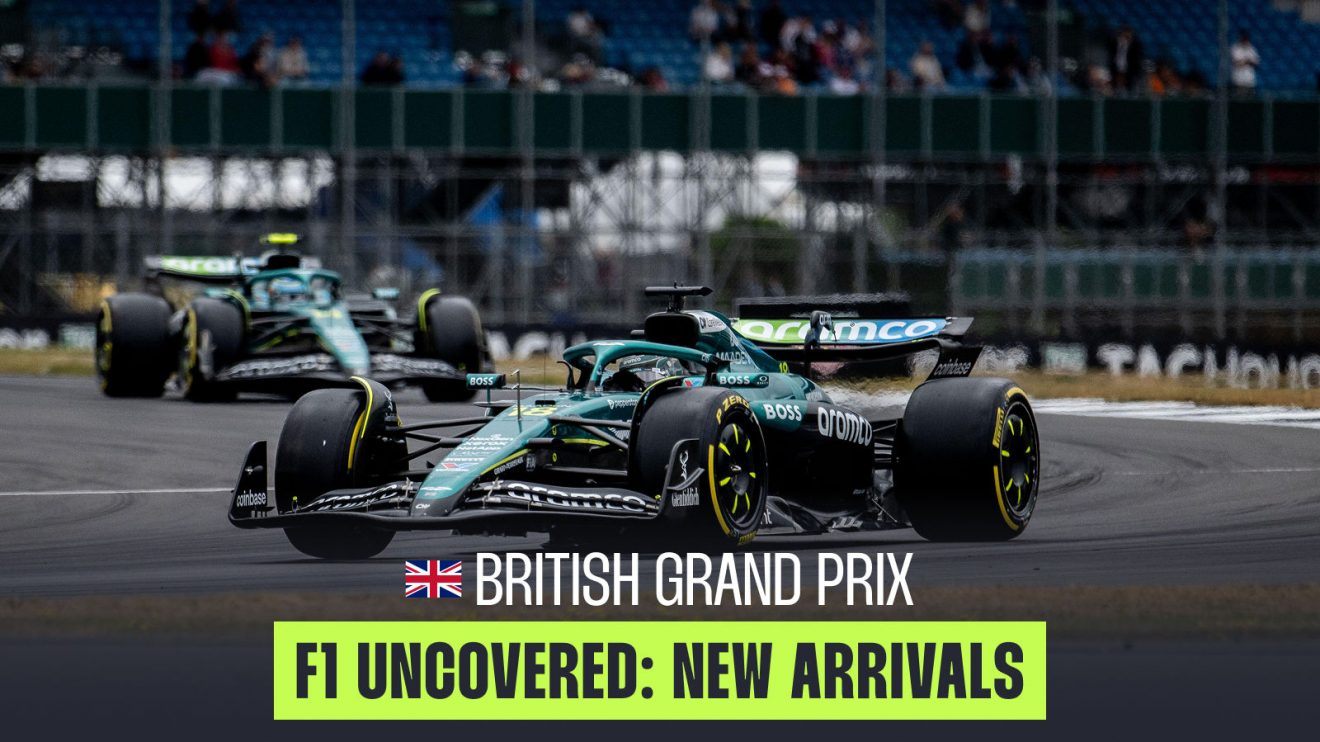
Aston Martin has introduced a significant update package, mainly to the car’s floor, at the British Grand Prix, as it looks to unlock some of the AMR25’s latent performance.
The main floor body, the fences and the edge wing have all been fettled in this revamp, whilst new sidepod bodywork has also been introduced to take advantage of the change in flow structures presented by the modifications to the floor.
Pressing on, or pulling the plug?
In order to assess the updates that had arrived at the British Grand Prix and gather additional data, Aston Martin ran its two cars in different trims during Free Practice 1, with Fernando Alonso charged with evaluating the merits of the new parts while Lance Stroll ran the old components.
The changes to the floor, which are plentiful, appear to largely retain the same design DNA as their forebears, with some adaptations to optimise the various flow structures, improving stability and resolving some of the issues that may have been introduced upstream.
This appears to have been a focus for all of the teams since the front wing load and deflection tests were altered at the Spanish Grand Prix, with a direct design change unable to mitigate all of the performance that’s been lost.
Rather than introducing them incrementally, Aston Martin has decided to parlay them into one larger update package, which includes revised curvature to the floor fences and underfloor, much of which is squirrelled away under the car and not visible to us. Whilst some small changes have also been made to the edge wing’s design and floor beside, in order they work effectively with the other modifications.

However, the most interesting aspect of the redesign is the change in shape that’s been made at the rear of the AMR25’s sidepod. The side-by-side of Alonso (top) and Stroll (bottom) shows how much longer the sidepod is, with the downward sloping ramp section now extending beside the rear wheel, for which I’ve overlaid a dotted line from Alonso’s car onto Stroll’s in order to show the difference.
This not only alters how the airflow moves along the upper surface of the floor and into the region beside the rear tyre and the diffuser’s sidewall, it also alters flow moving over the sidepod.
In Aston Martin’s case, this also includes the waterslide, which transports the airflow into the coke bottle region alongside the rear crash structure and now has a more clearly defined route for the airflow to take.

The team will now assess where to go with this car moving forward and whether these updates put it in a position where it should re-engage, development-wise, as currently its focus is on 2026, as explained by Andy Cowell:
“Ninety-nine per cent is on 2026, I guess I’ve got an open mind to the fact that what we learn here this weekend might mean that we drop the ’25 car back in the wind tunnel, just to close the loop. So we’re not saying absolutely no ’25 model running, because now we’ve got our own tunnel. We can test seven days a week, any hour of those seven days, and it’s easy just to slot the model back in and learn a little bit more”.
Read next: F1 data analysis: The hidden Mercedes factor behind Verstappen’s McLaren-beating lap