
Why engine understanding could decide early 2026 Formula 1 pecking order


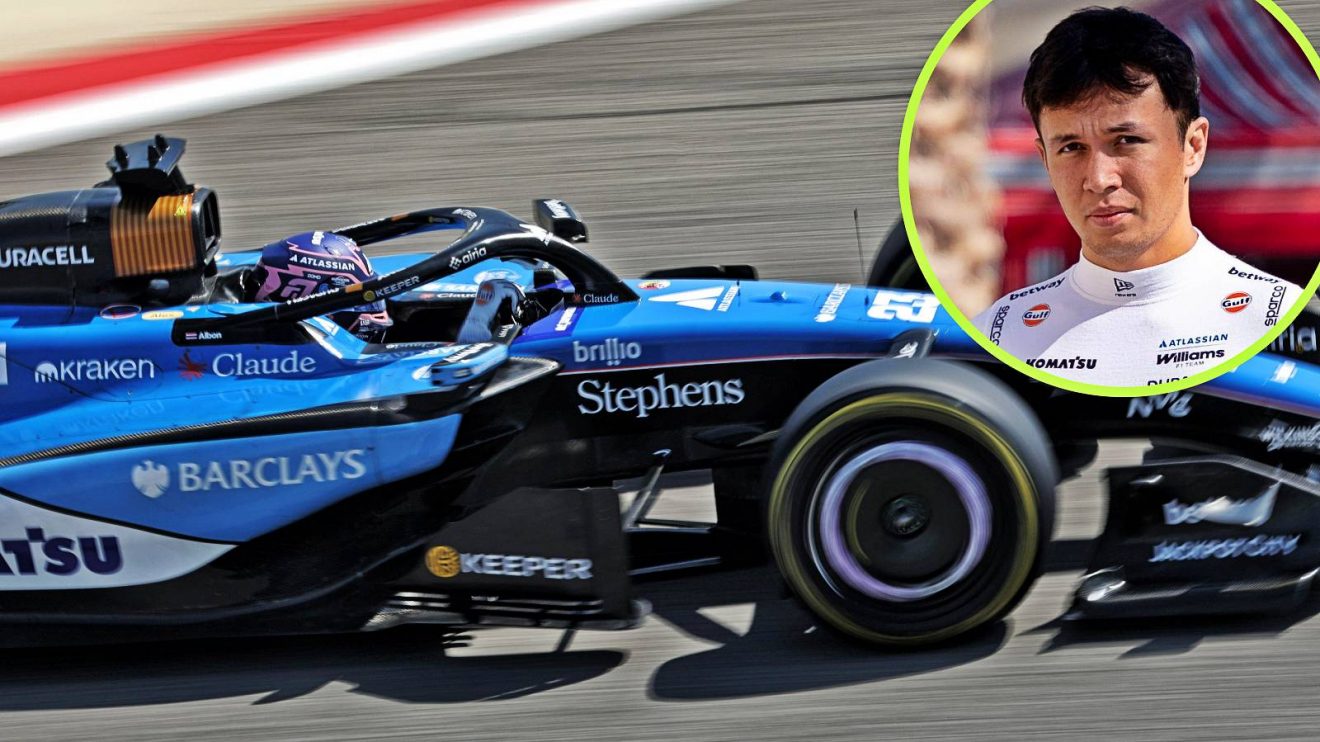
Alex Albon believes there's still plenty of laptime potential to be unlocked from the new 2026 regulations.
F1 drivers who have developed the greatest understanding of the intricacies of the new power units could start the new era strongest, believes Alex Albon.
Formula 1 is entering a new regulation cycle, with the latest-generation engines seeing an increase in electrification to create a near 50/50 split in power output with the internal combustion engine [ICE].
Alex Albon: Understanding the engines could create performance
Want more PlanetF1.com coverage? Add us as a preferred source on Google to your favourites list for news you can trust.
After spending the 2025 season evaluating the new rules via simulator work, all the drivers got the chance to sample the real-life driving dynamics of the cars during the Barcelona shakedown and two test events in Bahrain.
Those tests revealed in near-universal admissions from the drivers that the new regulations require a very different approach to attacking a lap and achieving the ultimate laptime, including some unusual techniques such as downshifting down the straights, and lengthier periods of lift-and-coast in order to harvest energy.
While some were particularly outspoken in criticising the regulations, such as Max Verstappen and Lewis Hamilton saying the changes are not in keeping with what racing is all about, others have suggested the unique challenge will reward drivers who put in the work to understand the requirements.
One of those drivers is Williams‘ Alex Albon, who said the task for every driver will be to develop their understanding of their engines and how best to exploit them.
“It’s not counterintuitive,” he told the media, including PlanetF1.com, of the new regulations.
“I think that you just need to understand the fundamentals of how it works. I think that I’d never really have had to speak too much to Mercedes about driving a Formula 1 car! How do I start the engine and, generally, that was about it.
“Now, the work that’s been done in the winter, there are some meetings at the technical level that you should understand.
“People can look at it in a good way or in a bad way. I think that as a driver, as an athlete, you just do whatever it takes to get to be the best you can be.
“So, if that is understanding how these things work, can you find a bit of performance yourself by knowing how these engines work better than everyone else? Yeah, likely you can.
“So do that and spend your time with Mercedes and understand how to drive these cars. It’s been very interesting, and I think, long story short, it’s just part of the game.”
With F1 no longer being solely about pushing the limits of adhesion at every corner, there is potential for a more considered approach to pay off for drivers and, with their jobs being made more difficult in terms of energy management, Alpine’s Pierre Gasly said the changes could reward those with greater mental capacity.
“For ICE tools, yes,” he said, in response to that question from PlanetF1.com.
“For the same engine, same car, someone who has more capacity to figure out all this situation and how to get on top of the management, etc., yes,
“But, at the same time today, there is quite a lot of stuff where we don’t have control over it, so we are more like on the passenger side in what we can do inside the car.
“So I think this thing’s gonna evolve, but it’s not a case of like, ‘Oh yeah, I’m gonna recharge my battery now, and I’m gonna deploy here’, because I decide to and this and that.
“So there might be some engines that allow that, some others that don’t. So I still think it’s not going to be as straightforward as ‘Ah, these guys have more capacity, so they’ll be able to be better’.
“It’s not sure that he’s got the tools to actually do the stuff you want. So again, I know there’s so much we want to answer now, but there’s so much that we need to discover first properly, like racing scenarios and racing situations.”
With the 2026 regulations serving as a complete reset for all the drivers, the potential for a shake-up of the pecking order is large.
While the energy management requirements will have a prominent effect, Gasly revealed how the handling characteristics of the cars have also evolved as the design moves back to a more traditional overbody downforce generation, as opposed to the ground-effect used in the last half-decade.
“You rely a lot less on the aero than you used to in the previous years,” he said.
“So it was very aero-dominated in the last years with the ground-effect cars, now you rely a lot more on mechanical and compliance from the car itself, which is something a bit different.
“You have more sliding, and high-speed feels very different. The way the car moves, etc., is quite different. It’s a different challenge, and there is no point in comparing with what we felt last year, because they’re just completely different cars.”
More on the F1 2026 rules
Explained: Honda’s abnormal vibrations triggered Aston Martin’s testing setback
Explained: How F1’s new ‘overtaking mode’ will work in 2026
Added to the mix is the fact that each power unit manufacturer is likely to deploy energy in different areas, meaning that on-track battles could result in drivers to-ing and fro-ing as they exploit their reserves at different points.
“There is so much to take into consideration at the moment that it’s difficult to really work your head around this, because with the ICE engine, you know, pretty much, the deployment of the other guys,” he said.
“So I know what the Merc engine is going to be like, so I can go racing knowing that if someone decides to commit a bit more in that straight, he will suffer from this in the other straight.
“What’s harder to figure out is what other engine manufacturers are doing. They might deploy more in a straight, less so in another, and I think this will create bigger differences in itself than the actual racing situation, where, once you have those cars full power with the straight-line mode on, there’s not much slipstream or car speed difference.
“I don’t think it’s going to be enough to actually make a move just from that [active aero] system itself.
“We’ll go to Australia, and we’ll see what it is. But it doesn’t look easy to me. Also, the DRS opportunity was a net gain of seven-tenths for free. Now, it’s not a net gain anymore.
“If you deploy more, your energy is going to cost you somewhere else, where you’re going to lose potentially more time.”
Want to be the first to know exclusive information from the F1 paddock? Join our broadcast channel on WhatsApp to get the scoop on the latest developments from our team of accredited journalists.
You can also subscribe to the PlanetF1 YouTube channel for exclusive features, hear from our paddock journalists with stories from the heart of Formula 1 and much more!
Read Next: Honda admits ‘inactivity’ delay hurting Aston Martin F1 2026 engine push