
Mercedes unveils radical rear wing ‘saddle’ concept in Bahrain test finale


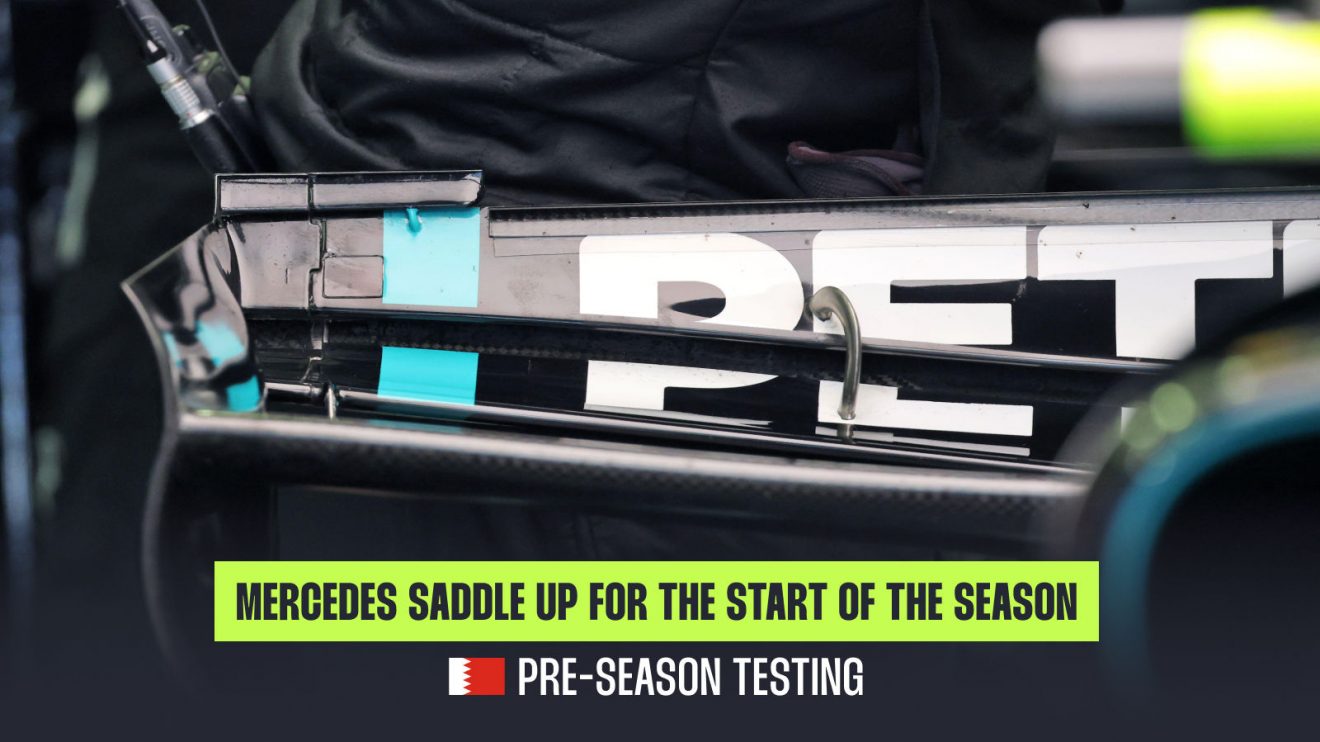
Mercedes saved its boldest trick for last in Bahrain, unveiling a radical rear wing concept on the final day of testing.
The new design pushes the limits of the bounding boxes within the regulations, whilst also appearing to take design cues from the previous generation of cars.
Mercedes reveals new rear wing solution in Bahrain testing
Want more PlanetF1.com coverage? Add us as a preferred source on Google to your favourites list for news you can trust
The most obvious feature is the mini-flap sat like a saddle in the outer corner of the rear wing. Split into two sections, the narrower portion sat in the static section of the wing, whilst the wider portion will also rotate when the active aerodynamics are deployed.

Both sections also have their own minimal Gurney flap section on the trailing edge too. The inboard portion has a curved corner section, likely in response to the aerodynamic effects caused by the proximity it holds to the Gurney flap on the trailing edge of the main upper element.
These mini-flaps essentially convert the three-element wing into a four-element wing in this section, as there is a slot gap between them and the trailing edge of the main upper element, with the inner section held to the element below by its own mini slot gap separator.
The outer segment of the mini-flap arrangement is connected to the endplate, creating its own mini-endplate. That creates in a larger notch section in behind the elements on the endplate (inset, arrow), as the team looks to manage the tip vortex.
There’s also a considerably different design approach taken with the forward section of the endplate, with a much more generously curved profile employed when compared with the previous solution.
This curvature is not only isolated to the upper portion of the endplate either, which is a returning feature of this year’s regulations, with the aesthetic rolled over juncture of the previous generation of cars no longer required.

This more swept variant utilised by Mercedes will not only have a bearing on the airflow and pressure distribution on the inboard face of the endplate, it’s clear that there’s a difference in the exposure of the endplate front-to-back on the outside of the endplate too.
In order to accomplish this geometry there’s change to endplate below the allowable box region for the wing elements, with the type of shaping we became accustomed to with the previous design solutions.
Mercedes’ reasoning behind waiting until this stage in the test is likely because rivals hadn’t come up with a similar solution, and didn’t want rivals having more time to research, test and develop their own variant than absolutely necessary.
Want to be the first to know exclusive information from the F1 paddock? Join our broadcast channel on WhatsApp to get the scoop on the latest developments from our team of accredited journalists.
You can also subscribe to the PlanetF1 YouTube channel for exclusive features, hear from our paddock journalists with stories from the heart of Formula 1 and much more!
Read next: Ferrari shrugs off FIA start tweak as Hamilton blasts from fifth to first