

Williams FW48 makes debut in Bahrain with bold aerodynamic innovations


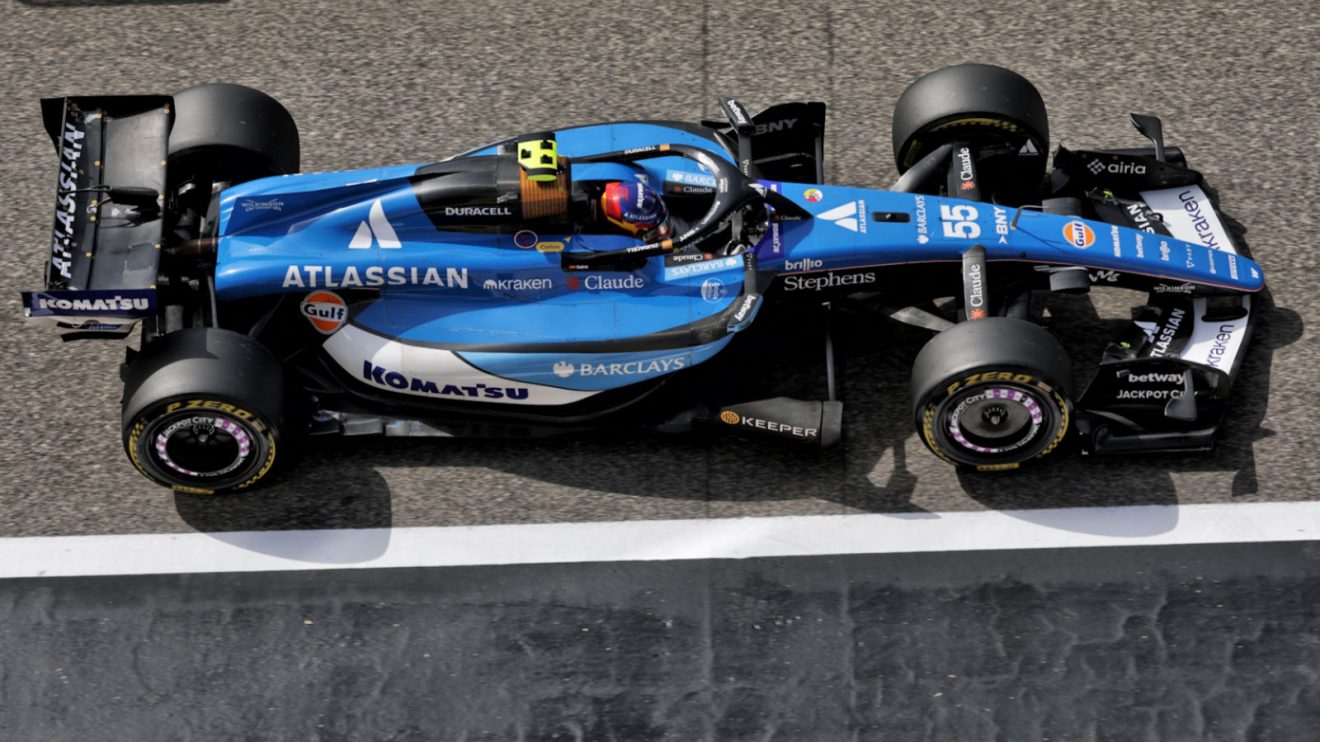
Williams might have arrived a little late to the party, having not taken part at the pre-season shakedown in Barcelona, but they’ve hit the ground running in Bahrain.
The FW48 also has a number of interesting features, which the Grove based squad will hope are going to help lift them further up the championship order in 2026.
Dissecting the details
Want more PlanetF1.com coverage? Add us as a preferred source on Google for news you can trust.
Williams might have missed the group shakedown but they’re already well versed in the FW48’s behaviour, as they’ve taken it for a spin around the block at Silverstone and Bahrain ahead of the test.
There will be plenty still to understand though, given the scope of this regulation change, which is something that they set to work on doing immediately, with the help of kiel probe rakes behind the front wheel assemblies and flo-viz being doused on the floor’s deflector array.
The deflector shares some similarities with the one seen on the McLaren MCL40, as it’s made up of a sail-like main element, an L-shaped forward section and another slat housed between the two of them.

Notably though, the Williams design team have opted to take a bite out of the lower rear quarter of their sail section, changing the airflow’s behaviour.
If we take a look over the shoulder of the deflector array, below, we can see how much work has been done to improve flow behaviour in regards to the front suspension and steering arms too.
The FW48 is one of only three cars on the grid to feature a pullrod front suspension layout, a decision that’s clearly been taken to optimize the aerodynamic output in this region.

The designers have clearly taken great care to not only try and find a trade-off between the mechanical layout required but also how each component has an impact on the airflow passing by.
This is further assisted by the design of the fairings, which have been shaped to better manage that flow, especially when in close proximity to the chassis.
Of course, this is by no means a new design solution, with teams taking this approach for decades but, it’s important to note the significance when we’re dealing with a new set of regulations, as the rules of the game might have changed but you can still take lessons from the past too.
Another small but interesting detail can be seen on the bib stay fairing (green arrow), as the team have a row of small vortex generators fixed just behind the leading edge.

In the regulatory eras that preceded the last, Formula One teams had spent a great deal of time developing solutions in this region of the floor to help tame a phenomenon known as tyre squirt.
The phenomenon, caused by the deformation of the rear tyre, results in jets of air being squirted laterally into the diffuser, upsetting flow through it and reducing the downforce that can be generated.
One such avenue of development that became prevalent from 2012 onwards was the use of slots, holes, vanes and winglets ahead of the rear tyre.
The 2026 regulations permit such designs once more, which will likely lead to this becoming a hotbed for development once more, as teams find more inventive solutions to arrest the issue at hand.
It’s an issue that has become more complex owing to the shape, height and length of the diffuser being different this time around too, whilst rather than having the winglet stack on the bottom of the rear brake duct, these regulations have seen that moved to the sidewall of the diffuser.
This has, in part, led to the expansion of the mouse hole solutions we saw during the ‘ground effect’ era, for which Williams have also adopted and can be seen in this picture.

Another trend that appears to be emerging is the use of a ‘centreline chute’, be it as can be seen here on the Williams, connected to the trailing edge of the diffuser and also seen on the Mercedes, an independent winglet sat above this region, as seen on the McLaren and Red Bull, or both options, as seen on the Ferrari.
Want to be the first to know exclusive information from the F1 paddock? Join our broadcast channel on WhatsApp to get the scoop on the latest developments from our team of accredited journalists.
You can also subscribe to the PlanetF1 YouTube channel for exclusive features, hear from our paddock journalists with stories from the heart of Formula 1 and much more!
Read Next: Mercedes F1 2026 compression ratio debate nears boiling point ahead of homologation