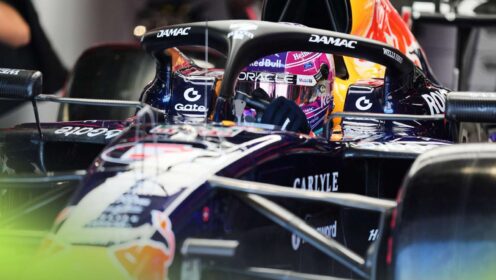

Adrian Newey revives iconic McLaren 2005 horns with Aston Martin AMR26


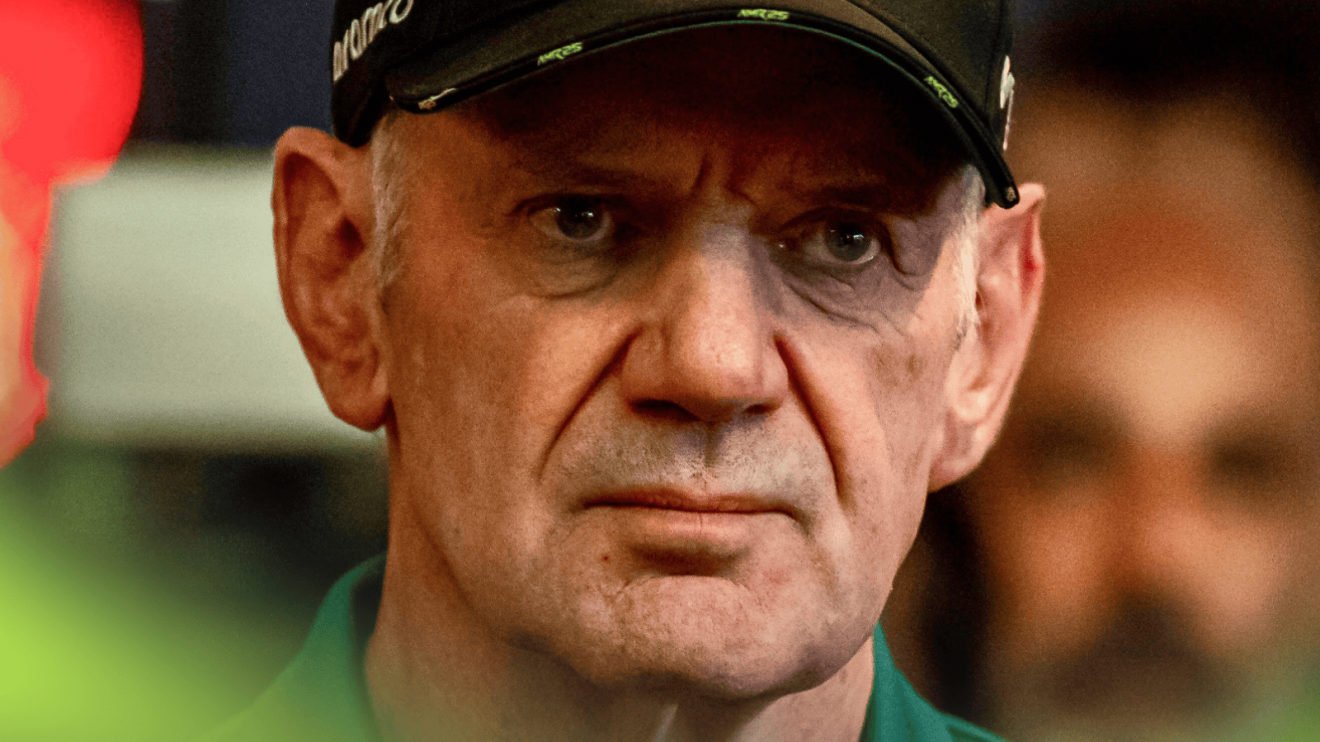
Aston Martin team principal Adrian Newey in the paddock at the 2025 Qatar Grand Prix
Adrian Newey has included a version of the iconic 2005-style McLaren ‘horns’ in the design of the Aston Martin AMR26 car for the F1 2026 season.
The Aston Martin AMR26, arguably the most hotly anticipated car of the 2026 season, made its long-awaited on-track debut in last week’s pre-season shakedown in Barcelona.
McLaren MP4-20-style horns spotted on Adrian Newey’s Aston Martin AMR26
Want more PlanetF1.com coverage? Add us as a preferred source on Google to your favourites list for news you can trust
The car – the first Aston Martin F1 machine to be designed by legendary designer Newey – appeared for the first time on the penultimate day of the test at the Circuit de Barcelona-Catalunya.
Lance Stroll carried out five laps on Thursday afternoon before handing the car over to teammate Fernando Alonso, the two-time world champion, for the final day of running.
Alonso completed a total of 49 laps last Friday, posting the 10th-fastest time.
Analysis: What we learned from the first F1 2026 pre-season test in Barcelona
Shakedown conclusions: Mercedes back in the light, Red Bull finds peace, key Newey question
Winners and losers from the Barcelona testing shakedown (Circuit de Barcelona-Catalunya)
The Spaniard’s time was 4.447 seconds slower than the fastest lap of the test, set by the Ferrari of Lewis Hamilton, strongly suggesting that Alonso’s best lap was not meaningful or representative of Aston Martin’s true pace.
The Aston Martin AMR26 has been noted for its striking design features compared to other cars on the F1 2026 grid.
Among the most eye-catching is the inclusion of a small set of ‘horns’ positioned on either side of the car’s roll hoop (below).


Newey pioneered the horns during his spell with McLaren, with the design detail among the distinguishing features of the MP4-20 of 2005 (above).
Despite failing to win the world championship, the MP4-20 – driven in competition by Kimi Raikkonen and Juan Pablo Montoya in the final season of V10 engines – remains one of the most beloved cars of the modern era due to its striking appearance.
The car won a total of 10 races in the 19-round 2005 season with Raikkonen taking seven victories to emerge as a title contender.
However, the Mercedes-powered MP4-20’s patchy reliability record meant Raikkonen missed out on the 2005 championship to Alonso, then competing for Renault (now Alpine).
McLaren retained the horns on its car for 2006, the year of Alonso’s last title triumph, with the design also appearing at selected races in 2007 after the two-time world champion moved to Woking.
In an interview with UK broadcaster ITV during the 2005 season, Newey explained that the purpose of the horns was to direct airflow towards the rear wing to enhance downforce.
He said at the time: “Basically, they’re to do with the rear wing.
“The regulations to the rear wing very heavily limit the span of the rear wing and we’ve tried to develop ways of overcoming that over the years.
“We’ve had increasingly elaborate endplates, shapes to the wing and so forth.
“That all modifies the performance of the wing, but another way of doing it is to effect the flow that comes on to the wing.
“That’s what the horns do: they increase the downforce to the wing by modifying the approaching flow.”
Newey’s use of the McLaren-style horns was noted by PlanetF1.com technical editor Matt Somerfield in his in-depth analysis of the Aston Martin AMR26.
Somerfield also wrote that a number of other design features on the new Aston Martin may have been inspired by the experiences of Newey’s career.
He noted that the AMR26’s wide nose compared to the opposition was reminiscent of Red Bull’s philosophy during Sebastian Vettel’s years of dominance between 2010 and 2013.


Somerfield also remarked that Aston Martin’s unique sidepod design brought a similar “shock factor” to when Mercedes revealed its famous zero-pod concept at the start of the 2022 season.
He also wrote that the “cavernous gap” between the sidepod undercut and the floor brought to mind the so-called ‘double-floor concept’ a number of teams have experimented with over the course of F1 history, citing the John Barnard-designed Ferrari F92A of 1992 and the Toro Rosso STR6 from 2011.
Somerfield also noted that the rear wing pillars were similar to those used by McLaren in 2009, more than three years after Newey left the team for Red Bull.
Somerfield wrote: “Of course, this [the 2009 McLaren] isn’t a Newey machine, but it doesn’t mean that the sketch from his notebook hasn’t been laying in wait all this time.”
Want to be the first to know exclusive information from the F1 paddock? Join our broadcast channel on WhatsApp to get the scoop on the latest developments from our team of accredited journalists.
You can also subscribe to the PlanetF1 YouTube channel for exclusive features, hear from our paddock journalists with stories from the heart of Formula 1 and much more!
Read next: Adrian Newey masterclass revealed as Aston Martin AMR26 dissected