

How Max Verstappen overcame McLaren to secure Abu Dhabi Grand Prix pole


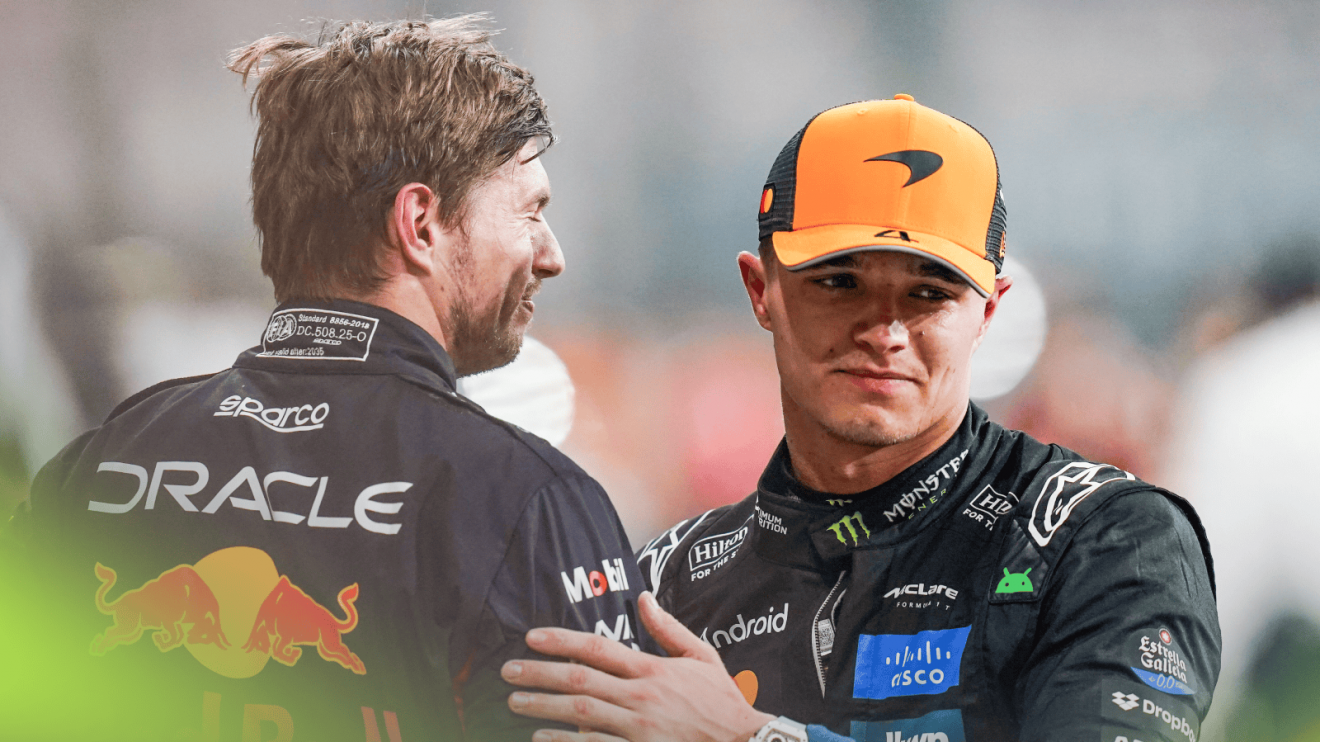
Lando Norris beat Max Verstappen to the title by 2 points
The championship fight is on! Max Verstappen has claimed his eighth pole position of the season at the Abu Dhabi Grand Prix, keeping the door wide open for a title showdown in the final race of F1 2025.
Let’s see how Verstappen defeated McLaren pair Lando Norris and Oscar Piastri with the telemetry data help.
How Max Verstappen beat Lando Norris and Oscar Piastri to Abu Dhabi GP pole
The fact that Abu Dhabi is a circuit that generally suits McLaren better when it comes to one-lap pace seemed to be true throughout the three practice sessions.
Norris was faster in all three outings compared to the Verstappen, shifting momentum – and expectations – firmly in his direction.
However, if there is one thing we have learnt this season, it is that you should never write off Max.
And once again on Saturday he demonstrated exactly why, beating both papaya cars by a not-so-small margin.
To make the statement even stronger, he did it twice in Q3, given that his first attempt alone was enough for pole.
Max Verstappen vs Yuki Tsunoda: Red Bull Racing head-to-head scores for F1 2025
? F1 2025: Head-to-head qualifying statistics between team-mates
? F1 2025: Head-to-head race statistics between team-mates
In doing so, he also showed that he could achieve it without any help from Tsunoda – who gave him a slipstream on the main straight and abandoned his own flying lap in that part of the session.
In the end, the gap between him and second-placed Norris was slightly more than two tenths, which is quite a significant margin considering how tight the grid was today and how minimal the differences have consistently been between drivers.
So let’s take a look at where exactly Max was quicker on the track:

By analysing the telemetry data, we can see that the fight for pole position was extremely close in the first sector.
Both drivers were strong under braking into T1 and through the fast sequence of T2, T3 and T4.
Max did take the slight advantage after the opening section, but it was very minimal and not particularly decisive.
The real difference emerged in T5.
Although Norris managed to hold a better racing line and carry more speed at the apex, Max was the one who retained greater grip, took a wider and, in this case, more effective trajectory and was stronger on throttle application.
With the assistance of a less-loaded and lower-drag rear wing, Verstappen also achieved a higher top speed on the straight between T5 and T6, gaining around a tenth over Norris.
With later braking into T6, Verstappen picked up another tenth through the T6–T7 chicane, making his advantage at this point genuinely significant.
However, the third sector had been Norris’s strongest throughout practice.
His car control through slow corners is something he has refined over the years. But unfortunately for him, he could not capitalise when it mattered most.
Although he was quicker through T9 and reduced the gap, he was actually slower than Max through the famous hotel section.
In the end, Norris’s final-sector time was indeed better, but only by 0.029 seconds – far from enough to make a meaningful difference.

On the other hand, a positive for him is that he still managed to finish ahead of his teammate and fellow title contender Piastri.
Interestingly, when we compare Piastri’s and Verstappen’s best laps, the data looks almost identical to the comparison with Norris.
Piastri matched Max in the first sector, but Verstappen was stronger on the first DRS straight and quicker through the T6–T7 chicane.
As with Norris, Piastri regained a small amount of time in the final sector, but again not enough.
The only meaningful difference between the two papaya drivers came at the first corner, where Norris was fractionally better and managed to carry that margin through to the end of the lap.

Could the McLaren drivers have done better?
What the data shows is that all three drivers delivered their best laps precisely when it mattered.
Their ideal qualifying laps were identical to their real ones, meaning each extracted the maximum from both car and circuit.
Red Bull simply did a better job preparing the car setup for qualifying and credit must be given for that.
Their choice of a lower-downforce, lower-drag aerodynamic package proved superior and Verstappen built his margin almost exclusively in the second sector.

We should also not forget that Red Bull preserved an additional new set of softs by allowing Max to progress to Q3 with a flying lap on used tyres.
This meant he opened Q3 on fresh softs, while both McLaren drivers used worn sets for their first attempts.
As was later shown, Verstappen’s initial lap alone was more than enough for pole – a lap that keeps his title hopes alive.
However, none of this will mean much for Verstappen unless he seals his fifth consecutive championship on Sunday.
The main race will undoubtedly deliver a thrilling end to the season. That is the only certainty.
Read next: Is Lando Norris going to choke?


