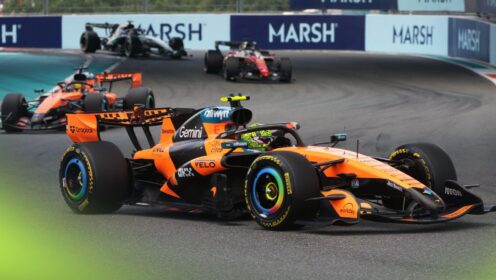

How Lando Norris missed his chance in Azerbaijan GP


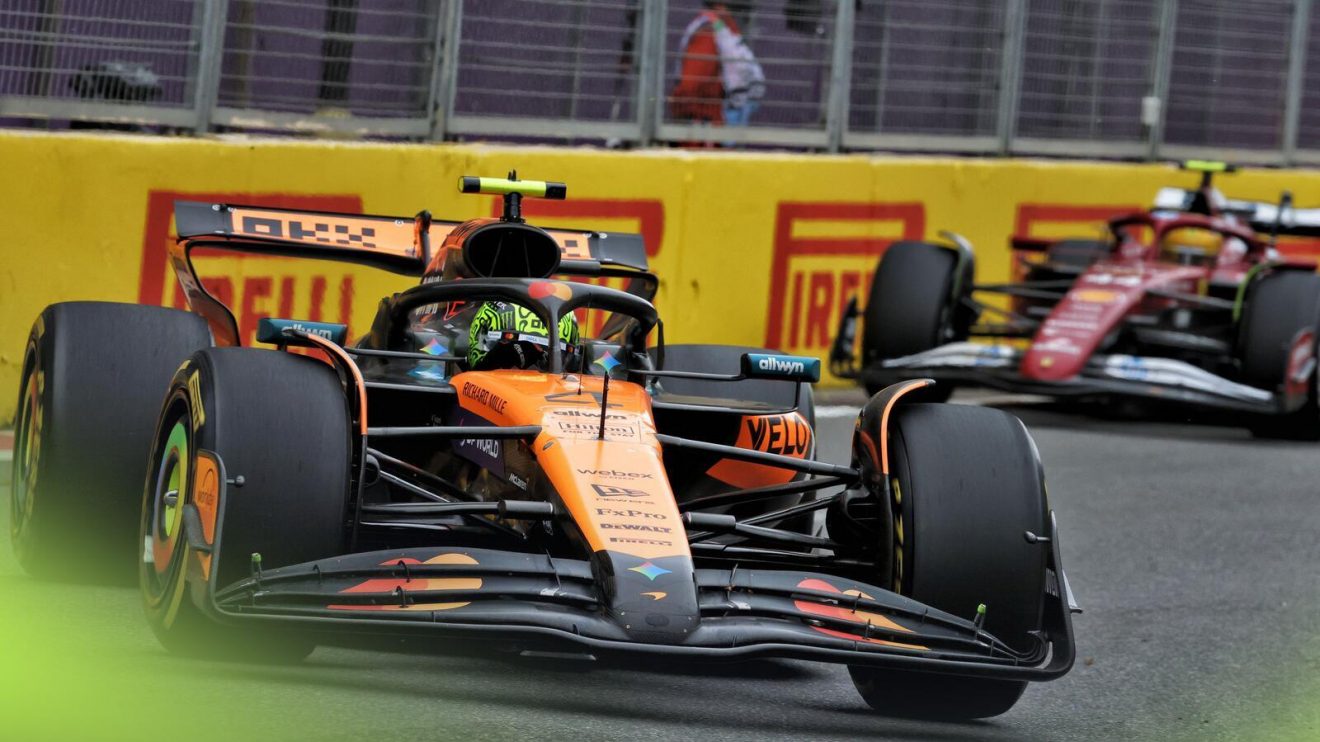
Lando Norris finished seventh in Azerbaijan, but could he have achieved more?
After missing his chance in Saturday’s poor qualifying session, Lando Norris was handed a second opportunity to cut his championship deficit – this time on the opening lap of the race.
Yet Norris finished where he started, in seventh, failing to capitalise on Oscar Piastri’s opening lap retirement. What could Lando have done differently, and which mistakes cost him a stronger result?
Could Lando have reduced the gap even further in the standings?
After Saturday’s disappointment and wasted chance, the question was whether the Briton would get another opportunity before the end of the season. The answer came almost immediately, on the very first lap of the race, when championship leader Oscar Piastri made two crucial errors.
After a jump start off the line, Oscar dropped to the back of the field, and in his attempt to recover quickly, he went into the wall at T5, ending an impressive streak of consecutive race finishes in his career.
This handed Norris complete control of the situation, knowing that every position gained would now be even more valuable in their tussle for the championship.
Norris started the race on medium tyres, with the likely aim of using the extra grip early on to make up positions. But as has happened before this season, he failed to take advantage.
Already in the second DRS zone of the opening lap, Hadjar overtook him, dropping him to eighth. A Safety Car then bunched the field, and at the restart on Lap 5 Norris once again lost out – this time to Leclerc on the start/finish straight. Only Hadjar’s technical issue saved him, allowing Norris to regain one spot quickly.
But stuck behind Leclerc, there was little Lando could do. Baku’s street circuit offers few overtaking opportunities, particularly when grip is low, as it was during this year’s race.
Had Norris remained seventh after the restart, he might have been able to use the advantage of fresher tyres early on to attack Tsunoda ahead, who was on the C4 hards.
Telemetry shows that Norris’ pace did improve slightly once Leclerc pitted on Lap 20, but never enough to realistically challenge Tsunoda. In fact, until his own stop on Lap 38, the gap to the Japanese driver remained virtually unchanged.


Why wasn’t McLaren faster?
The answer lies in both the track characteristics and the nature of the MCL39. McLaren’s strength this season has come from combining strong race pace with excellent tyre management. Azerbaijan, however, is a low-downforce, low-grip circuit, meaning the tyres never experience the stress that usually highlights McLaren’s advantage.
In addition, Norris spent the second stint stuck in a DRS “train” with Charles Leclerc, Tsunoda and Liam Lawson. Without being able to exploit DRS effectively on the 2.2 km main straight, overtaking was virtually impossible.
McLaren’s engineers surely knew this – which meant they needed to try something different.

Could the strategy have been different?
With hindsight, starting on hards and switching later to mediums would have been the better approach. Especially since, beyond the early Safety Car, the race had no further incidents to trigger neutralisations.
The medium-start strategy only works if the driver takes full advantage of the added grip at the beginning. Unfortunately for him, Norris did the opposite – losing two key positions under green flag running in the opening laps.
Blocked behind slower cars and unable to pass, McLaren waited for a pit window where it could leapfrog Leclerc. That opportunity came on Lap 38, but a slow stop, around two seconds longer than average, dropped him back out on track 1.3 seconds behind Leclerc instead of in front of him as planned.
Key statistics after the Azerbaijan Grand Prix
? F1 schedule: When is the next race and where is it being held?
? F1 points all-time rankings: Where do Hamilton, Verstappen and Alonso feature?
On the other side, Red Bull reacted immediately, pitting Tsunoda the following lap to ensure he retained his position ahead of both Leclerc and Norris – which he did.
Excluding the two lost positions at the start and the costly pit stop, Norris would have had every chance to clear that DRS train, which in the worst case would have secured him Fifth.
In that position, he could even have targeted Antonelli ahead, who, unlike Tsunoda, did not have a car in front helping him defend. While the chance of a podium was slim, it was not out of the question.

In the end, Norris reduced the gap to his teammate by just six points – not a drastic change, but still helpful in keeping the fight alive. The deficit now stands at 25 points, but it could have been cut to under 20.
With seven races left in the season, absolutely anything remains possible and the fight for the championship is far from over. What we can expect is that up until Las Vegas, which arrives on the calendar at the end of November, the races will take place on circuits that suit McLaren much better – venues where its dominant strengths are likely to come back into play.
Therefore, we can expect that, unless major mistakes or incidents occur, Piastri and Norris will have the chance to fight it out on track – and the better man in their head-to-head battle will ultimately take the championship crown.
Want to be the first to know exclusive information from the F1 paddock? Join our broadcast channel on WhatsApp to get the scoop on the latest developments from our team of accredited journalists.
Read next: Oscar Piastri wary of Verstappen title challenge after ‘messy’ Baku weekend