
What Lando Norris’ data reveals about his true Dutch GP performance


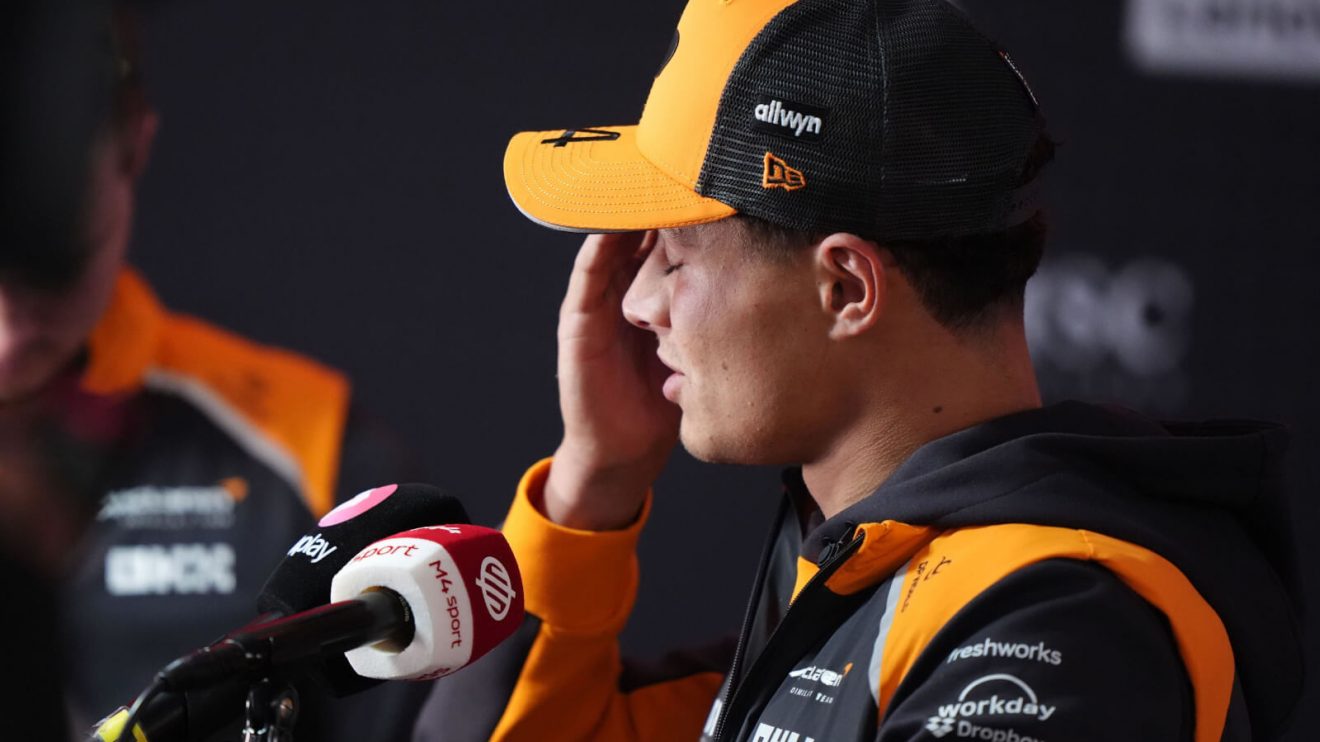
Lando Norris trails Oscar Piastri by 34 points
A Dutch Grand Prix weekend that began brilliantly for the current second-place driver in the championship standings ended in the worst possible way, as Lando Norris failed to score a single point due to a DNF caused by a mechanical failure on his car.
Putting the DNF aside — something he had no control over — the question remains: could Lando have done anything differently during the race itself, or was Oscar Piastri simply too quick this time around?
Is there anything Lando Norris can take away from the Dutch Grand Prix?
One thing that was clear even before the race began: overtaking in Zandvoort was going to be extremely difficult. You need roughly an 0.8-second advantage in race pace to pose a genuine threat to the car ahead, and Turn 1 at the end of the main straight is perhaps your only real opportunity.
One of the main ways to gain such an advantage is through softer tyres — as we saw at the start of the race with Max Verstappen and Lando Norris. Verstappen began the race on softs, while Lando opted for mediums.
The home hero got a better launch than the Brit and overtook him into the first few corners to take P2. It was quite remarkable how Max managed to keep his car on track and ahead of Lando after the moment he had going into Turn 3, where he lost rear grip due to dust on the surface.

But Norris was well aware of the advantage the MCL39 held over the RB21 — and that the softer tyres would degrade faster. So, by Lap 9, the Brit reclaimed his original position without much resistance.
Between Lap 9 and Lap 20, Lando pulled out a 12-second gap to Max, and by this point it was clear that Verstappen had no answer to either McLaren driver. The only real battle that remained was between Piastri and Norris — and it was for the win.
As we’ve discussed previously, the Dutch GP shares characteristics with the Hungarian GP — very few overtaking opportunities shift the focus towards strategy. However, this time around, strategy was largely dictated by the Safety Cars.
F1 2025: The season’s winners and losers
? The results of the F1 2025 championship
? The updated Drivers’ and Constructors’ Championship standings
Following the first Safety Car for Hamilton’s incident, and a second for the clash between Leclerc and Antonelli, nearly all the drivers boxed for fresh tyres, meaning there were no significant gains to be made via pit stop timing.
This meant the race focus returned to pure on-track racing.
That reality became clear to Norris and his race engineer on Lap 36, right after the Virtual Safety Car ended — when Lando received the message that if he was to fight for victory, it would have to be done on track.
However, the Brit failed to make any significant inroads. His pace improved after that message, but so did Oscar’s. Very quickly, they were lapping at an identical pace. If we compare the average race pace between Laps 36 and 52 (just before the next Safety Car), it’s almost identical.

Both drivers took advantage of the Safety Car to fit a fresh set of hard tyres. Could Lando have opted for a different compound to increase his chances of challenging Piastri?
It’s unlikely. At that point, the team only had two realistic options: a used set of hards or a used set of softs. With 14 laps to go at that stage, the softs seemed viable — and it’s exactly the route Max Verstappen chose.
But if we examine Max’s lap times immediately after the restart compared to the McLaren duo, it’s clear that he didn’t gain much. Despite the RB21 being slower than the MCL39, even in those initial laps, Max wasn’t able to outpace either McLaren. The delta of around half a second per lap remained fairly constant.

So would Lando have gained anything with that move? Chances are slim. What he did know at the time, however, was that with the same tyre set, overtaking his teammate was virtually impossible without significant mistakes.
On the other hand, Norris also didn’t know which tyres Verstappen would switch to — so had he opted for softs and then faded in the final laps, there was the real risk of losing P2.
All in all, it’s fair to conclude that Lando couldn’t have done much more than he already had — up until the unfortunate DNF. The only real lesson the Brit can take away from the Dutch GP is that Saturday qualifying is of crucial importance. If he wants to remain in the title fight, he has to consistently beat his teammate on Saturdays.
Beyond the limited overtaking opportunities on the track itself, there’s a broader issue with the current generation of F1 cars — how they generate downforce. The advantage of clean air is extremely tangible, impacting not only downforce but also tyre temperatures, brake cooling, and power unit efficiency. With clean air ahead, the leading car holds a major advantage. It’s no coincidence that pole-sitters have won the majority of races this season.
The more important question for the championship runner-up is: how to recover and make up for the lost points. What could’ve been a gap of just 2 points is now a 34-point deficit — a significant swing.
But the Formula One season isn’t even two-thirds over, and there’s still a long road ahead. Lando won’t have much time to reflect either, as racing resumes in just a few days.