
Uncovered: McLaren deploy update tactic for Dutch GP performance gains


Formula 1’s return after the summer break sees just three teams with updated components, as Red Bull, Alpine and Sauber have announced the arrival of minor parts in the car presentation document ahead of the event.
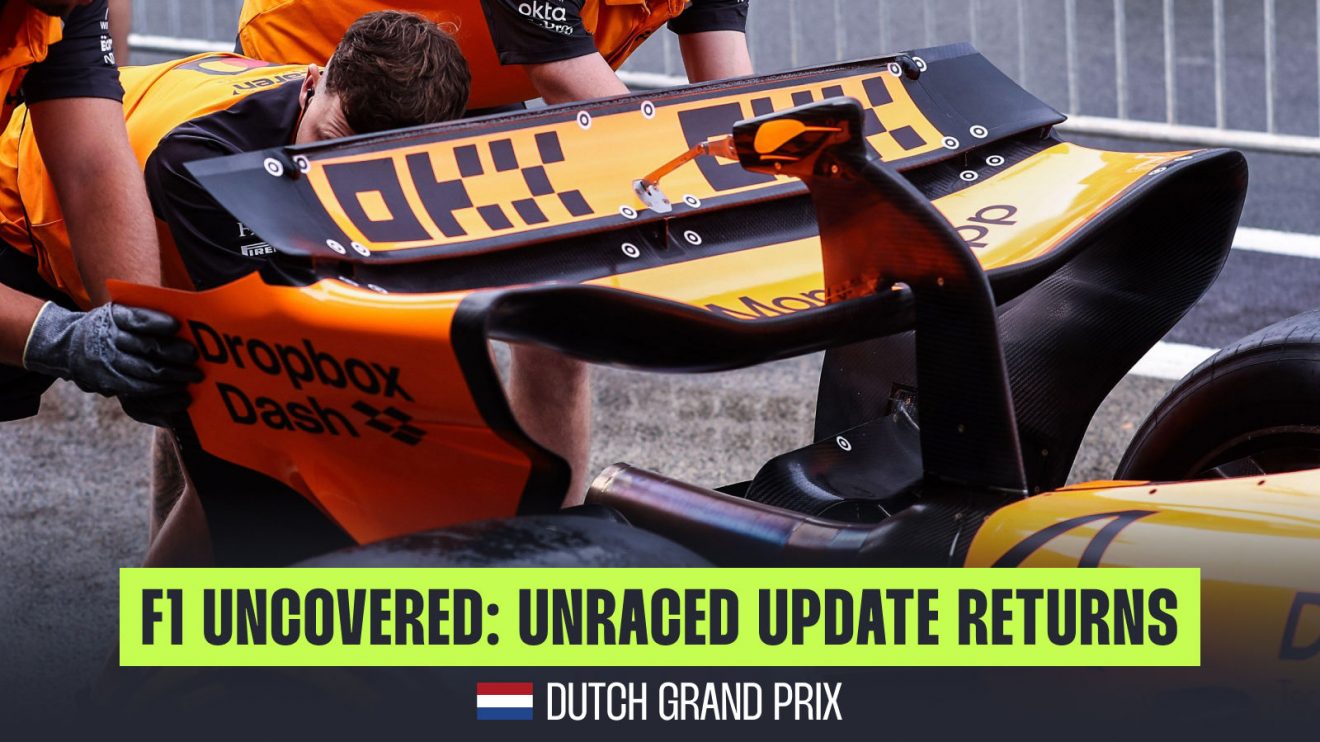
However, whilst it’s not a new solution, McLaren look set to use a rear wing arrangement on the MCL39 that has yet to be raced so far this season.
Not a new McLaren wing, but unraced to date

The rear wing solution seen on the MCL39 this weekend is straight from their allocation pool playbook: While it’s not been raced before, the team have trialed it and collected data in order to ascertain where they’d be best placed to use it in the future.
The design of this solution also bears all the hallmarks of the lineage of the other arrangements raced so far this season, but it is obviously providing the necessary efficiency required by the Zandvoort circuit.
More from PlanetF1.com:
? Five F1 2025 drivers with a point to prove after summer break
? Bold predictions as F1 2025 resumes: Hamilton engineer swap, Russell to Red Bull, Colapinto out
The main difference between the rear wing solutions within the family comes down to how much of the mainplane’s span is deeper in the central section than at the rolled endplate juncture.
In the case of the specification being used at the Dutch Grand Prix (top, above), there’s less of that central span in terms of depth, which results in a longer transition section outboard of that than the one employed in Hungary (bottom, above), for example.
These changes also naturally rely on some geometrical alterations to other features of the rear wing, with the outboard section around the endplate juncture and tip section considerably different.

And, whilst it might seem obvious that these design attributes contribute to the wing providing a different level of downforce and drag when compared directly against one another, there’s also the DRS effect to consider.
Altering the composition of the mainplane and upper flap will clearly have an impact on the performance of the DRS, with the team always keen to find the right balance between the two modes, in order to extract maximum performance during qualifying and the race.
Read next: Dutch GP: Norris sees off Alonso threat as Stroll crashes hard in FP2