

Uncovered: How Ferrari’s ride-height problems cost Leclerc the Hungarian GP win


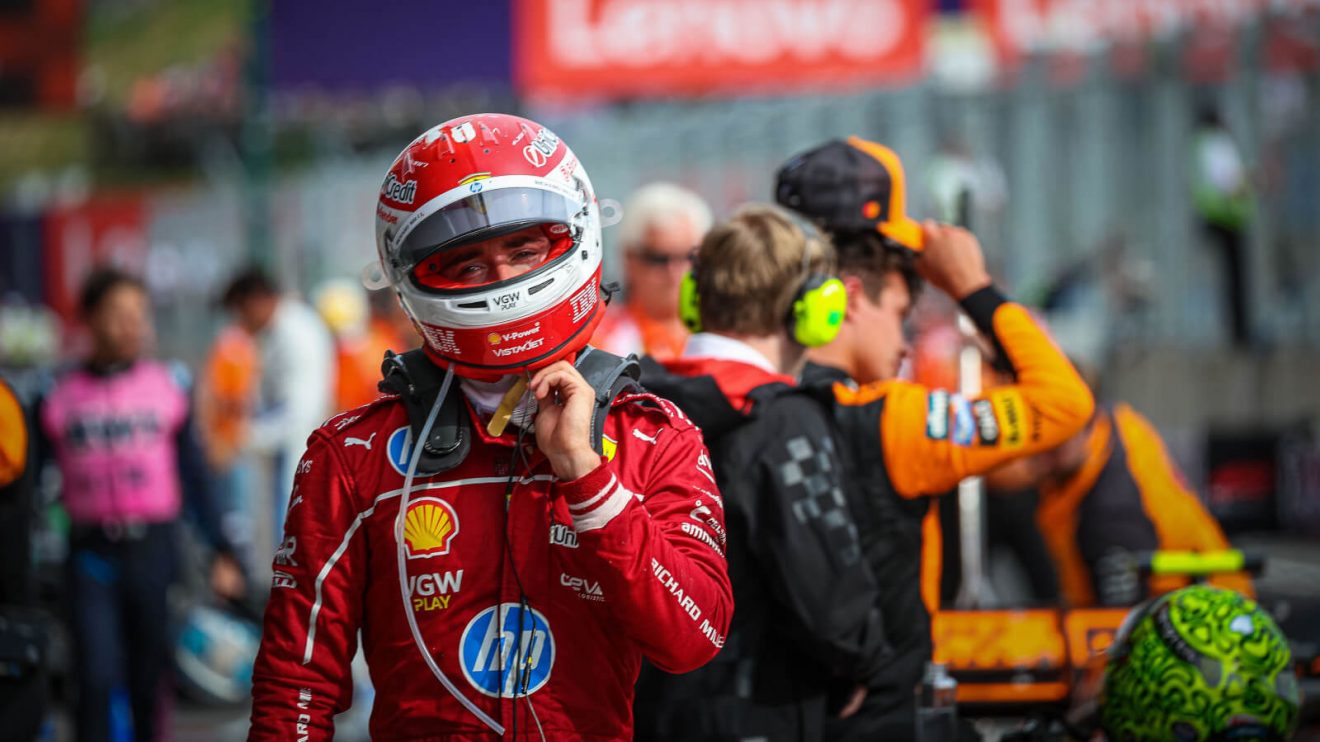
Charles Leclerc started from pole in Hungary, but dropped to P4 in the race
After an unexpectedly strong qualifying where he secured pole position, Charles Leclerc and Ferrari did not have the race they had hoped for in Hungary, losing the podium and finishing P4.
Much more was expected from Ferrari, as this was their first pole position of the 2025 season. What exactly went wrong, and what could the Scuderia have done differently on Sunday? Telemetry data gives us the answers.
Another missed opportunity for the Italian team
In a season dominated by McLaren, every chance to win, or even finish on the podium, is immensely valuable. Anything less than a 1-2 finish is now considered a poor result for the Papaya team, and the others must fight over the scraps.
Leclerc had a golden opportunity on Saturday when he delivered a flawless lap in Q3, improving his time unlike anyone else in the top 10 to take both his and the team’s first pole of the year. Hungary, like Monaco, is a track where starting up front is a massive advantage.
Overtaking at the Hungaroring is notoriously difficult. Combined with the short lap and consistent traffic, strategy becomes critical. But was it strategy that let Ferrari down?
Like the rest of the top 10, Leclerc started the race on medium tyres. Based on FP2 data and previous races at this track, the most common strategy was expected to be a two-stop, using medium and hard compounds.
Conclusions and Winners & Losers from Hungarian GP
? Hungarian GP conclusions: Hamilton shock factor, Verstappen investigation, Piastri raises Norris
? Winners and losers from the 2025 Hungarian Grand Prix
What was crucial for Leclerc was that he held P1 through Turn 1 and remained in the lead until his first pit stop.
With Lando Norris having a poor start and spending the first 20 laps stuck behind George Russell, the focus shifted to Leclerc and Oscar Piastri as the main contenders for victory.
On Lap 19, Piastri pitted in an attempt to undercut Leclerc. The Monegasque responded immediately on the next lap and, although the delta shrank, he rejoined just ahead of the Australian. Leclerc held onto the lead and continued to control the race in clean air.

Meanwhile, Norris committed to a one-stop strategy. Staying out longer allowed him to inherit the race lead. At this point, it was already too late for Leclerc or Piastri to switch to a one-stop: with 50 laps still to go, a second stop was inevitable for those who had pitted around Lap 20.
In this middle phase of the race, Leclerc still had clean air and was able to dictate the pace. Once he closed the gap to Norris, the Brit pitted, again leaving Leclerc in free air.
This allowed Charles to complete a very consistent second stint on hard tyres.
While he was slightly slower on average than Piastri, the McLaren driver never truly threatened his position. The growing concern, however, was Norris who, thanks to his one-stop strategy, was setting strong lap times and becoming a serious threat.

Despite that, Leclerc remained in the best position to win. Radio messages between Piastri and his race engineer made it clear that Ferrari’s #16 was the primary concern. Then came Lap 41, when Leclerc made his second stop, and that’s when everything started to fall apart.
As we learned after the race, Ferrari’s engineers were deeply concerned about the legality of the SF-25, specifically the plank wear. This wasn’t the first time as earlier in the season, Lewis Hamilton was disqualified in China for excessive plank wear.
To mitigate the risk, Ferrari decided to increase tyre pressure for the final stint. This would reduce plank contact with the tarmac and lower the chance of disqualification. The result? Best explained with the graph below.


After a few strong initial laps on new hards, Leclerc’s pace dropped off dramatically. Telemetry shows he was 1.4 seconds slower per lap than Piastri in the third stint.
It quickly became evident how easily Piastri overtook him, and how fast Russell caught up and passed him too. A complete collapse for Leclerc, who was powerless to respond.
We also learned post-race that Ferrari had been running a reduced power unit mode from the start, lowering top speed to further manage plank wear – especially under braking before Turn 1, the most critical zone for wear.
Whether this drastic setup change was truly necessary, we’ll never know. But what’s clear is that Leclerc’s race was compromised, and all of this could have been avoided with better preparation and clearer pre-race communication.
A driver can adapt his driving style, braking earlier, lifting off sooner in heavy braking zones to reduce wear. This would have helped. But based on the radio messages, the team didn’t trust Leclerc enough to give him that freedom.
In the end, it was a disastrous race for Ferrari overall, especially as Hamilton failed to gain a single position and brought home zero points for the team.
What matters most, though, is the evident breakdown in communication, which has been a recurring issue this season. Fixing that should be Ferrari’s top priority if they hope to turn things around in the second half of the year.
Read next: Hungarian GP driver ratings: New low for Hamilton as Norris overcomes Piastri


