

David Croft offers ‘risk’ elimination theory over Christian Horner sacking


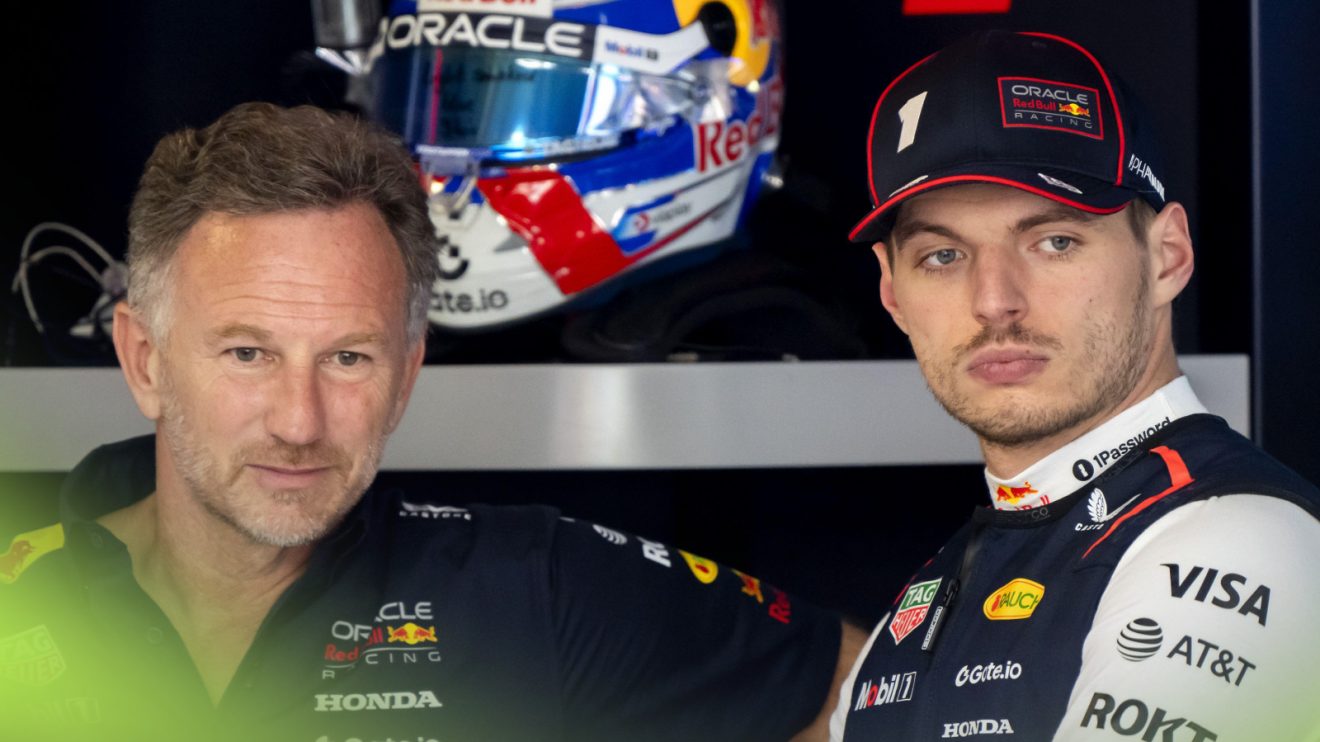
The risk of losing Max Verstappen was too great for Red Bull, suggests David Croft.
The sacking of Christian Horner from Red Bull was a case of risk mitigation, according to F1 commentator David Croft.
Horner was relieved of his operational duties at Red Bull Racing after more than two decades in charge of the team.
David Croft offers fresh Christian Horner sacking theory
It was announced on Wednesday that Horner had been removed as team principal and CEO of Red Bull Racing, the latter role filled by former Racing Bulls team principal Laurent Mekies.
No official explanation for the sacking has been made, though it has been observed that tension within the Milton Keynes camp had been high for a considerable period.
The squad has experienced a downturn in its on-track performance over the past 12 months, exacerbated by Max Verstappen’s team-mates being unable to come close to matching his performances.
That led to the team losing the 2024 Constructors’ Championship and being all but mathematically out of contention already in F1 2025.
There have also been a number of senior staff departures in the comparatively recent past, including Rob Marshall, Adrian Newey, and Jonathan Wheatley, prompting suggestions of a brain drain at the top of the organisation.
At Red Bull GmbH level, changes to the business ownership have occurred for the first time in its history, with majority owner Charlem Yoovidhya offloading a two per cent stake in late May, reducing his holding to 49 per cent – the same as Mark Mateschitz.
Horner himself came under fire at the start of 2024 following allegations made against him by a staff member, while there had been friction between the team boss and Verstappen camp ever since.
It’s the latter which Croft suggests has ultimately led to Horner’s downfall, suggesting Red Bull’s owners have backed the Dutchman to deliver results above the man who’d led the team since 2005.
“Christian, I think, is the third-longest serving team principal in the history of the sport,” he told Sky F1.
“But with the results not going well, with the star driver’s camp as it were seemingly at odds with the CEO and team principal, and harmony being a bigger, rarely used word behind the scenes, and with other stories as well, it comes together.
“And whilst the timing might be a surprise to a lot of people, I would imagine it’s just got to a stage where a decision had to be taken, and probably had to be taken because if the Verstappen camp was serious and did have options to go elsewhere, Red Bull can’t take the risk.
“[It] Can’t run the risk of Max Verstappen being at another team, winning the races and scoring the points and maybe getting the World Championship that he will undoubtedly get in a car that was good enough.”
Read more about Christian Horner’s Red Bull exit
? Christian Horner to Ferrari? Martin Brundle identifies one potential deal-breaker
? Christian Horner set for massive £50 million Red Bull settlement
The timing of Horner’s exit, in the days after the British Grand Prix, has been widely questioned.
Horner was under contract until 2030 and been instrumental not only in the squad’s previous success but in standing up it Red Bull Powertrains division.
Sweeping new regulations for F1 2026 will see both chassis and power unit regulations change, with an increased reliance of electrical energy.
Initially, that prompted Honda’s withdrawal from the sport, leaving Red Bull without and engine deal which triggered its decision to go it alone in developing a power unit for the new rules.
Now marks a critical time for all teams on the roadmap towards next season, as they begin to reassign resources.
The timing of Horner’s exit, therefore, raises questions around not only the motivations in the decision-making process but also the chances of success for his replacement, Laurent Mekies.
The Frenchman arrives with little time to prepare and familiarise himself with his daunting new role ahead of a potentially era-defining season.
Decisions made now will have a significant impact on Red Bull’s competitiveness not only next season, but well into the next regulation set if it is found wanting out of the box in 2026.
While the call to sack Horner was seemingly made to appease the Verstappen camp in the short term, it leaves significant unanswered questions and concerns over the longer-term impact of a seemingly rash change.
Read next: Red Bull urged to sack Helmut Marko next in ‘radical change’ call


