
How history shows officials got Oscar Piastri penalty call right


History has shown that officials in Silverstone got the Oscar Piastri penalty call right.
Oscar Piastri’s penalty during the British Grand Prix was a harsh but fair result, consistent with a host of other similar decisions across the years.
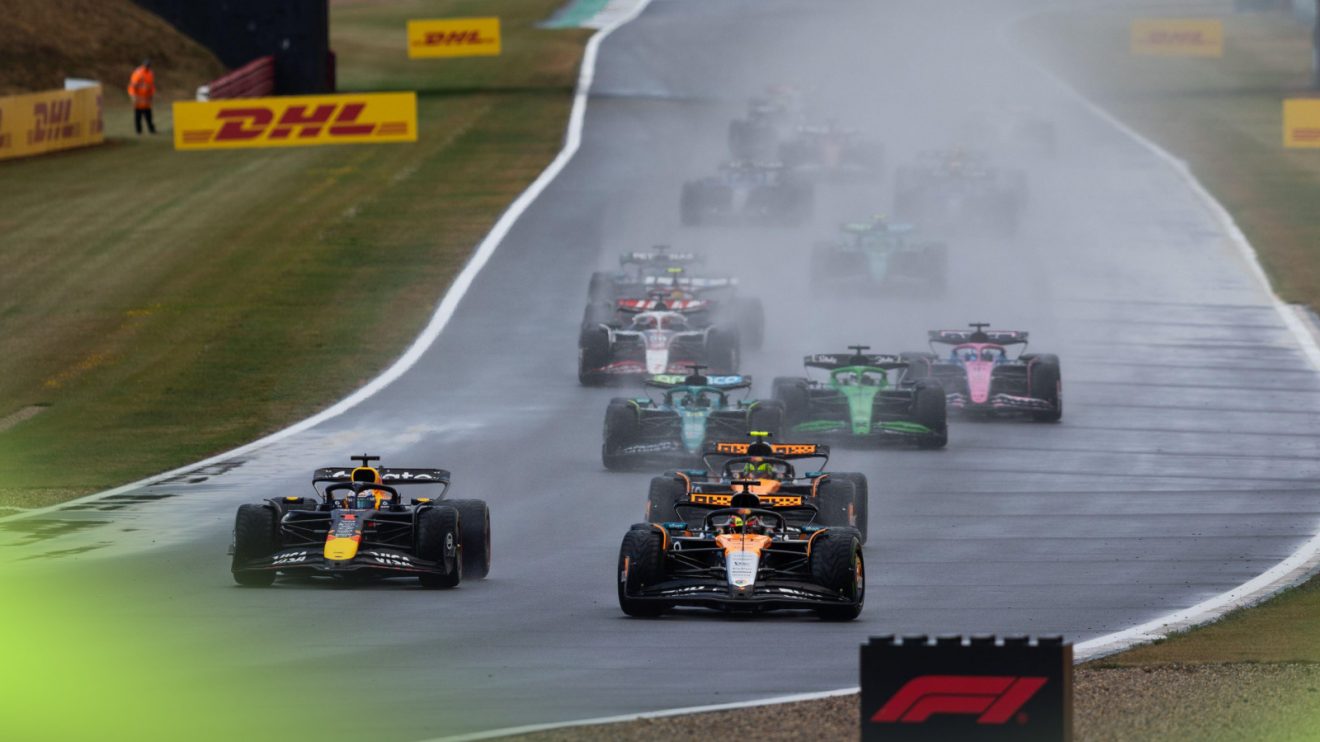
The McLaren driver was leading the race when he was handed a 10-second penalty for braking just prior to a Safety Car restart midway through the British Grand Prix.
Why Oscar Piastri was penalised when George Russell and others weren’t
The practice of accelerating and braking under Safety Car conditions is not new; it’s a well-accepted practice of generating and maintaining temperature in the tyre and brakes such that officials turn a blind eye to the letter of the regulations to allow for it.
In the Piastri incident, the critical difference was the timing of the Australian’s final brake application.
On Lap 21, the Safety Car extinguished its lights while on Hangar Straight, signalling that the race was about to restart.
A lap earlier, broadcast coverage shows Piastri slowing and dropping away from the Safety Car under the bridge approaching Stowe, before accelerating back up to the rear of the Bernd Maylander-driven Mercedes ahead.
Behind him, Max Verstappen was doing the same, weaving vigorously at the same time, but some way behind the race-leading McLaren.
On Lap 21, the television broadcast carried a notification that the Safety Car was ending moments after Piastri exited Chapel, the final left-hander onto Hangar Straight.
As he had the lap before, Piastri braked under the bridge on Hangar Straight, reducing his speed to 52km/h while applying much the same brake pressure he had before, as telemetry from his McLaren suggests.
Piastri’s brake application came moments after the Safety Car turned its lights off and accelerated away from the field, a point which tallies with the 25-year-old’s own telling of the events.
“I hit the brakes. At the same time I did that, the lights on the Safety Car went out, which was also extremely late,” he reasoned.
“I didn’t accelerate because I can control the pace from there, and you saw the result. I didn’t do anything differently from my first restart. I didn’t go any slower, so a shame.”
As he had in the laps prior, the Australian had braked to maintain temperature in his brakes and tyres, and it was coincidental that he did that just as the Safety Car pulled clear.
As unfortunate as that may be, it did breach the regulations given the Safety Car lights had been extinguished – albeit mere moments earlier.
That is a critical difference from George Russell’s actions in Canada, an argument cited in defence of the championship leader.
In Montreal, Russell was leading the race behind a late Safety Car from Verstappen, the Dutchman passing the Mercedes driver as he applied the brakes.
There, Russell applied a moderate amount of brake pressure, 30psi to be precise, with his pace dropping by 55km/h in dry conditions.
Protested by Red Bull, the resulting document affords a useful and extremely recent precedent.
In their findings, the stewards in Canada noted that “periodic braking is commonplace and to be expected during safety car deployments to ensure that temperature is maintained in tyres and brakes.”
It also states that, “it is not the responsibility of the Car ahead to look out for the following Car in any event,” suggesting that, while Verstappen may have been caught by surprise by both incidents, that is a result of his own actions and not those of Russell or Piastri.
The key difference was the timing of the braking, and the magnitude of it, as noted by officials in Silverstone who reasoned that “the safety car was coming in that lap and the lights were extinguished, Car 81 suddenly braked hard.”
In real terms, Piastri applied 59psi of pressure to the brakes and reduced his speed by 166km/h in wet conditions. While officials noted Verstappen was forced to take evasive action, the precedent set in Canada suggests that was not a consideration when deciding on a penalty.
Indeed, the specified breach itself was not for dangerous driving, as one might expect if a rival is forced to take evasive action, but for erratic driving under Safety Car conditions.
Under the FIA penalty guidelines as published by the FIA in May, officials had four recommended penalties available to them: a five-second time penalty, a 10-second time penalty, a drive-through, or a 10-second stop-and-go.
That Piastri was handed a 10-second penalty suggests it was not especially egregious. However, it also lays down a precedent for braking once the Safety Car lights have been extinguished.
Article 55.5 of the sporting regulations states that: “No car may be driven unnecessarily slowly, erratically or in a manner which could be deemed potentially dangerous.”
As Piastri was penalised specifically for “eErratic braking on the straight before T15,” we can discern that the five-second penalty must therefore be applicable to driving ‘unnecessarily slowly’, with the more severe options logically reserved for driving in a ‘potentially dangerous’ manner.
More on Oscar Piastri’s British GP penalty
? New Oscar Piastri evidence emerges after controversial British GP penalty
? Max Verstappen highlights ‘strange’ George Russell inconsistency in stewards’ Oscar Piastri verdict
There is precedent for that, with Sebastian Vettel handed a 10-second stop-and-go penalty at the 2017 Azerbaijan Grand Prix after he deliberately banged wheels with Lewis Hamilton ahead of the Safety Car restart.
The German felt the race leader had brake-checked him, and expressed his displeasure. The stewards decided that was “potentially dangerous” and handed the Ferrari driver the harshest of the penalties available, though it should be noted that he was penalised under Article 27 of the regulations – a catch all for driving standards, not the specific Safety Car regulation which Piastri was found to have breached.
Though one can understand how officials reached the conclusion they did, there is an argument to be made that Piastri was treated harshly.
During the 2020 Tuscan Grand Prix in Mugello, there was a significant crash following a Safety Car restart.
While race leader Valtteri Bottas maintained a low-speed ahead of the restart, the pack behind him did not, leading to a concertina affect that eliminated a number of cars in spectacular, and dangerous fashion.
But rather than handing the 12 drivers involved in that incident any sporting penalty, they were all let off with a warning.
“The Stewards conclude that the root cause of this incident was the inconsistent application of throttle and brake, from the final corner along the pit straight,” officials noted at the time.
“However this incident demonstrates the need for caution to be exercised in the restart situation and note that there was an extreme concertina effect which dramatically increased as it moved down the field.”
The mitigating factor in Mugello, however, and another key element in why that precedent falls flat in the case of Piastri, was that it was “the view of the Stewards that no one driver was wholly or predominantly to blame.”
In Silverstone, the fault was with Piastri alone, and therefore, he singled himself out for punishment.
It was an unfortunate outcome for a sequence of events entirely without malice or ill intent. Piastri’s decision to brake was consistent with his approach on the laps prior, but the key difference is that the Safety Car lights had gone out moments prior.
While it may seem unnecessarily harsh to slap him with a 10-second penalty, the rationale used by the stewards appears sound; of the options available to them, they selected appropriately given the definition of the regulations and the precedents that have been set.
Read next: Mohammed Ben Sulayem responds to FIA ‘reign of terror’ accusations