

The new and old parts that Mercedes used in Canada to help propel Russell to pole


George Russell’s stunning lap during Q3 resulted in the Brit pipping his rivals to pole position at the Canadian Grand Prix.
And, whilst the team are clearly aware that this level of performance is often derived from cooler track conditions, it also suggests that there’s a significant level of latent performance that can be unlocked in the W16.
Keep plugging away
Mercedes have taken a slightly different approach to development this season, as it was round six of the championship, in Miami, before we saw any new parts arrive for the W16. But, there’s been a steady stream of updates delivered since then, with Monaco the only outlier in that respect.

The team have another, larger inlet and outlet arrangement for their front brake duct at their disposal in Canada, as it’s a circuit that’s tough on brakes. It’s worth noting that now the parts are in the available pool, they’ll also come in handy at the next event, with the Austrian Grand Prix even more reliant on a robust solution, as there’s both altitude and less room to breathe between corners to consider when compared with Circuit Gilles Villeneuve.

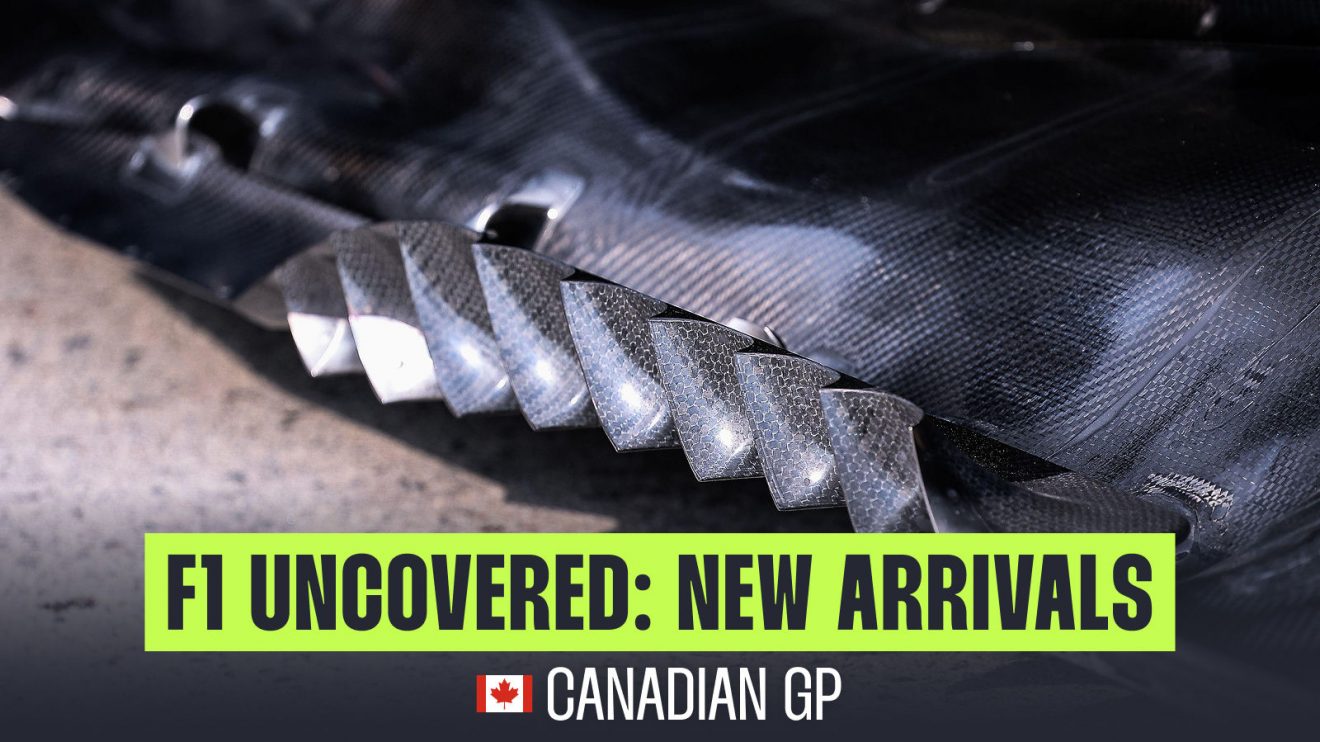
Another new edge wing solution was introduced in Canada too, with the team making some more tweaks to the arrangement that was fitted to the W16 at the Spanish Grand Prix.
It’s the third solution to be used on the W16 in as many races, as the team looks to improve the aerodynamic characteristics of that region on the floor and how it interacts with the wake being generated ahead of it.
This updated variant is a subtle adjustment to the one used at the Spanish Grand Prix, with the team perhaps looking to rotate between the two designs going forward, depending on the demands of the specific circuit.
There’s a notable difference in the chord height and camber of the upswept section of the main element, which is clearly longer than the previous variant, that was last used in Monaco. Meanwhile, as a consequence of the aforementioned alterations, the geometry of the vanes have also been amended.

Mercedes have also returned to the rear suspension layout that they introduced in Imola but have not used for the two Grands Prix that have intervened. The newer layout sees the lead arm of the upper wishbone moved down and placed slightly further rearward, in an effort to help with some of the tyre woes that they’ve often encountered.
More on Mercedes in the F1 2025 season
? Small upgrades, big gains? Mercedes introduce a handful of new components at Imola
? Mercedes focus their efforts elsewhere, as there’s no new front wing on the menu
But, whilst they’ll be buoyed by the clear improvement that they saw during Qualifying, they’re also sceptical of it being driven by the cooler track temperatures. And, with the race starting two hours earlier, that’s clearly going to have an impact, as explained by George Russell:
“We perform when it’s cooler and struggle when it’s hotter. The race is at two o’clock tomorrow. Qualy, by the time we did Q3, it was after five o’clock. So, you know, it’s little things like that make a big difference. If a cloud comes out, that’s good news for us. If the sun’s there, it’s not good.”
Read next: Telemetry exposes costly Lando Norris error in Canadian GP qualifying