

Banned parts and new rules: Why Monaco is the ultimate unique challenge


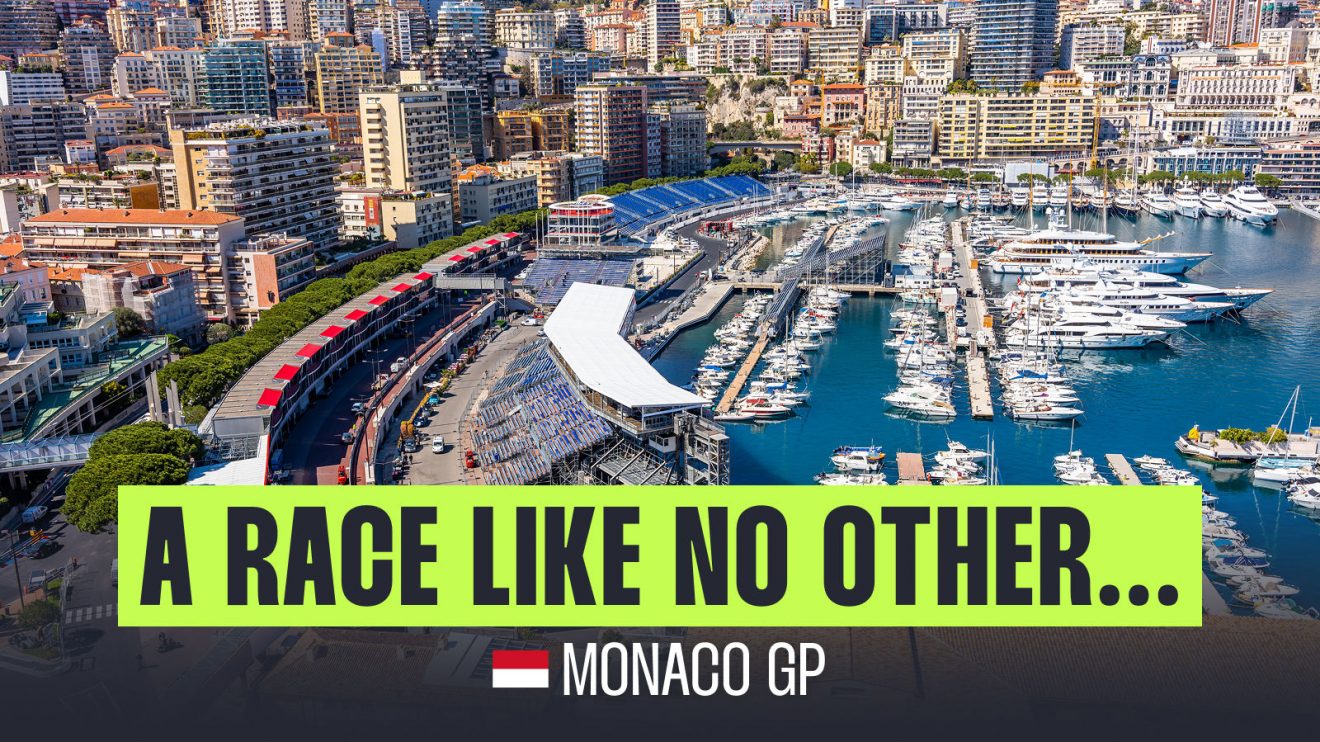
Famed for the glitz and glamour that exudes from the event, we often forget about the raw, unnerving challenge faced by the drivers as they stare down the narrow, barrier-lined streets of the Monaco track.
And, as Formula 1 heads to one of the most challenging circuits on the calendar, there’s a whole host of differences that the teams have to consider if they’re to get the best from their machines.
Dirty downforce at the Monaco Grand Prix
Most of the teams will have prepared high downforce wing packages that will have their first outing this weekend, as they forsake the efficiency they covet at other venues, given their priority shifts towards low-speed cornering performance.

And, whilst the rest of the grid will push their new high downforce offerings into their pool when they announce the arrival of their new parts in the car presentation document ahead of the event, we’ve already seen McLaren’s offering.
The papaya-painted car of Lando Norris was briefly outfitted with the new, high downforce beam and rear wing arrangement in Imola (above), with the team eager to get an understanding of its performance ahead of time.
The Monaco only rule
Pirelli have announced that they will once again have the softest tyres available in their range in use in Monaco.
With the C6 having already debuted last time out at Imola, the teams will have more of an understanding of the compound as they head to Monaco, where it will feature again.
However, there are two wrinkles for the teams to iron out.
Firstly, the introduction of the Monaco-specific two-stop rule, whereby drivers must complete at least two pit stops during the race, which has been implemented in order to add some strategic variety.
And, secondly, Pirelli have prescribed the lowest minimum starting pressures of the year so far, albeit they are the same pressures as prescribed last season.
By comparison, they are considerably lower than what we saw in Imola though, with the Italian manufacturer prescribing 20psi and 19psi minimum pressures, front and rear respectively.

Talking about things specific to Monaco, there are solutions that teams might take there and not race again the rest of the season, namely front suspension components or fairings that help to mitigate any issues caused by the extra steering lock required to navigate the Grand Hotel (Loews) hairpin.
As we can see in this image of the RB20 from last season, Red Bull modified the outboard section of the upper wishbone fairing to create some additional clearance, otherwise the tyre would have collided with it at full lock.
Teams will also have a different set of parameters that they work with in terms of setup, not only in terms of improving suspension compliance at lower speeds but also how they use the power unit, as clearly it won’t be operating at some of the higher speeds it normally does, which provides an entirely different bandwidth in which the ICE and ERS are utilised.
Courting F1 controversy
Formula 1 designers always saw Monaco as an event whereby they’d try solutions that they might not otherwise be able to run elsewhere, given the additional drag penalty they might incur, as such, there have been a number of interesting solutions appeared down the years, some with more success than others…
 Perhaps the most famous Monaco arrival comes from Tyrrell, who introduced their ‘X-Wing’ solution at the 1997 Monaco Grand Prix and recorded their best result of the season, as Mika Salo was fifth. It’s a solution that would be widely adopted thereafter, albeit in different guises by their rivals and was subsequently banned during the 1998 season, as the designs became more and more bold.

Jos Verstappen at the wheel of his Arrows A22, which the team outfitted with a tall nose wing assembly during Free Practice for the 2001 Monaco Grand Prix. The FIA quickly snubbed the teams’ approach and asked it to be removed from the car on safety grounds.
 Meanwhile, Jordan had a similar idea, albeit further downstream, as the EJ11 was fitted with a pillar ahead of the driver, on top of which an extra wing could be found.
It would suffer the same fate as the Arrows solution and removed from the car before it could be used competitively.
Only at Monaco!
Read next: Ferrari ‘regret’ surfaces as Adrian Newey reaches big Aston Martin milestone