

Revealed: Why there is more to the RB21 than meets the eye


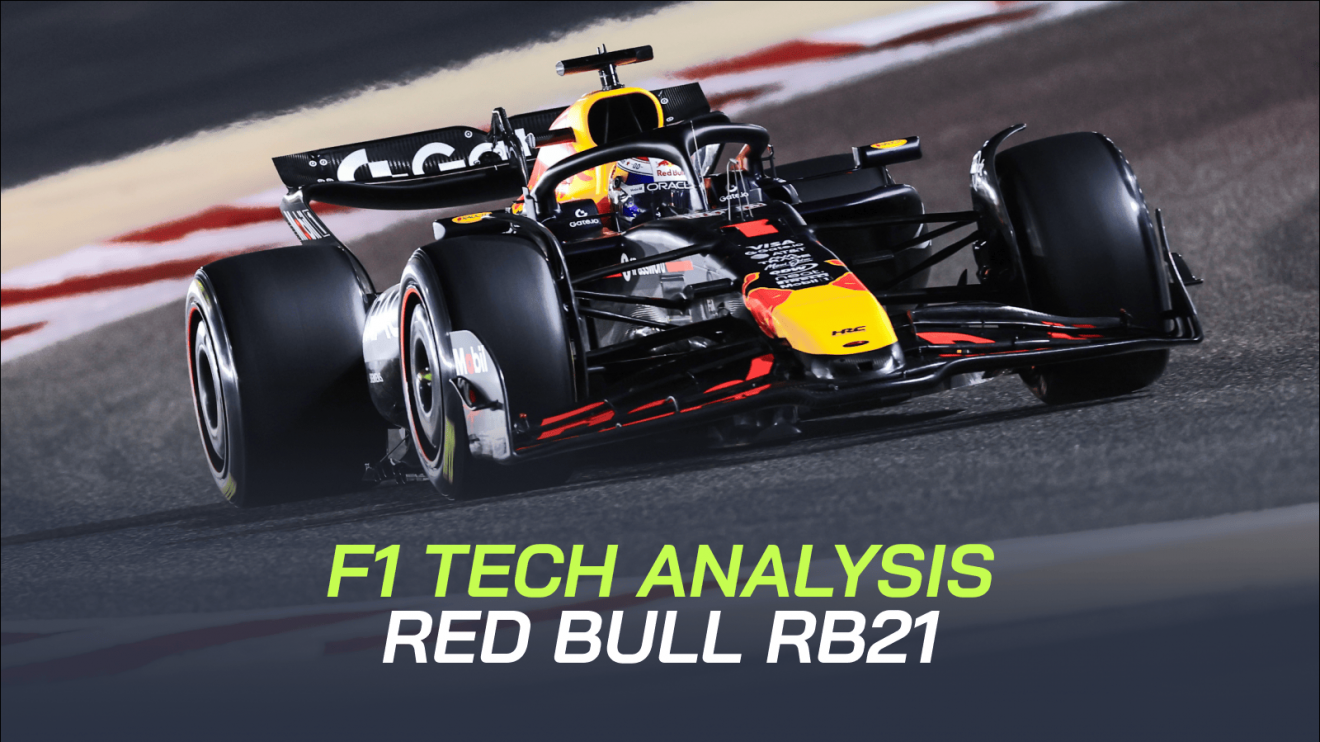
Can the Red Bull RB21 deliver a fifth straight title for Max Verstappen?
The arrival of Red Bull’s latest challenger left many confused when they first caught sight of the RB21, as it was largely expected that results on track in 2024 would lead to a heavily revised car for F1 2025.
The RB21 that arrived in Bahrain wasn’t a completely different concept, though. Rather, it was an evolution based on the update the team had introduced at the Hungarian Grand Prix in 2024.
Red Bull RB21: More than meets the eye

The biggest change by far between this and last year’s Red Bull’s is the approach taken to cooling, with the novel centreline arrangement used in 2024 quietly dropped in favour of something more traditional.
This comes after the team had already exchanged the cockpit shoulder intakes (left inset, arrowed), for similarly sized intakes below the airbox as part of the aforementioned update package in Hungary (right inset, arrowed).
These additional inlets have been eradicated entirely for F1 2025, with the team opting to make adjustments to the internal packaging on the RB21 that remove the need for the additional centreline cooling.
F1 analysis: Red Bull RB21 vs McLaren MCL39
? F1 testing data discovery indicates true Red Bull pace compared to Ferrari, McLaren, Mercedes
? Uncovered: McLaren’s intriguing change to their front suspension
It’s always a fine balancing act between the need for cooling and how much of an impact this has on aerodynamic performance, as explained by Pierre Waché.
“Last year, we were minimising the cooling capacity to gain aero. The problem is, when you need more [cooling], you lose more aero because you will start to open more bodywork.
Now, as you increase the cooling capacity as a system, it gives you less demand on the bodywork to be open and reduce the downforce.”
This does mean that whilst the general shape of the sidepod and engine cover remain similar to last season, the main heat exchangers, which were housed in a V-shape arrangement last season, have now been offset from one another.
The small intakes beside the cockpit and halo have also been optimised on the RB21, along with the shape of the fairing that wraps around the rear leg of the halo as it now blends into the engine cover bodywork, rather than having a fin-like appearance.

The aerodynamic furniture on the side of the halo and above this small inlet has also been revised, with a similar winglet to the one mounted on the side of the halo during the early part of 2024 (inset), used in combination with the vertical element that replaced it at the Dutch Grand Prix and was considered a foil for that update package.
Red Bull may have brought a car to the start of pre-season testing that resembled last year’s challenger – but they did have a new nose and front wing available to them on the final day of the test.
There were also some other bodywork options that they tried to ensure they’ll have enough cooling capacity when racing in warmer climes.

The new nose solution has a few distinct characteristics that its predecessor does not, with a shorter tip section that sits on the leading edge of the second element, rather than the mainplane resulting in a gap between the elements that wasn’t exposed before.
This will obviously invoke a different aerodynamic response, with more airflow allowed passage to the underside of the nose assembly, which may also be different in shape to account for this.
Meanwhile, the tip section is also taller and broader, which not only requires the nose of the body to taper in more before reaching the chassis, it also means the static flap elements attached alongside it are narrower than before.
The team are clearly looking to capitalise on the current static load and deflection tests before the FIA introduces new, more stringent measures at the Spanish Grand Prix.
As such, the moveable sections within the upper flaps have also been modified as it’s likely that this new front wing design is more flexible than its predecessor too.

There’s also an interesting revision in the outboard portion of the wing, as Red Bull’s designers have folded over the third element entirely and added a vane on top of it to connect the element to the endplate.
Read next: Joy for McLaren? Max Verstappen’s blunt Red Bull assessment ahead of Australian GP