

Explained: IndyCar qualifying, and why the process is different on ovals


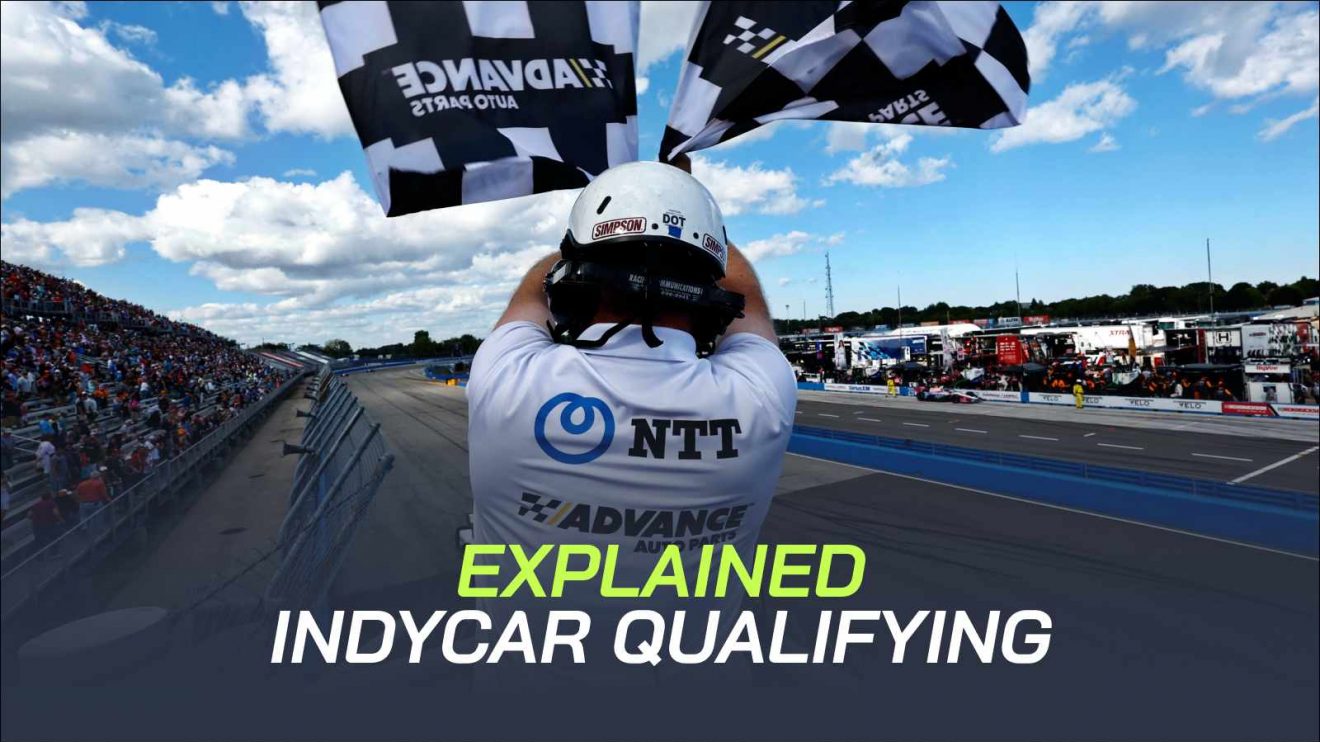
How does IndyCar qualifying work?
The IndyCar Series is getting its start in 2025 this weekend with the Grand Prix of St. Petersburg down in Florida — and to get you ready for the new season, we’re going to dig into the different qualifying procedures that the series uses.
Because IndyCar races on ovals as well as road and street circuits, the series implements two distinct qualifying formats. We’ll dig into both below — but remember, qualifying has extra importance in IndyCar because scoring pole position is worth one championship point.
IndyCar qualifying explained: Road and street circuits
Qualifying on road or street courses will take place in three segments. The first segment sees the full IndyCar field split into two groups that are determined by the fastest time set by each driver in the final practice session before qualifying.
Each group in segment 1 receives 10 minutes of track time during which they attempt to set a fast lap time. The fastest six cars from each group will advance to segment 2. The drivers that fail to advance will occupy the remainder of the grid, with group 1 cars lining up in odd-numbered positions on the grid (13, 15, 17, and beyond) while group 2 cars will take the even-numbered positions (14, 16, 18, and beyond.)
Now, onto segment 2! Here, all 12 cars that progressed from segment 1 will have 10 minutes to once again attempt to set their fastest possible lap. The fastest six drivers will advance to the third and final segment of qualifying, while the slower six will be assigned starting slots in positions 7-12.
Finally, we hit the last segment, which is known as the Firestone Fast Six. Here, the fastest six cars are guaranteed six minutes of green-flag running to set fast times. The fastest car will be awarded pole position, with the other five runners taking up grid slots two through six based on descending speed.
There’s one big caveat to all of this, though: If a specific driver causes a red flag condition, its two fastest laps will be disallowed, and the driver will not be allowed to move onto the next segment of qualifying.
If a specific driver brings out a yellow flag, then that car’s fastest lap time will be deleted — but, critically, that driver is allowed to continue on to the next phase of qualifying.
If any of this happens during the Firestone Fast Six, though, you’re out: All of your laps will be voided, and you’ll line up sixth.
Where you’ll see this format in 2025:
- St. Petersburg
- Thermal Club
- Long Beach
- Barber
- Indianapolis road course
- Detroit
- Road America
- Mid-Ohio
- Toronto
- Laguna Seca
- Portland
How IndyCar compares to Formula 1:
? F1 v IndyCar: Top speeds, engines, formats, calendars and safety measures all compared
? Formula 1 v IndyCar: How open-wheel racing’s hybrid powertrains compare
IndyCar qualifying explained: Oval tracks
Oval qualifying order is determined by the reverse order of entrant points entering an event; if a car turns up for just one race, then that car will be placed at the front of the order and then actually slotted into the qualifying order via a blind draw.
Every car has one guaranteed chance to qualify, which will be done one car at a time.
When a car hits the track, it has up to two warm-up laps before it begins what is known as the “green-flag run” that will determine qualifying order. In that green-flag run, cars run two laps, and the aggregate time is the time recorded for the car.
Cars are slotted into the starting order in descending order, starting with the fastest car in qualifying.
Where you’ll see this format in 2025:
- Gateway (World Wide Technology Raceway)
- Milwaukee Mile
- Nashville Superspeedway
There are two instances where qualifying on ovals looks different: during doubleheader weekends, and during the Indianapolis 500. We have specific explainers available for those two instances!
In short, doubleheader oval qualifying sees each car run two qualifying laps instead of one qualifying lap: The first lap speed sets the grid for the first race, while the second lap speed sets the grid for the second race. This will be used during the doubleheader event in Iowa.
Indy 500 qualifying, though, is its own beast. Every car is allowed to attempt to qualify once, with each qualifying attempt lasting for four laps. The car’s speed is determined by averaging out the speed of all four laps. There are also two different qualifying lanes, as well as multiple sessions — but for all of those details, you’ll have to check out the specific story digging into everything!
Read next: IndyCar schedule: Every street track, road course, and oval in 2025