

How Atlanta showed fans a better version of NASCAR racing at Daytona


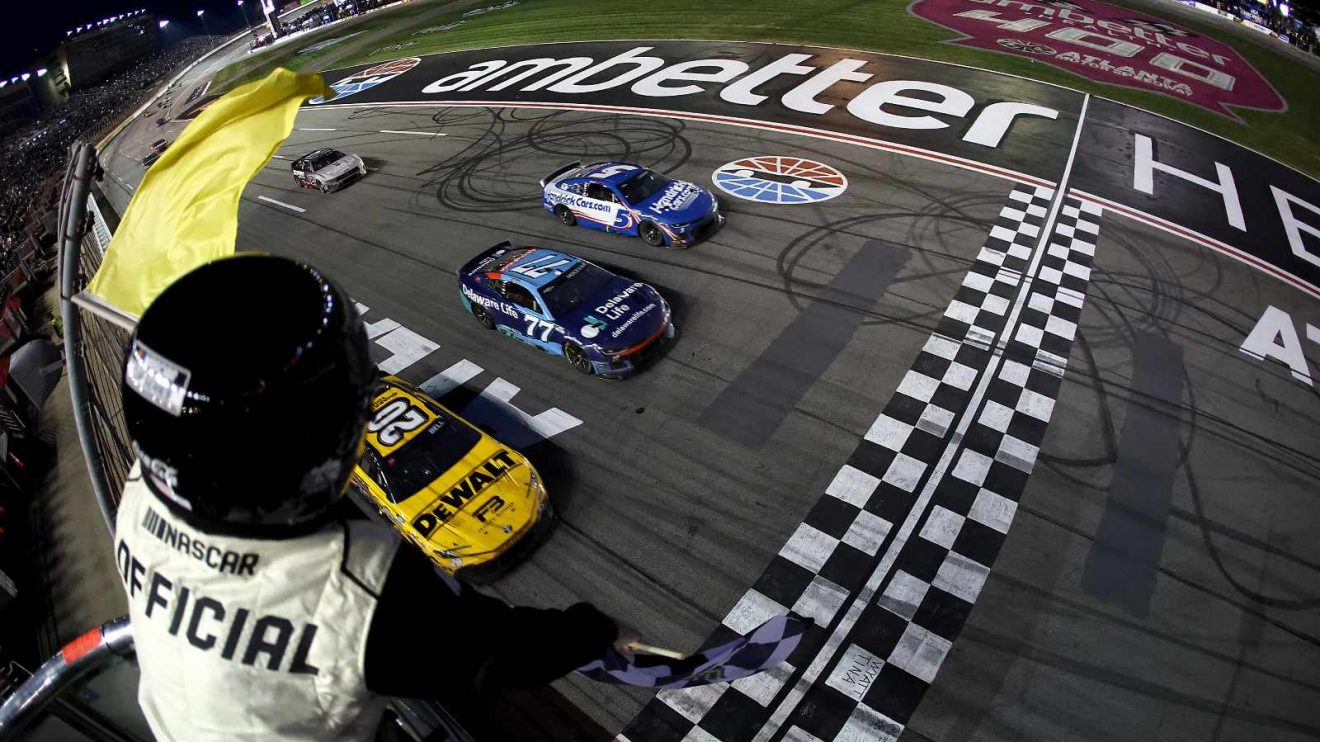
Christopher Bell wins the 2025 Ambetter Health 400 at Atlanta Motor Speedway under yellow.
If you walked away from the Daytona 500 with a sour taste in your mouth regarding the NASCAR Cup Series and the quality of superspeedway racing, you wouldn’t have been alone. And you probably would have been dreading the fact that Atlanta was next on the schedule.
While not a traditional superspeedway, Atlanta’s reconfiguration has created a similar style of racing to the superspeedways of old — but a strong, exciting race gave fans the Daytona 500 they craved.
Atlanta proved that superspeedway racing can be great
After the conclusion of the Daytona 500, plenty of NASCAR fans around the world were left frustrated. The biggest race of the year had been marred with irresponsible wrecks and a whole lot of poor racing that only seemed to be encouraged by the implementation of green-white checkered flags and the Playoffs.
In the aftermath, many of those Cup fans debated why the race had felt so bad, and many pointed to superspeedway racing as a whole (myself included). The nature of that kind of racing paired with the current NASCAR technology means that drivers have to stay bunched up together, and that they will be rewarded for audacious — if stupid — moves.
Next up on the schedule was Atlanta; at just 1.5 miles, Atlanta isn’t the textbook definition of a superspeedway — it’s far too small for that — but due to a track reconfiguration in 2021, it races like a superspeedway.
The question was, would driver treat Atlanta the same way? Would NASCAR?
More from NASCAR history:
? From moonshine running to land speed records: The unlikely history of NASCAR
? Explained: NASCAR Cup Series points and championship format
Thankfully, the answer was ‘no.’ The shorter nature of the track seemed to keep drivers more occupied with clean but hard racing, while perhaps without the prestige of the 500 lingering over their shoulders, there was less incentive to try the kind of do-or-die move that tarnished Daytona.
There was pack racing, yes, but the narrower track couldn’t facilitate three lanes for the whole race. There was more strategy involved, a more careful selection of drafting partners and lane changes. There were still wrecks and angry passes, but they weren’t taking place every third lap, and they weren’t bringing sudden halts to the rhythm of the race.
And there were still imperfections with race control and the throwing of the yellow flags — though, NASCAR’s senior vice president of competition Elton Sawyer did state that he’d be quicker throwing the yellow on the last lap of the Cup race after race control neglected to do so for a massive wreck at the end of the Xfinity race. A lack of consistency, yes — but an acknowledged and rectified one.
It is, at the very least, a step in the right direction for the NASCAR Cup Series, and more akin to the kind of racing fans want to see from the crown jewel events.
Read next: The wildest penalties in NASCAR history, from race bans to team-killing fines