
Racing Bulls VCARB 02 uncovered: More than meets the eye for Red Bull sister team


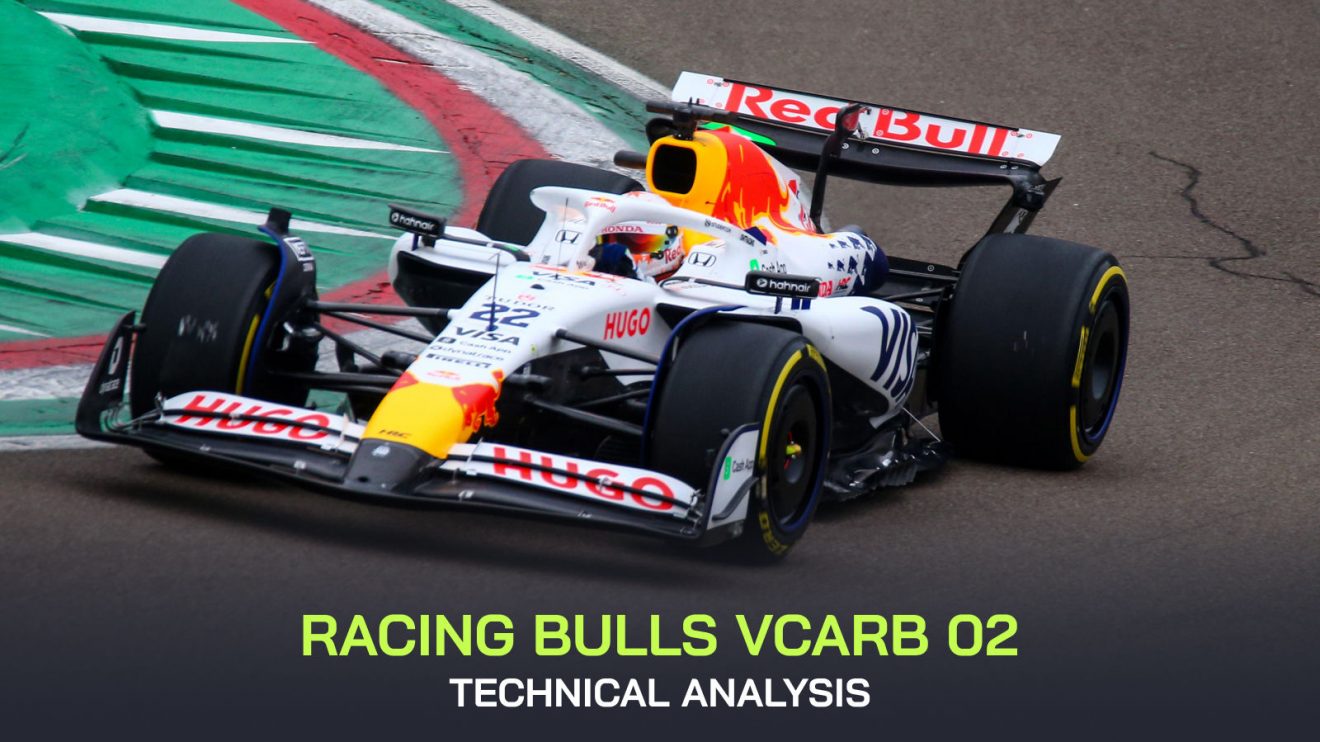
Racing Bulls decided against a traditional launch this season, having already unveiled their livery at the F1 75 event and instead took to the track on Wednesday, at Imola, to shakedown the VCARB 02.
The stunning livery, which resembles one used by their sister team, Red Bull, at the Turkish Grand Prix in 2021, is not the only new feature on this year’s car though, with the team refining solutions that they developed during 2024 and adding a new twist on some others.
Racing Bulls VCARB 02: White knight, white elephant or just white noise?…
As you’d imagine, this year’s car doesn’t have any revolutionary features, rather it’s all about having a stable platform from which to build on for the rest of the season.

At the front of the car, we can see that the team have adopted the front wing and nose assembly that the team arrived with at the final race of last season, in Abu Dhabi but decided not to race.
On that occasion, Liam Lawson’s car was outfitted with the assembly during FP1, with the team using it as an opportunity to collect some data and establish if the new direction they were seemingly taking would pay dividends this season.
The changes between this and the old specification front wing are fairly significant, with numerous design features altered, as the team looked to improve how the wing and car perform over a range of conditions, with more balance a key ingredient in that recipe.
In order to achieve some of the changes to the front wing it also required the team to alter some of the features of the nose, with a redesigned tip section now present. This led to a change in shape for the mainplane, as the previously upturned leading was swapped for a flatter profile.
Spreading outward from the nose, there’s also been a reorganization of the inboard flap section on the front wing, as there’s more space where the flaps connect to the side of the nose.
This has also resulted in an alteration in the spanwise distribution of the flaps and a reorganisation of the endplate juncture, with the flap tips now in what we consider to be ‘semi-detached’ arrangement, in order to alter how they produce ‘outwash’.
More technical analysis of the F1 2025 grid so far
? Ferrari SF-25 analysis: Worst-kept secret not the only big change as Ferrari aim high
? MCL39 v FW47: The big differences that separate McLaren and Williams
The endplate itself has also been redefined, as the designers have shifted to a much more rounded solution across the leading and upper edge. The twist profile of the endplate has also been altered, with a diagonally skewed surface favoured over the flatter design of its predecessor.
This has resulted in a change to the diveplane too, as it now has an S-shaped profile, rather than the most simplistic semi-circular variant preferred previously.
The team have retained a pull-rod front suspension arrangement, like they had last season and is also a weapon in their siblings arsenal. Like Red Bull, the upper wishbone’s rear leg is slung lower than you’d expect in a conventional setup and will provide some additional mechanical and aerodynamic benefits.
The front brake duct’s inlet and outlet arrangement has been changed for 2025, likely in order to capitalize more on the pull-rod’s layout at the outboard end, with a more sinuous shape applied across the duct to improve its interaction with the various suspension fairings.
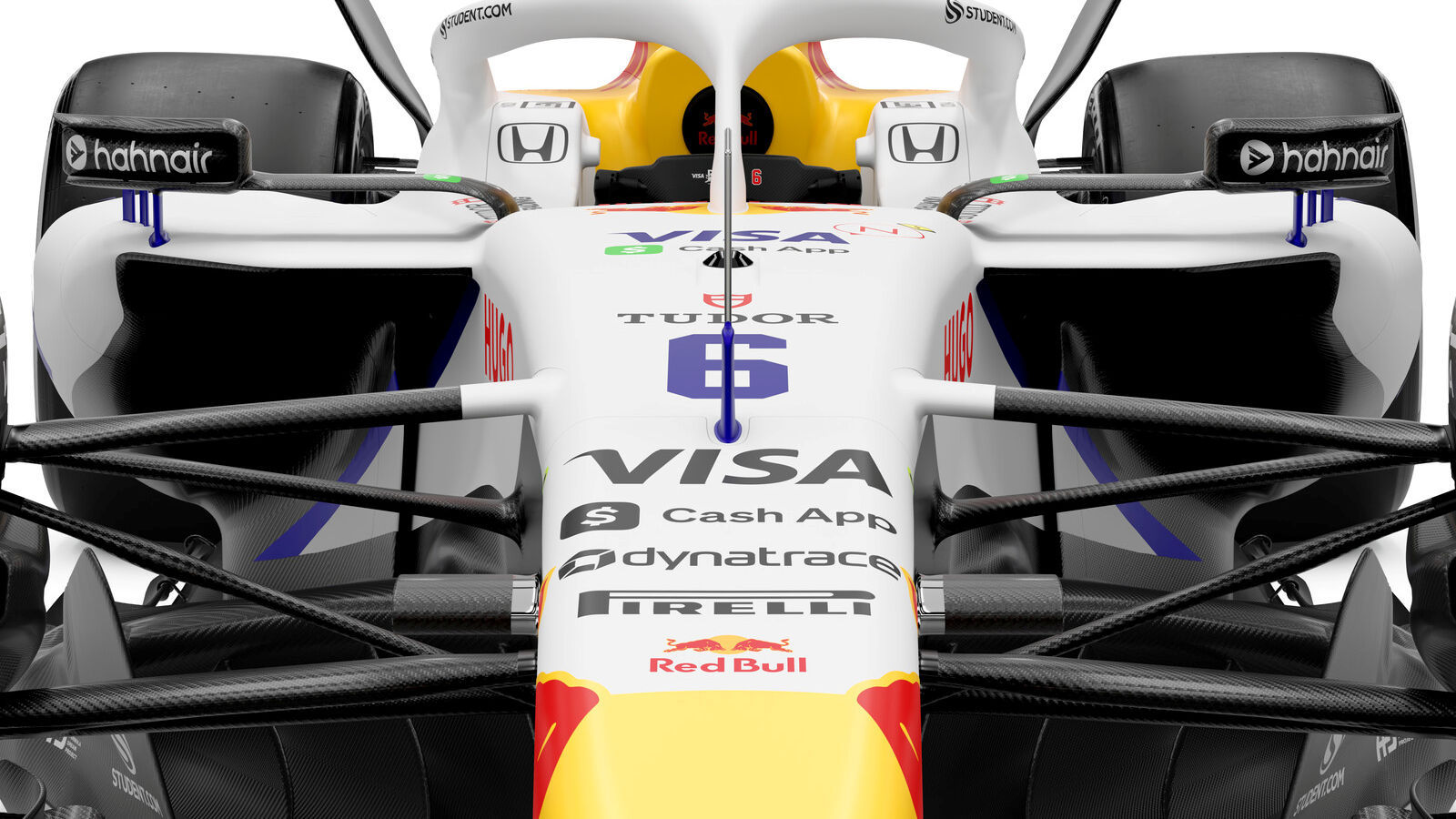
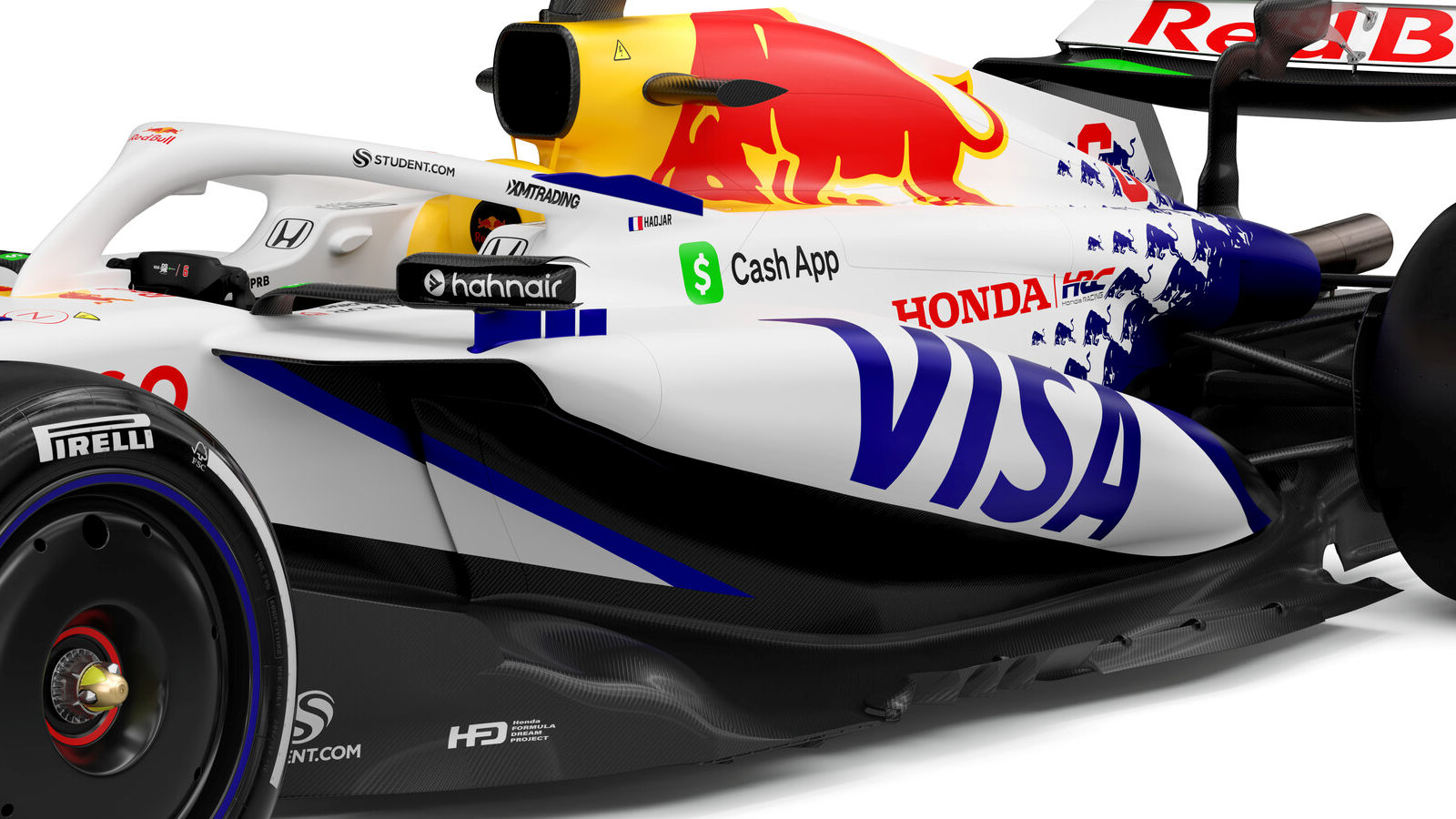
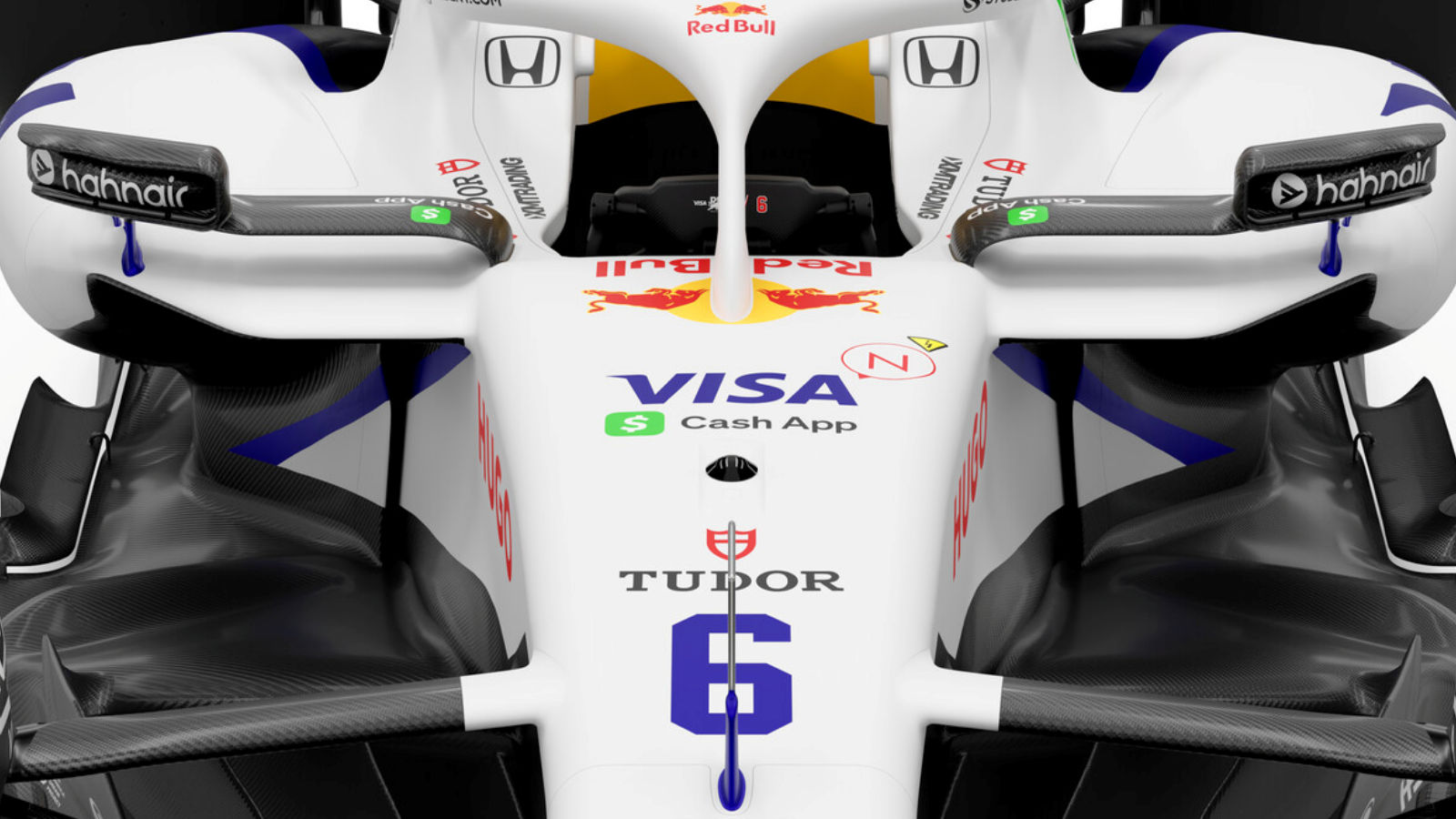
The biggest change, by far, on the VCARB 02 comes in the form of the sidepods, as the team have adopted the now almost ubiquitous overbite-style inlet, which is incorporated within a design very similar to the one seen on the RB20 last season.
Like the solution seen on the Red Bull, the Racing Bulls have opted for a slender vertical inlet alongside the side of the chassis too, helping to tidy up the losses that accumulate along its length.
This extends up from the floor line and widens slightly as it approaches the vertical portion of the inlet, which also has a shallow entry and sits beneath the overbite.
The rest of the sidepod’s shaping is similar to the type of solution we’ve now become accustomed to with these regulations, with the bodywork shaped for improving the external aerodynamics, rather than being shrink-wrapped to the internal components, as was the case with the previous generation of cars.
As such, the sidepod has a generous undercut, wide body midriff when viewed from the top and gentle downward ramp-style slope toward the rear of the car, where it tapers into the coke bottle region with a waterslide profile to help guide the airflow.
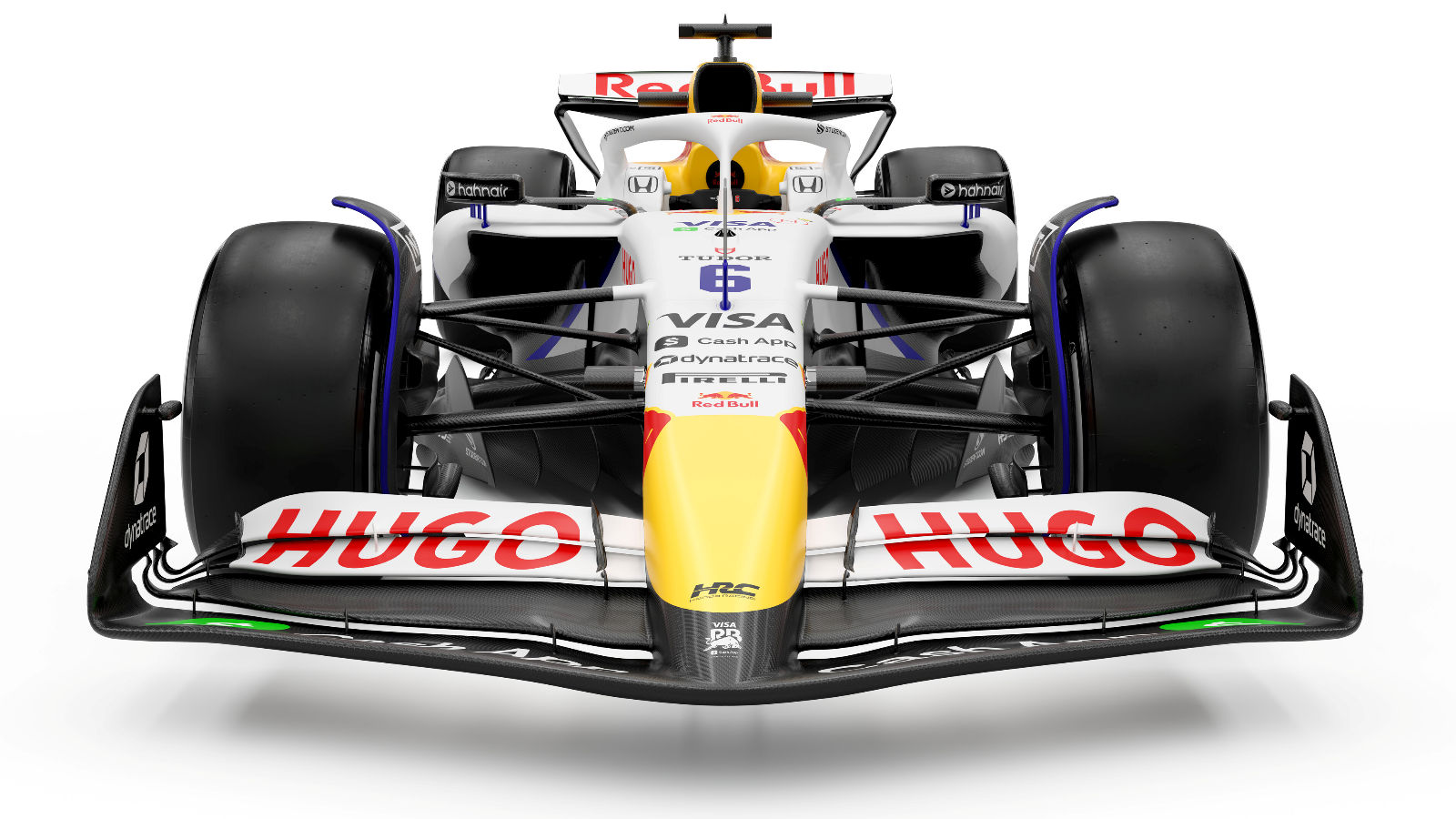
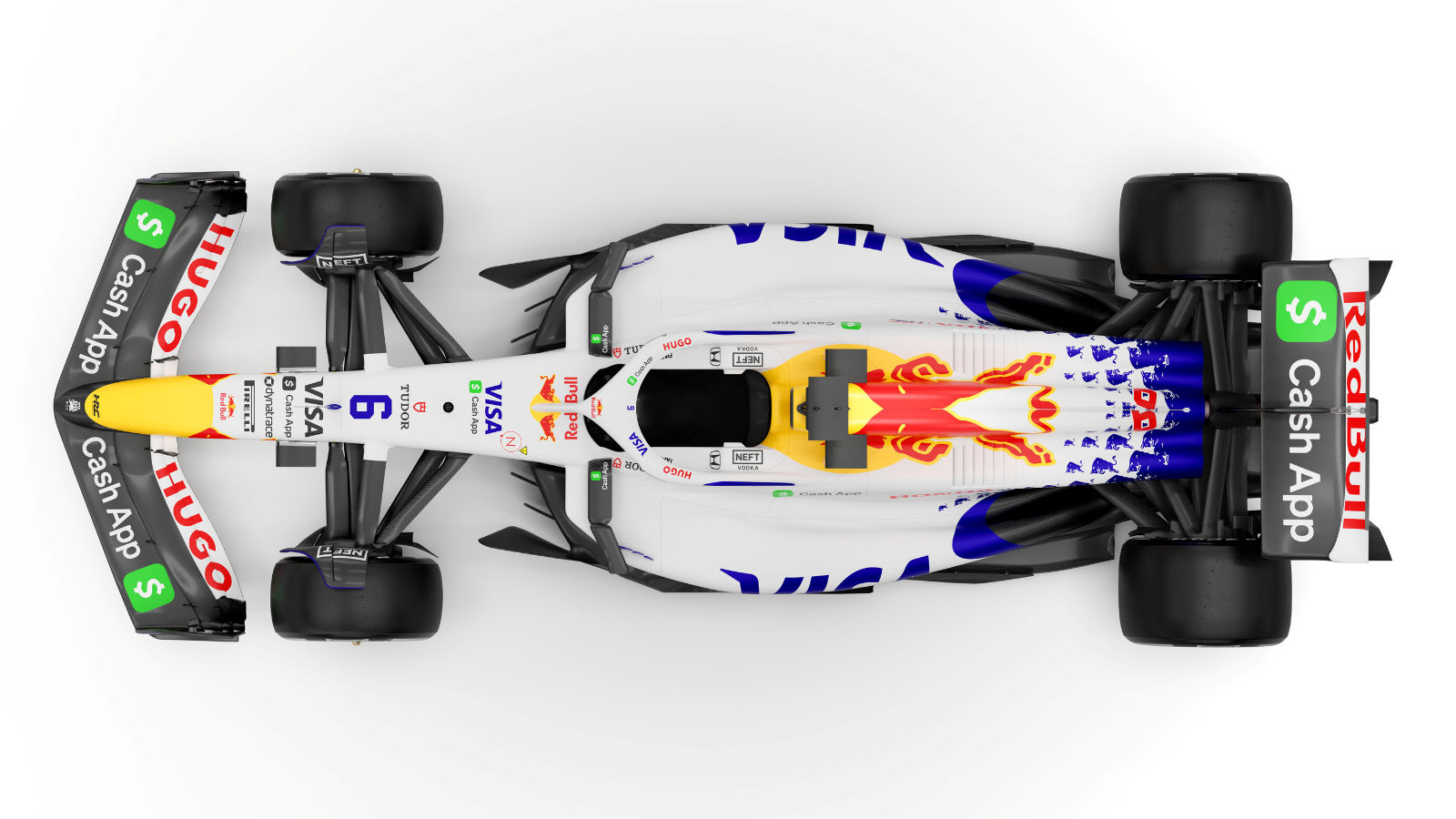
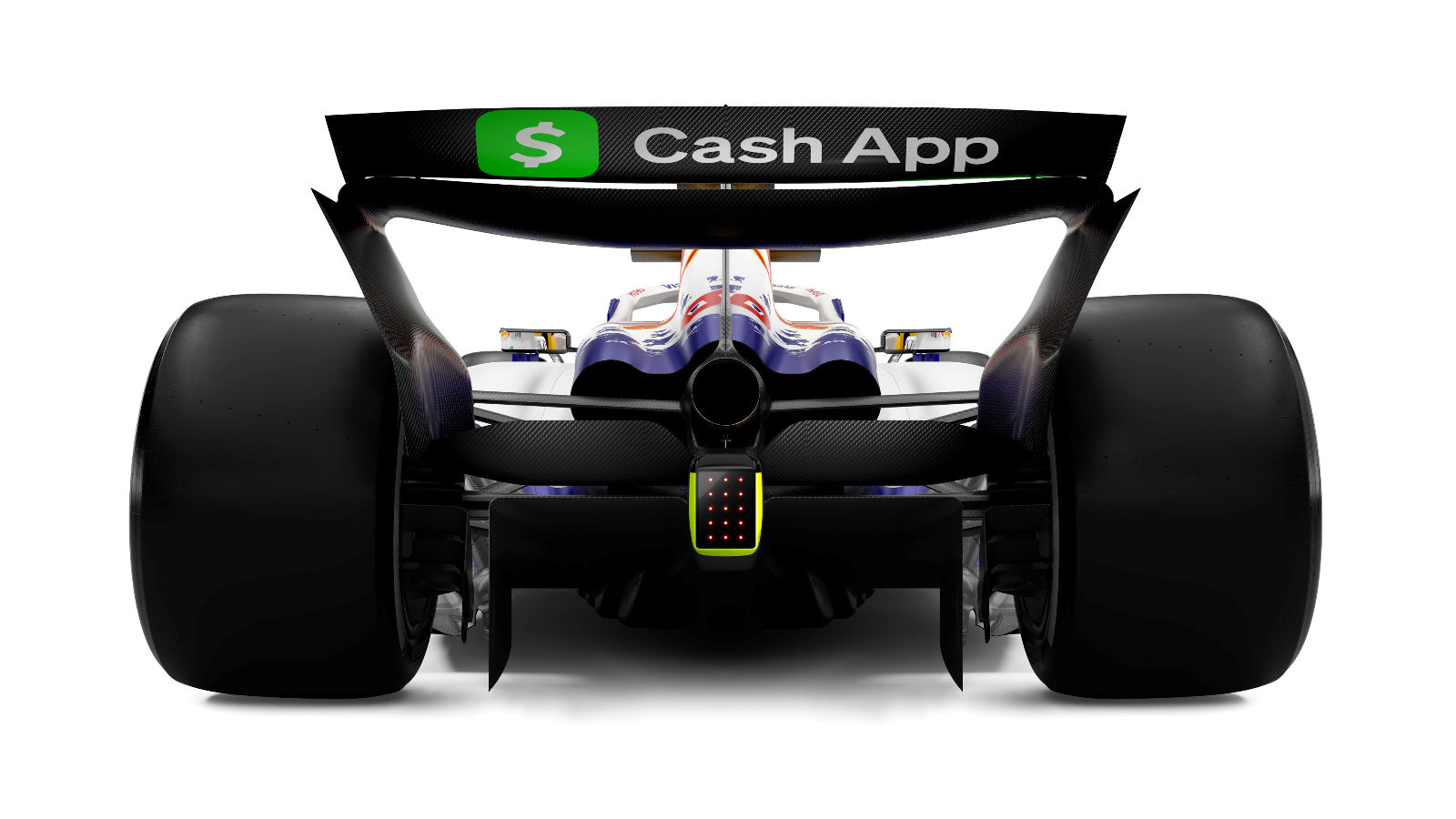
The more rectangular airbox seen on the car’s predecessor remains, as does the high shoulder engine cover arrangement, as the team appear to have simply looked to optimise the surfaces here, rather than look for larger gains.
It’s a similar story with other aspects of the cars design too, with the wing mirror and stays a carryover from last year’s machine, albeit they already had one of the more detailed arrangements in this area, as slats flank the mirror body both above and below, whilst a pair of vortex generators can be found behind the main outboard mirror stay on the sidepod’s shoulder.
Similarly, the external facing elements of the floor seem largely unchanged at this stage, albeit these will likely be a focus area for development throughout the first part of the season, as they look to tie-in the response that can be expected from the changes ahead and around it.
Meanwhile, at the rear of the car, the rear wing is also a carryover design, with the team having run similar during last season.
Read more: Lawson reveals full story behind Sergio Perez replacement after Red Bull promotion