

Seven key improvements American fans want to see in F1


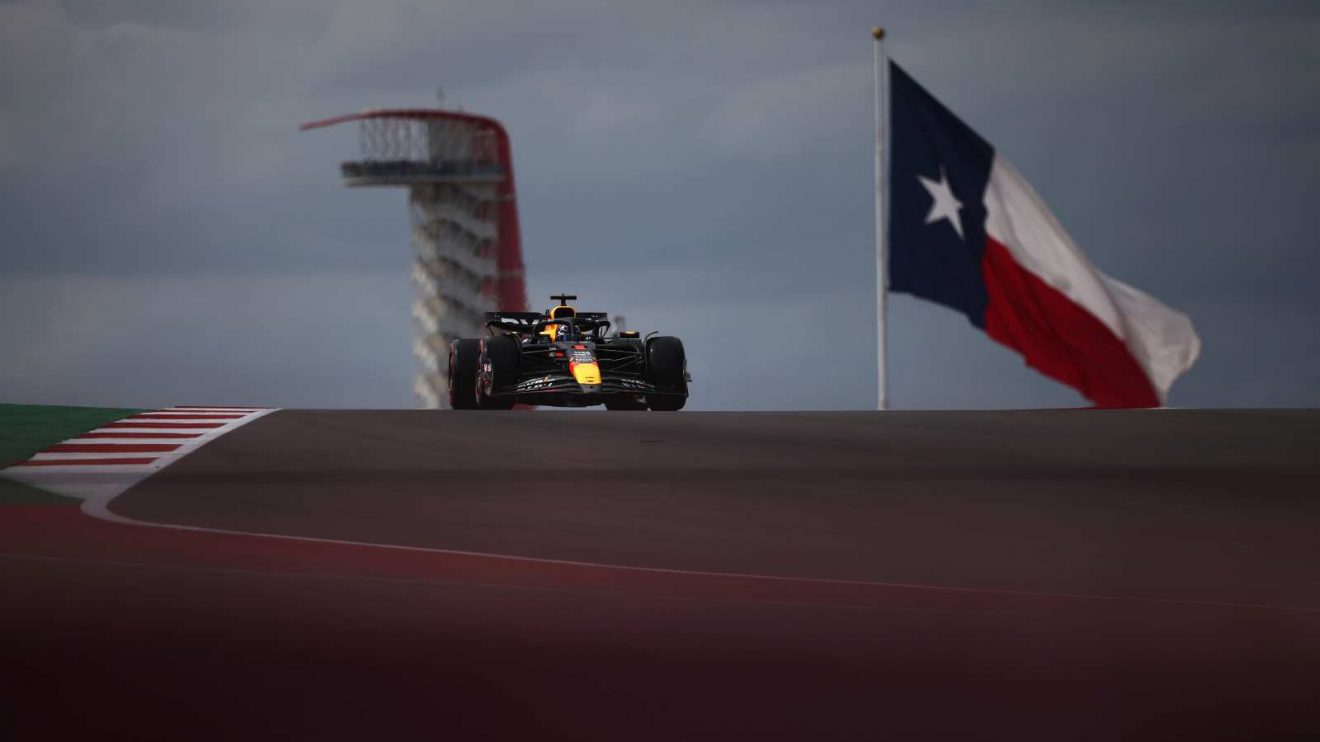
Max Verstappen of Red Bull Racing cruises in front of the Texas flag at the US Grand Prix.
Now that the dust has settled on the 2024 Formula 1 season, we’ve firmly entered a time of reflection — and, as F1 continues to pursue an American audience, it’s time to ask if the sport is on the right track.
To find out, we spoke with 23 different American fans about their experiences with Formula 1 and their hopes for the future. Some fans rode the Drive to Survive wave into a new fandom, while others had been dedicated F1 viewers for decades. Though all felt the 2024 season was deeply compelling, these fans raised some critical points about the growth of F1 in America.
It’s time for an American Formula 1 broadcast
Gone are the days of NBC’s US-specific F1 coverage. When ESPN took over American broadcasting rights back in 2018, the company declined to hire a slate of its own in-house commentators. Instead, fans have been listening to Sky Sports F1 coverage during this recent F1 boom period — and yes, that even includes the regular instructions to press the nonexistent “red button” on our remotes.
Most of the fans I spoke to expressed their desire for an F1 broadcast dedicated to the American viewership experience. Doing so would allow for a kind of “translation” of F1-specific racing terms into a more general language designed to attract the ever-growing slate of American fans, and would also do wonders in making those new fans feel more at home.
One fan, who declined to be named but has been working in motorsport on both the TV and PR fronts for over 30 years, suggested that it might also be time for a comprehensive rethink of how we air F1 — from broadcasts to coverage on other American news networks.
“Good Morning America tries to promote events when they are in the Americas, but three 4-minute segments aren’t going to draw in the crowd,” this fan told PlanetF1.com. “You can’t just cover it on a ‘the circus is coming to town’ coverage, but instead a steady amount of programming.
“ESPN is even hard pressed to show highlights following a race weekend. They need to have updates as warranted, as they do with soccer, to help get more eyes on the sport to boost that tune-in factor.”
Further, that same motorsport professional suggested that a weekly show dedicated to F1 would be great in establishing context for what happened in a weekend. Why was Sauber so excited to score points this year? Why does sixth in the World Constructors’ Championship matter? Exactly how important are mid-season upgrades?
A regular show about F1 on an American network could do wonders in establishing a dedicated, and informed, fanbase here in the United States.
Americans are perceived negatively
“I have always thought F1 has the attitude towards America of ‘this is our product, we are better than your racing, take it or leave it,'” our aforementioned motorsport professional told PlanetF1.com.
“This dates back to when F1 came to IMS and wouldn’t credential local media. There were reporters who covered 20-30 Indy 500s and weren’t allowed into the gates for F1.”
Another common theme among the fans we spoke to was the feeling that F1 was treating American fans with disregard.
“I have noticed that European F1 fans tend to look slightly down on American fans, at least online,” a fan named Mandy told PlanetF1.com.
“I’ve had more than one tell me there shouldn’t be any US F1 races since we have IndyCar — which is nice, but it’s a different sport!”
A fan named Preston agreed, pointing out that he feels F1 is trying to appeal more to entertainment fans than motorsport fans, to the detriment of American fans.
“[F1 doesn’t] seem to think we are ‘sophisticated’ enough to appreciate the technical ability or the amazing travel that happens with the sport,” he said./div>
Another fan, Jessica H., argued that “There is an attempt at showmanship that is incredibly basic, and a clear indicator that the F1 corporation doesn’t understand their audience [in America].
“You can really see that with their attempts to bring in celebrities and influencers. People don’t care about them, especially if they haven’t previously expressed a sincere enjoyment of F1.”
Formula 1 doesn’t know how to authentically embrace America
The United States Grand Prix has been hosted in Austin, Texas for over a decade at this point, but each season, the event promotion centers on the same rootin’ tootin’ cowboy theme — inspiring many fans to question whether or not Formula 1 actually intends to engage authentically with American audiences.
Multiple fans pointed out the stereotypical themes of American races, as well as F1’s inherent disregard for American motorsport as being ‘lesser’ than European open-wheel. It has created a sentiment in the States that the sport cares more about the bank accounts of its American audiences than establishing longevity here.
One fan named Erin VanSickle offered a few suggestions on how F1 could improve in this regard.
“I’d love to see F1 do more with American car culture,” VanSickle told PlanetF1.com. “The U.S. has such a rich automotive scene, and F1 has a real opportunity here to engage by highlighting the cars.”
Other fans pointed out that they’d love to see displays at F1 events centering around American-built race cars, or showcasing cars that race in our local series. For example, both Daytona and Sebring host Florida-based endurance races; why not tie that into F1 somehow?
Failing that, there’s also a huge desire to see F1 engage with the history of the American competitors who raced in the series. Texas-based fans have been perplexed for decades why Circuit of The Americas doesn’t collaborate with Jim Hall, a former F1 driver and motorsport legend who pioneered aerodynamic concepts like rear wings and ground effect. All of Hall’s cars are located in Texas; why not bring them out to the track?
Finally, VanSickle suggested that “F1 could benefit from a dedicated brand ambassador or someone in the U.S. who can be the face of the sport and promote it year-round, especially in cities like Miami, Vegas, and Austin, where there’s already a built-in fanbase.”
More from Formula 1 in the United States:
? Revealed: What American fans really want to see from Formula 1
? Four reasons why GM’s huge F1 arrival makes so much sense
Affordability is at the heart of American criticism
For as much as Americans would like to be respected by Formula 1, most would simply like to be able to afford attending a race.
“I can’t afford to go to any of the three races in my own country,” a fan named Mark told PlanetF1.com, pointing out that between tickets, airfare, and lodging, he’d be looking at a high four-figure sum.
“I am dying to go to a race in my own country but it would be cheaper for me to fly to Canada or even to some of the European countries to view a race and fly home than it would be to go to the Vegas or Miami GP.
“I just can’t stress enough how insulting how expensive it all is. There is no ‘cheaper avenue’ to being a F1 fan in America.”
Several other fans PlanetF1.com spoke to pointed out that they’d been able to attend races abroad — in Canada, Mexico, Italy, Austria, and Hungary — for less than they’d spend on any one of the US events.
For fans like Jeff Ducharme, the affordability issue is also the result of F1 misunderstanding the American market; he pointed out that a large part of the US motorsport audience are grassroots racers and fans.
“F1 has priced itself out of the market and is now an elite sport that only elites can afford,” he said.
“The fascination with the US market is annoying and its impacts are predictable. The sport is being sold to the elites and the races are more about bling, than the race.”
Dara Lind, a fan from Washington D.C., agrees.
“I’m not the kind of fan that Liberty Media had in mind,” she said, “and I’m not doing fandom in the way that the F1 establishment expects Americans to do fandom, partially because I acknowledge the existence of other racing series.
“Those of us who care about going to races as experiences, but not as premium experiences, are very obviously not the ticket sales that F1 wants to attract.”
The at-track fan experience is lacking
Speaking with former IndyCar driver turned F1TV commentator James Hinchcliffe in Las Vegas, the Canadian noted to PlanetF1.com that F1 trails other, more US-based race series when it comes to fan engagement — and the fans we spoke to agreed.
“As someone who watches and attends races in five different series, I feel like fan accessibility is where F1 really falls behind the others,” a fan named Nicole told us.
“I know this is a little more specific to the niche race-attending demographic, but the fact that the other series have fan activations and merch giveaways at races is something that is woefully lacking in F1.
“Would it really be that hard to have a bunch of boxes of (unsigned) driver cards in the fan village at COTA, and give them away to fans that show they are following the team on Instagram or something. That way you walk away feeling like you got something from the race.”
Nicole is a longtime F1 fan, attending US races here for decades. In her view, as the American audience has grown, so has the lack of concern for the US race attendee experience. Where there used to be opportunities for autographs from the drivers — or at least a chance to pop in to listen to an interview — there seems to be nothing left.
As an example, she noted that “the fan stage schedule at COTA wasn’t even listed in the app schedule this year, so the one opportunity for the public to see the drivers up close was basically a secret.
“Despite F1 being at its highest popularity in my lifetime in the US, fan experience is at an all time low.”
What about Andretti?
Do American fans care that there are American drivers or teams on the grid? Reviews here were mixed.
Some fans noted that the reason they enjoy F1 is for its international flair, and so the existence of Americans on the grid is of little importance, while others admitted that their interest in the sport does, to some extent, rely on the hope that one day there will be Americans to cheer for.
But there is one thing thing united many of the people we spoke to, and that was their frustration with how Andretti Global was treated, and how Formula 1 has responded to Cadillac.
“The way that the teams have dealt with Michael Andretti being too somehow gauche and American in daring to announce publicly that he was interested in breaking into this sport has been deeply insulting and deeply frustrating,” D.C.-based F1 fan Dara Lind told PlanetF1.com.
“It’s been very reminiscent, generally, of what Americans hate about European sports — that they’re all very political, that they’re all very corrupt, that there isn’t a whole lot of genuine interest in being open to anybody but the old guard, and that they don’t particularly care about the rule of law and written policies, such as the text of the Concorde.
“The rejection of the bid by FOM was tremendously frustrating because it was so transparently bad faith. They weren’t even trying to make an argument. I wasn’t the only person who looked at that and went, ‘This is not a document that an American lawyer would have looked at and approved, because you are really not beating the collusion wrap. This is opening the door to an antitrust investigation.’
“And lo and behold, that’s what happened.”
Lind admitted that she was “disappointed” in the way Formula One Management openly admitted its interest in Cadillac and GM, as well as Andretti Global’s ultimate decision for Michael Andretti to leave his role as the head of the team — and she wasn’t the only fan with that sentiment.
“The Cadillac thing just felt self-serving,” a fan named Steven told PlanetF1.com. “I guess I get why F1 would be more interested in Cadillac as a manufacturer than in the Andretti name, but it still felt like they were spitting in the face of American racing tradition by claiming the Andrettis were just going to piggyback off F1’s credibility.”
The drama conflict raised by Drive to Survive
The final suggestion on our list was only clearly articulated by one American F1 fan, but we found similar threads of this tension in responses from others.
As a fan who enjoyed motorsport prior to Drive to Survive but fell for F1 as a result of the Netflix docuseries, Dara Lind pointed out that F1 is asking fans to do a lot of heavy lifting in terms of how it reckons with drama and conflict.
Per Lind, DTS is effectively a reality series dressed up in the trappings of a documentary, and the fans who were sold on the DTS premise of conflict and drama are butting up against some uncomfortable questions about the kinds of conflict F1 wants us to care about.
She pointed out the allegations of inappropriate conduct against Christian Horner that arose early in 2024 — a storyline that was “starved of oxygen in the first six weeks of the season because everybody decided not to talk about it.”
“It’s so weird to have such constant interest in, ‘Will Checo Perez keep his seat?’ and so little interest in ‘Will Christian Horner keep his job?’” Lind said.
She noted that the Horner situation was emblematic of a larger problem in F1, where “it could be much more interesting and more satisfying to be a fan” if the series encouraged fans and drivers to probe the ethics of power in F1 — but that instead, F1 and the FIA have adopted a “patronizing” mindset of, “‘Don’t worry your pretty little head about it. We’ll hand you driver drama instead.'”
Though Lind was the only one who expressed this conflict in so many words, many other fans noted similar concerns with the sport about what constitutes acceptable drama.
One fan asked why F1 media at large had failed to interrogate the racial undertones behind FIA President Mohammed Ben Sulayem’s “rappers” comment. A Las Vegas local questioned why no one was addressing the city-wide dissatisfaction with the Grand Prix, and why so many storylines seemed to focus on the success of the event as if there were no other perspectives. Another noted that 2024’s fierce debates about British bias seemed to completely skirt around legitimate concerns regarding conflicts of interest.
As Lind summed up, “I’m not sure how sustainable it’s going to be for me to retain this level of interest in the sport when I feel like I’m being encouraged to care about conflict and drama on scales that don’t matter.”
Read next: Six classic US mistakes Cadillac should learn from