

American drag racing invented motorsport’s unique Christmas tree


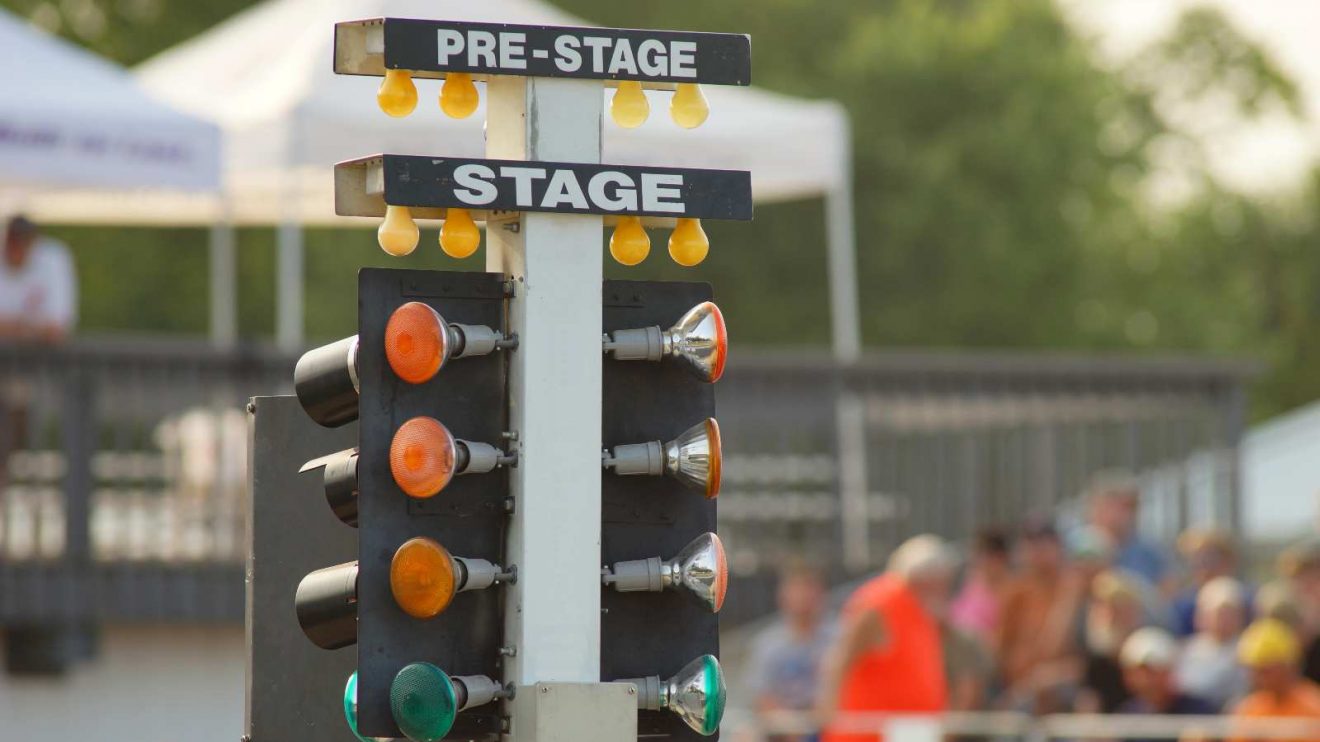
The "Christmas tree" in the American drag racing world.
If you find yourself at an American drag strip, you’re bound to hear mention of a “Christmas tree” — even if it’s the middle of summer. So what is everyone talking about?
Here in the US, we start our drag races with a column of lights that progress from red to yellow to green, and that colorful pylon has earned an affectionate name: the Christmas tree.
O (Motorsport) Christmas Tree…
In 1951, Wally Parks, editor of Hot Rod magazine, gathered together a handful of key personnel in the drag racing world to form the National Hot Rod Association, or NHRA.
The whole goal of the NHRA was to bring “safety, sportsmanship, and fellowship” amongst American drag racers — a group that often called themselves “hot-rodders.”
See, drag racing’s origins are almost inherently illegal. In post-World War II America, as prosperity grew, people had far more disposable income to spend on things like cars and car modifications, but finding sanctioned racing events wasn’t always easy for younger demographics.
There’s a fairly common image associated with the 1950s drag racer: The delinquent teenager. These kids would take their cars out to a long stretch of empty road and launch into action to see who had souped up their machinery to cover a small distance faster than the other.
While there were certainly plenty of illegal drag racing meets, not everyone participating in the events wanted to be associated with breaking the law. In fact, many hot rodders found purpose in modifying and racing their cars, as it taught them valuable skills.
When Wally Parks brought the NHRA into existence, it was with the belief that an organized sanctioning body could bring structure and respectability to the act of drag racing. Over the years, the organization enhanced safety standards for motorsport.
But one problem remained: The flagger.
More from American motorsport:
? Five reasons why Cadillac x Ferrari makes so much sense
? James Hinchcliffe: From IndyCar driver to rising F1 star commentator
If you wanted to start a drag race in the 1950s, you needed a flagger — or, an actual human being holding a flag — to signal the start. The flagger would drop their arm to signal the start of the event.
But that was not only dangerous — it was also inconsistent, and Hot Rod magazine writes that countless sore losers complained that their “engine wasn’t up to rpm when flagged.” Plenty of drivers interpreted every flinch or twitch of the flagger to mean they were about to start the event, and it resulted in amplefoulstarts.
Enter: The Christmas Tree.
Basically, the Christmas Tree is a kind of automatic starting system that featured a pylon with a vertical row of lights attached on each side — or, in front of each driver. The lights would illuminate one at a time, allowing the racers at the start line to get their engines fired in a predicable amount of time before launching. It’s thanks to those amber, green, and red lights that the tree earned its name.
Such a simple piece of technology should have easily traceable origins, but few in the drag racing world thought to make note of the Christmas Tree’s debut. Some say it appeared in 1962, though the first official debut was at the 1963 U.S. Nationals.
Per Hot Rod magazine, the idea was dreamed up by NHRA Eastern Division Director Ed Eaton, who commissioned an electronics technician named Lew Bond to assemble the concept. Bond said the tree — called the Countdown Starter at the time — was “foolproof in design” and that “the new innovation will be a boon to nervous drivers trying for the big win… An equal start for all is assured.”
It was a simple design. Five amber lights were arranged vertically on each side of the tree, followed by a red, then a green. The starter would activate the tree when the drivers got about a foot away from it, after which point drivers could roll up closer to the beam or stage as they liked.
Hot Rod initially claimed that “the general reaction” from the drivers was positive, though that report has long since been disputed. Don Garlits, one of the legends of the drag racing world, ran afoul of the timing during that first U.S. Nationals appearance and lost out to a a driver who was fairly unknown at the time.
The drag racing Christmas tree has undergone a variety of overhauls over the years. Some lights have been removed, the delay between lights has been changed, and better automation has helped keep drag racing starts competitive.
And it also makes for a little taste of the holiday season, no matter when you’re at the drag strip.
Read next: NHRA debuts groundbreaking healthcare policy designed to support pregnant competitors