

Why Christmas Day is a significant day in F1’s history


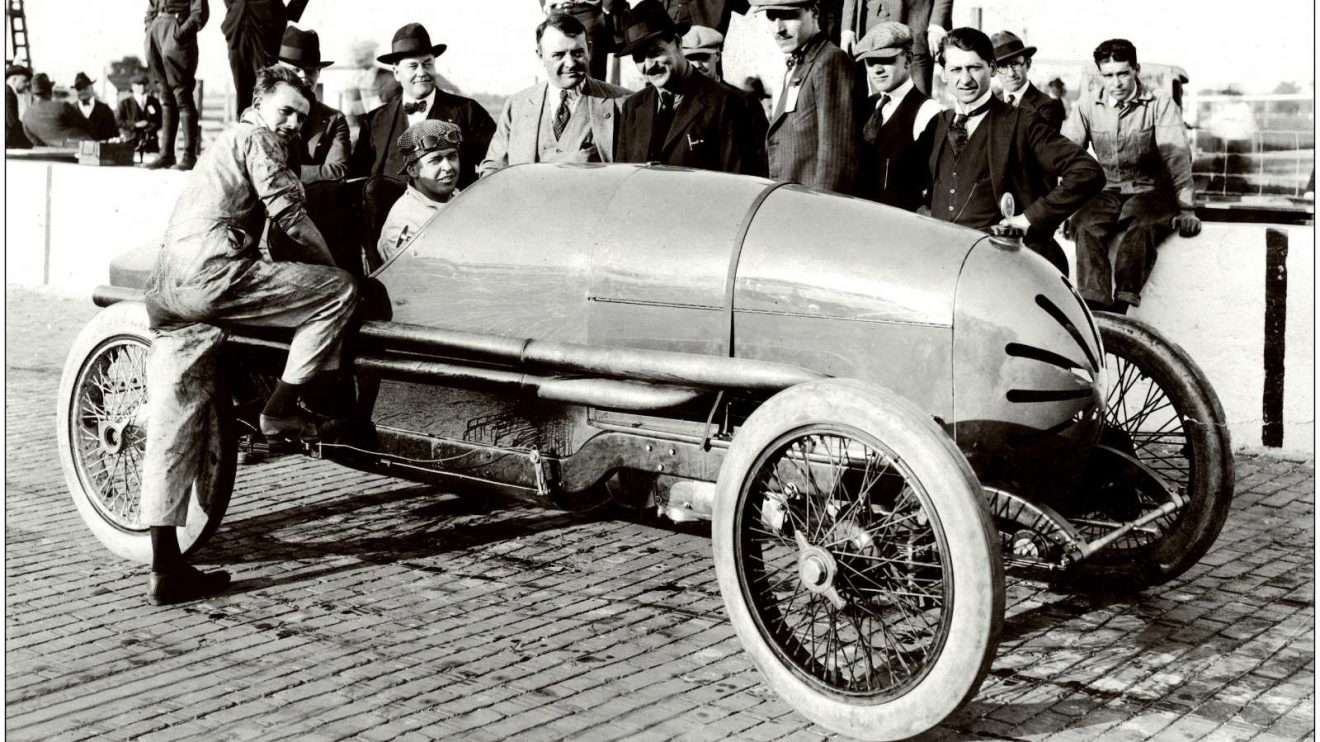
Louis Chevrolet, founder of the Chevrolet Motor Car Company.
On December 25, 1878, motorsport — and Formula 1 — history changed. That Christmas Day, Louis-Joseph Chevrolet was born.
While the Chevrolet badge has become synonymous with the American automotive scene, the Swiss-born driver’s influence extended into all aspects of the racing world, including into Formula 1.
Louis Chevrolet: A Christmas Day racing legend
December 25, 1878. La Chaux-de-Fonds, Switzerland. A baby boy was born.
Named Louis-Joseph Chevrolet, this infant was the second child of a watchmaking family — a trade that likely taught Chevrolet the basic mechanical skills he would go on to employ in a series of groundbreaking automotive innovations.
At nine years of age, the Chevrolet family moved to Beaune, France — an ill-fated move that saw young Louis joining the workforce just two years later in order to support his family. That first gig was at a Robin bicycle workshop, where his basic watchmaking knowledge soon blossomed.
See, Chevrolet wasn’t merely working on bicycles; at some point, he was sent off to a local hotel to service a steam-driven tricycle belonging to a member of America’s wealthy Vanderbilt family, who was on an extended European vacation. Allegedly, such was Chevrolet’s skill that the Vanderbilts invited him to America with the promise of work.
It took several years before Chevrolet made his way overseas, first moving to Paris to work for the Darracq manufacturer before using his salary to make an overseas trip to Canada, where he found work as a chauffeur and later moved to New York to work as a mechanic.
All the while, he had been nurturing a competitive streak that began on a bicycle before soon spreading to all things motorized. He began setting world records, building his own cars, and winning races and championships in what was then known as America’s Championship Car series.
His brothers Gaston and Arthur eventually joined Louis in the United States, where all three soon became business partners and racing rivals.
More on the pre-World War II racing scene:
? Europe v USA: How Le Mans sparked a decades long battle over technical innovation
? Meet the street circuit that hosted the first-ever Hungarian GP in 1936
Yet not all was well.
In 1911, Louis and Arthur Chevrolet joined William C. Durant and a handful of investment partners to form the Chevrolet Car Company in Detroit, Michigan — but the operation was short-lived for the Chevrolet family. Durant soon exerted control over the design of the cars (he wanted to opt for cheap, mass-produced machinery), while Louis Chevrolet fiercely disagreed with that direction (as he prioritized exclusive, high-powered machinery).
In 1915, he sold his share to Durant, who was able to use that money to purchase a controlling stake in General Motors; two years later, Chevrolet was merged into GM. Louis Chevrolet had gone to Canada to build Chevrolets at the McLaughlin Car Company — but that company too merged with Chevrolet.
By this point, Louis Chevrolet had almost entirely given up on the automotive business, instead opting to design and build cars specifically for motorsport. His brothers, Gaston and Arthur, kicked off their own company, called Frontenac, to build hugely successful racing cars.
Sadly, in 1920, Gaston Chevrolet was killed in active competition just months after securing an Indianapolis 500 victory with his own Frontenac Ford. After his death, Louis Chevrolet stepped away from active competition. It was perhaps for the best, as he’d spent several years of his life hospitalized as the result of racing injuries.
In the mid- to late-1920s, Louis and Arthur Chevrolet moved into the aircraft engine business, but what followed was a series of disappointments that saw the company liquidated and Louis Chevrolet move off to begin working on his own 10-cylinder airplane engine. By the time he was awarded a patent in 1935, however, Chevrolet was too exhausted to found yet another company.
Instead, he worked as a mechanic at a Chevrolet plant in Detroit until he died on June 6, 1941, years after falling ill with a brain hemorrhage, nine years before the first official Formula 1 championship.
Despite that, the seeds sowed by Louis Chevrolet at the turn of the 20th century have finally begun to pay off.
Even in the 1920s, Chevrolet had begun to spread into Europe, with factories established in Copenhagen and Antwerp that soon began to provide popular trucks and other models to the continent.
But it wasn’t until the post-World War II years that the Chevrolet company returned to the roots that its Swiss-born founder had envisioned. Vehicles like the Corvette began to establish the brand as a frontrunner in the performance market, with roots spreading firmly into the motorsport world.
Though Formula 1 may not have existed during Louis Chevrolet’s lifetime, the sport is almost certainly one he would have aspired to master — and now, heading into 2026, a General Motors brand will join the sport.
Read next: Revealed: The 10 best racing films to watch this Christmas