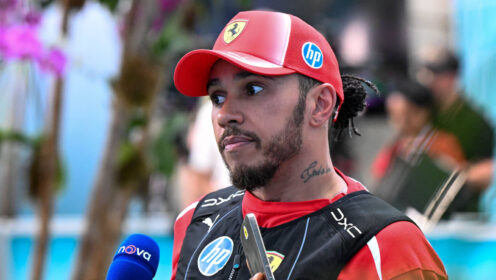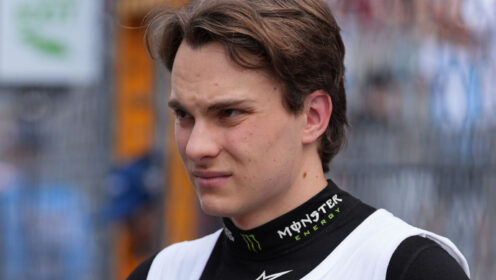

Abu Dhabi GP conclusions: McLaren’s people power and the Lewis Hamilton F1 crime scene


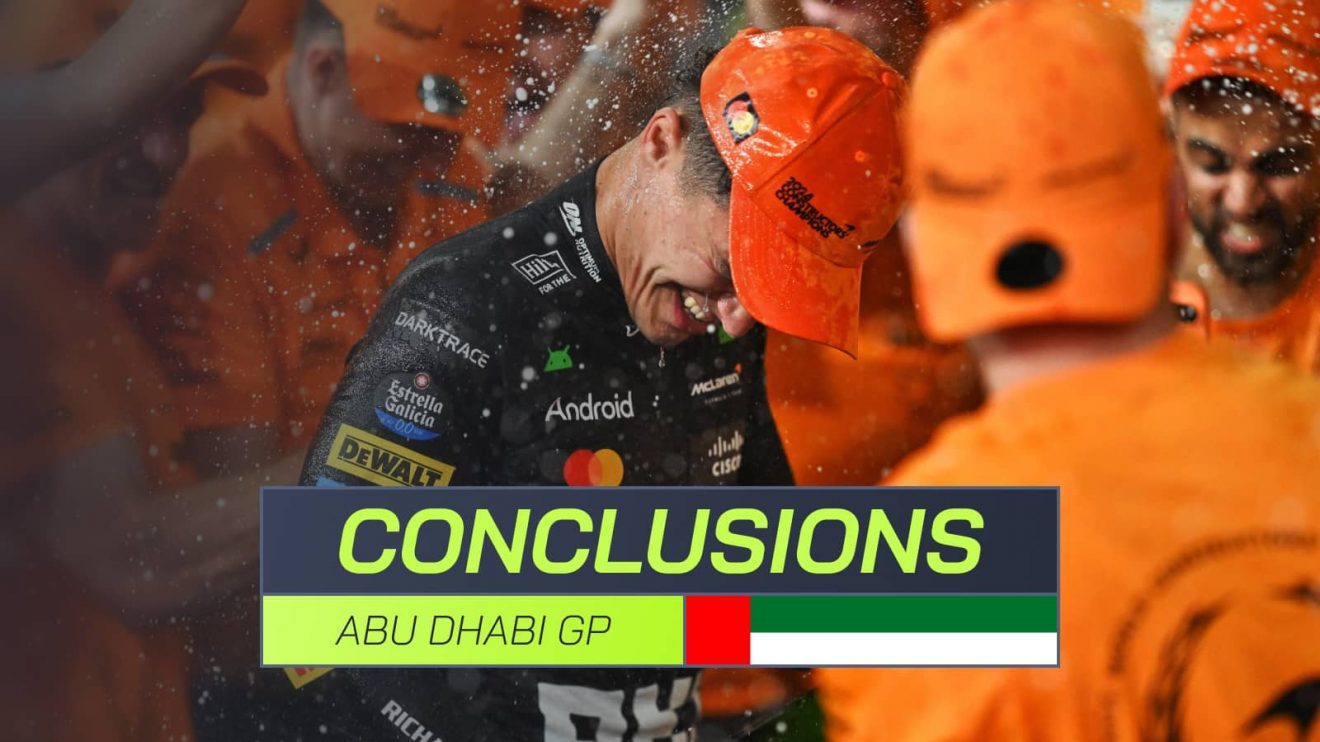
Now for the Drivers' Championship? Lando Norris celebrates McLaren's title triumph in Abu Dhabi
Lando Norris claimed his fourth victory of the F1 2024 season at the Abu Dhabi Grand Prix to seal McLaren’s first Constructors’ World Championship in 26 years.
Norris dominated from pole position as McLaren took the teams’ title in style, with Ferrari falling short despite claiming second and third with Carlos Sainz and Charles Leclerc respectively. After Lewis Hamilton’s final race for Mercedes, and what is set to be Sergio Perez’s last with Red Bull, here are our conclusions from Abu Dhabi…
Conclusions from the 2024 Abu Dhabi Grand Prix
The McLaren revival: A victory for people power
To appreciate the significance of McLaren’s first Constructors’ title in more than a quarter of a century, it is worth recalling the state the team were in when Zak Brown arrived in late 2016.
As he explained in a recent interview, Brown found a place lacking just about everything required to make a successful F1 team.
There was no structure, insufficient investment, an ancient wind tunnel and simulator, hardly any sponsors, a dissatisfied workforce, a dispute in the boardroom and, to top it all off, an uncompetitive car.
It was, in other words, a team that had lost all semblance of self-respect.
McLaren’s place on the F1 landscape had effectively been seized by Mercedes, who first came along to take their star driver, then their technical director, then their major sponsor before finally replacing their former partners as a regular race-winning, title-contending force.
Ron Dennis, it had long become clear, had stayed too long for all the good he had done.
Not that Brown has been perfect.
There were times in the first couple of years when he carried the air of a superfan that got lucky, too willing to kneel at the Temple of Fernando Alonso, who for all his skill was afforded a little too much power and influence for his team boss to be taken seriously.
There have been signs of that naivety this year, too, Brown reacting emotionally – disproportionately so – to the clashes between Lando Norris and Max Verstappen, as if trying slightly too hard to present McLaren as a serious and sustained threat to Red Bull.
As if trying to convince himself – everyone – that the world had finally righted itself on its axis to this time make McLaren the new Mercedes, a decade after Mercedes became the new McLaren.
His fellow team principals have often poked fun at the fan sitting just below the surface, remarking that Brown would not recognise the front of a Formula 1 car from the back of one even if he tried.
Invariably it is intended as an insult, but doesn’t that actually highlight Brown’s great strength?
To recognise the limits of his own knowledge and expertise? And to plug those gaps by finding, and sufficiently empowering, the right people?
An overarching, interfering team boss – the worst kind of team boss – Brown is not.
It requires a certain humility, and good control of one’s own ego, to delegate successfully in the way he does.
Most of the credit will go to Andrea Stella but spare a thought also for his predecessor Andreas Seidl – last seen leaving the Audi F1 operation in undignified fashion – credited for igniting McLaren’s recovery by leading the strategic decisions to return to Mercedes engines and commit to the construction of a new, standard-setting wind tunnel in 2019.
Here’s how it works at McLaren these days: Stella, like Seidl before him, is given total freedom to run the race team as he sees fit while Brown stays in his lane and does his thing of dealing with the shareholders, charming the pants off potential sponsors, courting the media and acting as team mascot on Sundays.
It is a two-man job yet essentially no different to how Toto Wolff and Christian Horner have insulated the Mercedes and Red Bull race teams from their respective boards over the years (Fred Vasseur, with a similar feel for how things should be done, is in the process of implementing an identical structure at Ferrari).
F1 teams, after all, are at their best and most agile when they operate more like oversized F3 teams, focused entirely on the essentials and protected from the machinations of the global organisations to which they are attached. Motor racing is complicated enough without getting in your own way.
By being McLaren’s shield, in other words, Brown allows Stella to be the sword.
The results have been spectacular, the team’s trajectory so encouraging over recent years that the title triumph they had been craving for so long, and feared might never happen again back in those darkest days, has felt inevitable for some months.
The McLaren revival is finally complete. Even sweeter, maybe, that they did it by blowing away their old friends at Mercedes with their own engine.
The real magic in this sport?
It is found not in the technical trickery, the nuts and the bolts, the ride heights and the tyre pressures.
It is found in the people. Relationships. Bonds. Human chemistry. Flesh and blood.
Get that bit as right, as McLaren have, and you’ll always have a chance.
Lando Norris will be stronger for the experience of F1 2024
If it seems that Lando Norris has cut a more relaxed figure over the last two weekends, it should come as no great surprise.
This year has been a new experience for him, exposed to the unique pressures and scrutiny of a title battle not only for the first time, but ahead of time.
It was never meant to be this way. At least not yet, at least not this season.
With his father admitting recently that Norris had targeted third place at best at the start of 2024, Red Bull’s mid-season struggles promoted him and his team into something of a false position of competing for a Drivers’ Championship before either were really ready for it.
There is a reason why it is unheard of for a driver to win the title in the very same season he collects his first grand prix victory.
There is a process to be undertaken here and it takes time to build the momentum and develop the inner certainty required to emerge as title contender.
Yet such was the unusual nature of Red Bull’s sudden and sharp decline that Norris and McLaren were expected to be born ready.
The abiding image of Lando’s title challenge?
On the grid in Brazil, where he had the grim facial expression of a conscientious objector who’d kept quiet, only to realise the error of his ways once he found himself stationed on the front line.
Even on a day when everything was laid out for Norris to win – starting from pole, surrounded by a bunch of midfield cars, Verstappen at the back – his demeanour before the start that day told the story of someone who would still find a way to lose.
Was he put out of his misery when it was finally all over? Not quite, but there was likely some liberation when, at the very next race in Las Vegas, Max finished the job.
For, finally, 2024 could be treated how it was always meant to be – Norris and McLaren positioning themselves, much like Sebastian Vettel and Red Bull back in the Brawn GP year of 2009, for a more serious and sustained attempt the following season without the extra complication of excess pressure.
Make your mistakes now – and whatever you do, make sure you learn from them – so they’ll be less likely to happen when it really matters.
Norris and McLaren have been criticised for letting a number of potential victories slip away this year, yet the races he has won – Miami, Zandvoort, Singapore and Abu Dhabi – have all followed the same pattern of Lando positively oozing pace, looking for all the world like the next F1 Champion in waiting.
The peaks always offer a more accurate gauge of a driver’s ultimate potential than the lows and Norris will be better – more resilient, more self confident, more complete – for the experience of this year.
The moment the points reset to zero, and the chance arrives for the lessons of this year to be put into practice, cannot come soon enough.
This coming Friday will mark the fourth anniversary of the Abu Dhabi Grand Prix of 2020, an event regarded as Race Zero of Verstappen’s title-winning 2021 season.
At the time it felt nothing more than a footnote at the end of another year dominated by Lewis Hamilton and Mercedes, yet soon came to be seen as a bright, flashing warning sign that Max and Red Bull were coming at them quick.
Might Abu Dhabi 2024 be mentioned in similar terms a year from now?
The title fight ends and so the title fight begins.
Mercedes really lost Lewis Hamilton back at Abu Dhabi 2021
How must it feel to be Lewis Hamilton when, at the end of each season, he must return to the scene of the crime?
If the intense emotion of this highly unusual year has driven him to writing love letters on social media in tribute to his private room within Mercedes’ hospitality unit, it is safe to assume that he feels a pang of poignancy whenever he comes back to this place.
Perhaps the heart even skips a beat when he drives past the corner at which the most successful career ever produced by a racing driver suddenly started to feel strangely unfulfilled.
The comment section lit up when, two days after the Abu Dhabi Grand Prix of 2021, this website published a column entitled: ‘Is 2021 title defeat the beginning of the end for Hamilton?‘
How can it possibly be the beginning of the end, people said, when he produced a performance so perfect, under such enormous pressure, just 48 hours ago?
When, without the illicit intervention of Michael Masi, he would now have an eighth World Championship and stand undisputed as the greatest racing driver of all?
True, nobody could have seen coming then the dire, torturous underachievement of the last few years and Mercedes’ prolonged struggles under the current regulations.
Yet here’s the thing about Abu Dhabi 2021: no matter the result, no matter how it ended, the tone of Hamilton’s career, his outlook and his view of life from inside the Mercedes team was about to alter beyond recognition – irreversibly so – anyway.
Analysis: Lewis Hamilton to join Ferrari in F1 2025
? Lewis Hamilton now finally has a chance to escape the ghosts of Abu Dhabi 2021
? Revealed: The remarkable 36-hour timeline behind Lewis Hamilton’s shock Ferrari move
Hamilton, as we know, was anxious for Valtteri Bottas, his trusty wingman of five years, to be retained beyond that season.
Yet Mercedes decided they knew better and had long ago committed to promoting George Russell, falling into that classic trap teams do of forcing into the present a future that hadn’t quite yet arrived.
Put simply, if a team is fortunate enough to have a driver like Hamilton, they do not require one of Russell’s calibre in the second car.
It makes such a difference when an elite driver feels the full support of the team behind him, with a team-mate he can trust implicitly, rather than constantly having to look over his shoulder to keep checking what the other guy, all youth and ambition, is up to.
In other words, by signing Russell for 2022 Toto Wolff effectively signalled to Hamilton that he was no longer Mercedes’ total, all-consuming priority, right at the point he needed to hear it most that he was.
Why, to take a current example, were Red Bull reluctant to sign Carlos Sainz this year, even when he looked for all the world the ideal solution to their problems with Sergio Perez?
Precisely, went one school of thought, because of the effect it would have had on Max Verstappen.
At a time Verstappen’s future was the subject of growing uncertainty, the last thing Red Bull needed was to risk increasing his sense of unease.
Any move for Sainz could have been interpreted by Max and his camp that Red Bull were actively planning for a future without him, potentially only hastening the departure they were so desperate to avert.
Christian Horner now, unlike Wolff then, reasoned wisely that it was far more valuable to keep the lead driver comfortable at all costs and, if necessary, lower the overall performance ceiling of the second car to preserve that state of order.
For the first two years Hamilton and Wolff gave a good impression of a couple smiling through the pain yet, inevitably, the frays in the relationship between team and driver have become more difficult to conceal as the end point has neared.
It is frankly inconceivable that their personal bond could have emerged completely unscathed from the trauma of 2021.
Recall by that stage Hamilton had spent the last 18 months or more fighting for what he believed to be right, campaigning for what he regarded as justice, and Mercedes had followed him all the way to the end of the Earth – even to the extent of changing the colour of the car.
Imagine how it must have felt, then, when in his hour of need, the team abandoned their appeal against the outcome of Abu Dhabi no sooner than it had been lodged, seemingly for no other reason beyond optics and concerns that they might be considered sore losers.
Little wonder that often over the last three years Hamilton has cut a diminished figure, his wounds opened by the way 2021 ended and salted by being denied the car with which to strike back; struggling to fight off a team-mate he never even wanted in the first place; tired of life inside a team he could no longer love, and whose decisions he could no longer trust, like before.
His world had changed completely. Nothing was the same anymore.
He needed to get out of there one way or another, either by tipping himself into retirement or fleeing for Ferrari.
And so it culminated on a cold Wednesday morning back in January when Hamilton visited Wolff’s home in Oxfordshire and informed him over breakfast that he had decided to leave.
Would he, you wonder, have felt the same need to tick the Ferrari box, and to keep competing beyond his 40th birthday, if that race three years ago had ended differently?
Everything that has happened since would have been no more enjoyable, but at least a little easier to stomach.
It took until the beginning of this year for it to materialise and until now, ten months later, for the parting of ways to finally arrive.
But for the moment Mercedes really lost Lewis?
Look no further than Abu Dhabi 2021, the night everything changed.
All roads since then have led to here.
Sergio Perez will regret denying himself a more fitting farewell
There is a famous saying in sport that athletes die twice: the first time when they retire, the second time when…well, y’know.
Dramatic it may seem, yet it captures perfectly the finality of stepping away from something around which your entire life up to that point has revolved.
Retirement? It is more a reincarnation. A reinvention. A reconfiguration of who you are, what you do and how you view the person looking back at you in the mirror.
Life is never – can never – be the same again.
It explains why sport is littered with so many poignant stories of people whose existences are stripped of purpose, never to be regained, when they wake up the next morning and the realisation hits that it really is all over.
What now? Welcome to the first day of the rest of your life.
It matters, then, to have a good retirement.
A retirement over which you have some control, particularly for those who have contributed heavily to their chosen sport over a long period of time.
It is why so many hearts bled back in Singapore when Daniel Ricciardo, among the most prominent and popular drivers of the last decade, was left to dangle for a full race weekend before slipping into the shadows almost unnoticed.
Ricciardo, deep down, knew Singapore was his last race; Red Bull knew Singapore was his last race.
But neither could definitively say so, serving only to create this humiliating, intensely awkward – should I hug you now just in case or save it til later? – atmosphere.
A leading F1 photographer on duty that night recalled being left with the distinct impression that Daniel just didn’t want to leave, finally exiting a deserted paddock some hours after the race had finished and long after everyone else of note had headed for home.
That, by any measure, was no way to go.
Was Sergio Perez not paying attention that weekend? Did it not occur to him that it could well be him in that position just a few months later?
It is not as if this should come as a great surprise to him, having raced with his Red Bull seat under some degree of threat throughout 2024.
Perez, you’ll recall, has already once come close – exceptionally so – to being replaced this year.
As revealed by PlanetF1.com, Red Bull’s plans to make a change over the summer break were so advanced that they even reached the stage of arranging a shootout test between Ricciardo and Liam Lawson to inform a decision on his replacement, only for Christian Horner and Co. to have a change of heart 24 hours after the Belgian Grand Prix.
If Perez came that close to losing his seat in August, when his deficit to Max Verstappen stood at 146 points, it has been clear for some months that the situation would be revisited at the end of the season with the difference between the Red Bull drivers almost doubling across the final 10 races.
Horner’s comments in the aftermath of last weekend’s Qatar Grand Prix that Perez must “come to his own conclusions” effectively amounted to an ultimatum: jump or be pushed.
Checo’s counter in Abu Dhabi, maintaining all weekend long that he has a contract for next season and intends to stick to it, has ensured that he will not go quietly.
Or with much class, on the evidence of his father warning that he will publish a hit list of what he describes as “lying” media outlets and reporters on Monday.
With his performances below the required standard for some time, the confrontational public response of the Perez camp has completed his regression to Full Pay Driver Mode.
They’re easy enough for teams to get in, pay drivers, but an absolute pain to get shot of when they start digging their heels in.
It didn’t need to end this way and feels all so undignified, especially when you consider that Perez only recently passed up the opportunity for a good – the perfect – retirement.
How he laughed off those rumours in September that he planned to announce his exit at the Mexican Grand Prix.
Yet pause to picture of the scene if he had elected to end his career at his home race, returned by his sport to from whence he came in some quasi-religious act.
He would have likely been treated to his own parking spot in the stadium section after the chequered flag, cherished like never before the adulation of the spectators with his family close by and perhaps even permitted a special farewell appearance on the podium.
Who, at that point, would have cared how his season had transpired?
The boy from Guadalajara would have bowed out there and then as the King of Mexico, the most successful F1 driver in his nation’s history at a race that only exists in its current form thanks to his impact of single-handedly reawakening a country’s interest.
It would have made for one of the emotional highlights of the season and become a template for how to retire right.
More than anything, it would have been the easy way out, an exit done on his terms.
Instead? He has chosen the hard way, ceding control and ultimately consigning himself to following Ricciardo out F1’s back door.
It’s no way to go.
George Russell has set himself up for a fall by standing up to Max Verstappen
So who’s going to stand up to Max Verstappen, then? Hm? Who’s going to finally tell him enough is enough?
Lando? Too timid. Lewis? Too old.
So, George Russell reasoned, it’s going to have to be me.
Well of course it would be him, the one determined to impose himself on each and every situation, unflinchingly aggressive and always seeking the brave strategy call, the bold overtake, an extra risk on the typical qualifying lap.
An unflattering clip recently surfaced of Russell stating in Vegas that “it’s about time somebody gave him a proper fight” in reference to Verstappen, breaking into laughter as he claimed Max was not even the favourite to win the title at one point this season (presumably after qualifying in Brazil) yet still took it with three races to spare.
The implication?
If he had been presented the opportunity Norris was given in 2024, there’s no way Max and Red Bull would have got away with it.
It is that sort of interjection, the type most professional athletes prefer to leave unspoken, that makes it difficult for the watching world to warm to Russell and it is not a secret that he and Verstappen are not particularly close.
In one corner you have Mad Max, the tough-as-nails streetfighter with a family background rooted in the travelling and scrapyard community in the Netherlands.
In the other you find Slideshow George, the prim, proper, too-bloody-perfect headboy renowned for his Powerpoint presentations to his prospective team bosses, who dots every ‘i’ and crosses every ‘t’ even in his speech.
A clash of personalities – of cultures – is inevitable with these two, yet by being so public and vociferous in his criticism of Verstappen in Abu Dhabi has only set Russell up for a fall over the next 12 months.
One of the recurring themes of this season, after all, has been the subject of Verstappen’s future and whether a new-look, Newey-less Red Bull is really somewhere he wants to be for the long term.
Having failed to persuade him to replace Hamilton for 2025, Mercedes are widely expected to renew their interest in Max ahead of the new regulations in 2026, for which the team’s preparations are thought to be advanced.
With Christian Horner telling media including PlanetF1.com at Zandvoort that Verstappen’s contract contains a “performance element”, a British newspaper claimed recently that this supposed exit clause will allow Max to walk away from Red Bull if he is lower than third in the Drivers’ Championship after a significant portion of the 2025 season.
If true, this would mirror an arrangement widely reported to have been included in at least one of Verstappen’s previous Red Bull deals.
If Red Bull prove unable to arrest their competitive decline with next year’s RB21, it is not impossible to imagine that exact scenario materialising around, say, the time of the summer break.
And who would Verstappen replace at Mercedes, you ask?
Almost certainly not Andrea Kimi Antonelli, the new face of the team’s future, but Russell, whose current contract is due to expire at the end of 2025.
Despite Russell’s promising emergence as Mercedes’ team leader over recent weeks – leading the early stages in Brazil, victory in Vegas, pole in Qatar – the timelines appear almost perfectly aligned for Verstappen to slot into that seat almost regardless of what he achieves next year.
And it could be a question of how much Toto Wolff wants (needs?) him and whether Red Bull can recover sufficiently over the winter to provide a car competitive enough to evade that eventuality.
If his period of dominance with Red Bull really is set to come to end next year, it would no doubt give Verstappen great pleasure to stroll straight back into a winning car for 2026.
Even sweeter, you bet, if it just happens to deprive Slideshow George of one in the process…
Read next: Sergio Perez answers resignation possibility in new Red Bull ‘talks’ admission