

A Canadian Grand Prix scheduling conflict with the Indy 500 will be a mistake


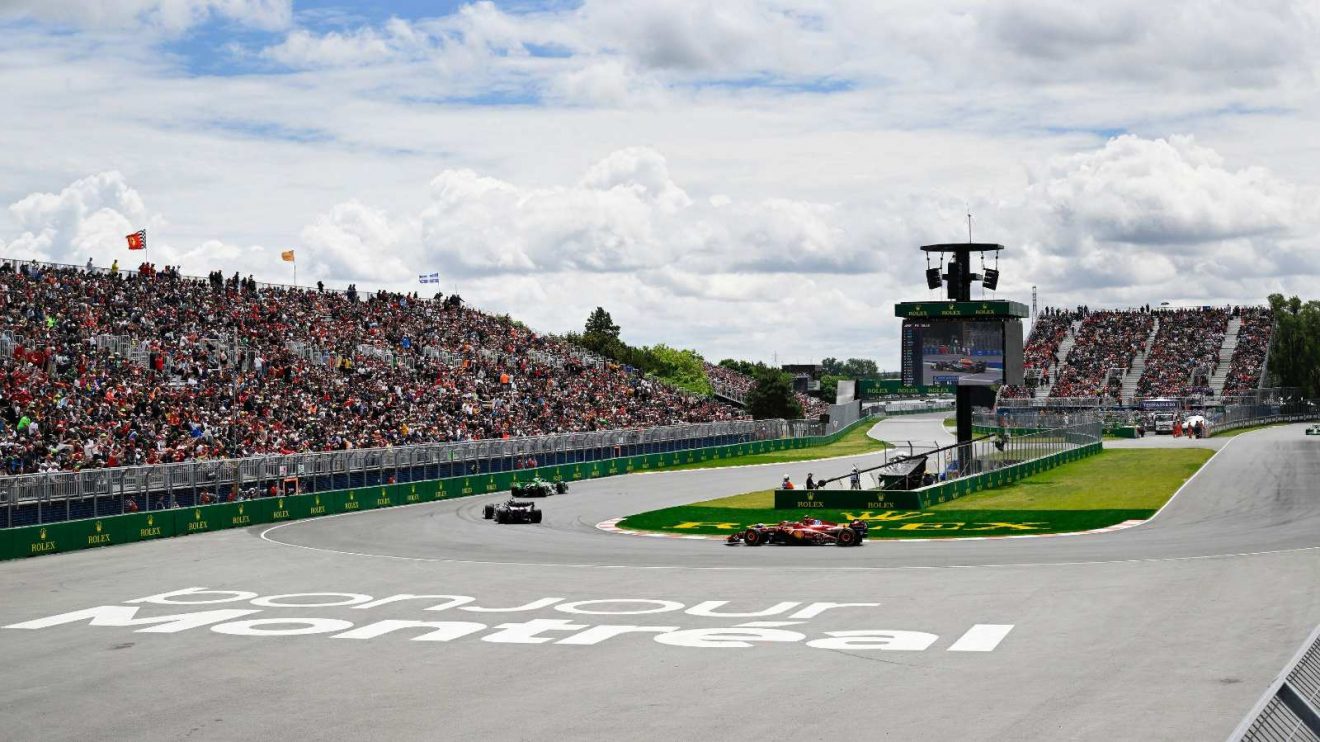
A shifted date for the Canadian Grand Prix could bring it into direct conflict with the Indianapolis 500.
In a bid to reduce cross-continental travel and to improve sustainability, Formula 1 has announced that the Canadian Grand Prix will move to late May as early as 2026 — and that could be one of F1’s biggest mistakes yet.
In North America, late May heralds the build-up to the Indianapolis 500, with many race fans flocking to the Speedway to catch sight of the Greatest Spectacle in Racing. But what happens when there’s a conflict with Formula 1?
The harm of a potential Canada/Indy conflict
In 2026, the Canadian Grand Prix will find a new date on the Formula 1 calendar.
The event at Circuit Gilles Villeneuve in Montreal has become increasingly awkward as Formula 1 continues to expand its North American presence. The traditional mid-June date has required the F1 community to fly to Miami in early May, then tick off a few European races before returning to North America to compete in Quebec.
As Formula 1 continues to pare down its carbon footprint, though, that jet-set schedule has faced ample criticism.
For 2026 and beyond, F1 has introduced a new solution: The Canadian Grand Prix will be held on “the third or fourth” weekend of May — a slot that has generally been reserved for either Spain or Monaco.
In other words, the Canadian Grand Prix could come into direct conflict with the Indianapolis 500 — a race that traditionally takes place on the fourth or fifth Sunday in May, with a full qualifying weekend taking place a week prior.
That conflict will be a huge mistake if Formula 1 allows it to happen.
Dig deeper into North American motorsport:
? Revealed: What American fans really want to see from Formula 1
? Why Miami-Montreal double header concept could lead to more schedule headaches
The Indianapolis 500 is the largest single-day sporting event in the world, regularly drawing over 300,000 spectators to the Indianapolis Motor Speedway on the Sunday before Memorial Day weekend. And for North American race fans, it represents the highlight of Memorial Day’s racing action.
For the past several years, race day kicks off with the Monaco Grand Prix in the morning, followed by the Indianapolis 500 in the afternoon, and NASCAR’s Coca-Cola 600 in the evening. Those three marquee events herald the beginning of a lively summer racing season, and it’s often an opportunity for fans of one discipline to experiment with the others.
Changes in that schedule were bound to happen — but it is perhaps safe to say that no one expected the Indianapolis 500 to conflict almost directly with the Canadian Grand Prix, an event that would likely be scheduled for roughly the same time as Indy.
More than that, though, is the fact that it represents a blatant disregard for the North American audience F1 has stumbled upon.
Last year, I spoke to a slew of American race fans to understand exactly how F1 could improve, and a motorsport historian named Kate raised a critical point: F1 doesn’t show respect for American racing traditions. And Indianapolis is the greatest tradition of them all.
The first running of what was then called the 500-mile sweepstakes took place in 1911, and it has continued almost every single year since, with the exception of pauses during the World Wars. The Indy 500 has taken place in May every single year, with the exception of the pandemic-delayed running in 2020 that took place in August. The event has amassed deep layers of tradition centering around that late-May race date.
Formula 1, though, has never really understood the event. For the first 10 years of the sport’s existence, it included the Indy 500 on its Grand Prix calendar, but only one F1 driver ever attempted the race. Since then, some F1 drivers have tried their luck at the Brickyard, but the firming up of a long race calendar and F1’s insistence that its drivers prioritize its events above all else means there’s been very little crossover in the modern era.
Unfortunately, it has also resulted in a disregard for any non-F1 racing. The Indy 500 is “just driving in circles” to a certain subset of fans — and disciplines like NASCAR and IndyCar are treated as less professional than Formula 1.
And while an argument can be made that F1 represents the pinnacle of technology, many North American race fans have long since grown tired of Formula 1’s desire for American dollars without any legitimate engagement with American fans.
A significant part of engaging motorsport fans in any country is understanding their motorsport traditions and histories. That’s a critical step in forming lasting relationships with those race fans — and it’s a step that F1 has largely attempted to skip over, despite hosting three Grands Prix in the United States, with additional events in Mexico and Canada.
F1’s decision to reduce its carbon footprint is a noble goal, of course. But opening up a potential conflict between the Canadian Grand Prix and the Indy 500 is a mistake; it shows North American fans that F1 isn’t interested in respecting one of the continent’s most celebrated racing traditions — and that will only sour this rapidly growing fanbase.
Read next: What the Las Vegas Grand Prix got right that so many American street races got wrong